Why Does Hair Shedding Look More Noticeable When Washing?
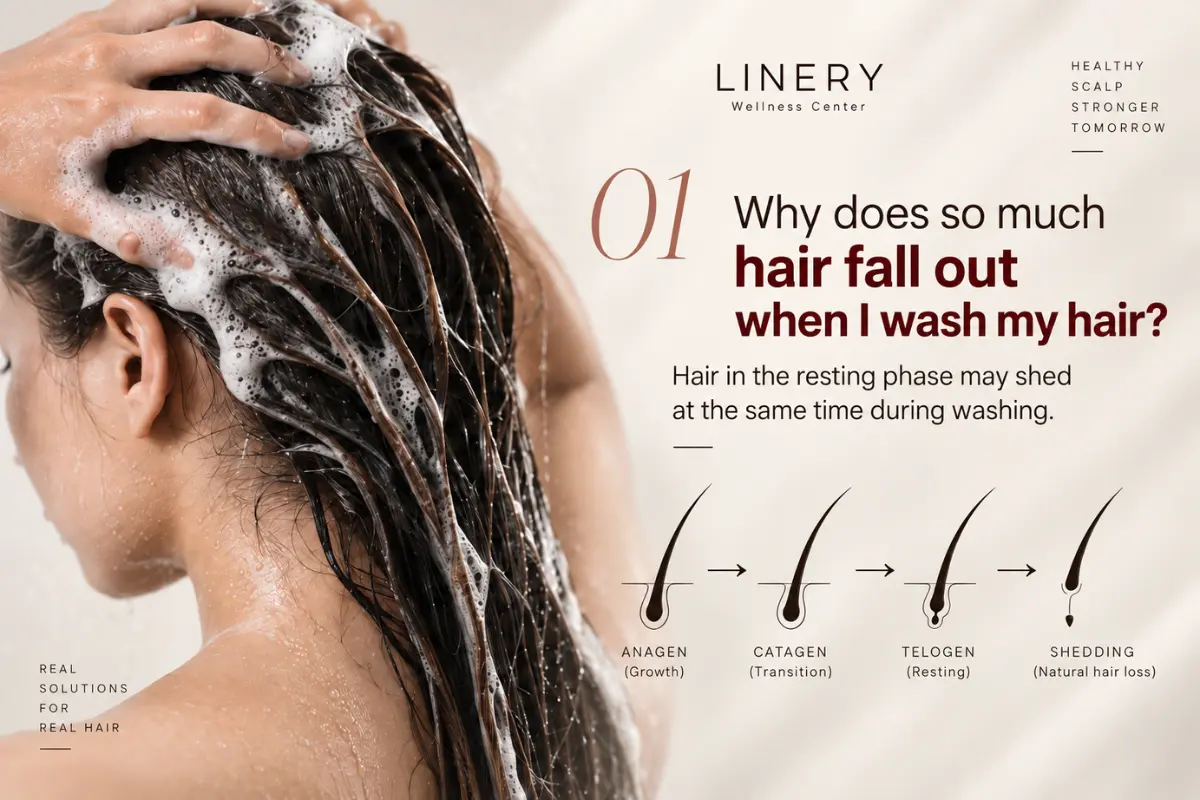
Shedding may be more noticeable on wash days because hairs that are ready to shed naturally are released together during washing and rinsing. The time between washes also affects how much hair you see.
Washing Releases Hairs That Are Ready to Shed
Hair goes through a cycle of growth, rest, and shedding. When some hairs are ready to shed, touching the scalp and rinsing can release them. This is why you may notice hairs on your hands or around the drain, even when washing gently.
Waiting Several Days Between Washes May Make Shedding Look Greater
If you leave several days between washes, you may see more hair come out on wash day than when washing more frequently. This does not necessarily mean that the rate of shedding has increased. For a more useful comparison, look at washes with similar intervals between them. Avoid directly comparing the amount of hair after daily washing with the amount after several days without washing.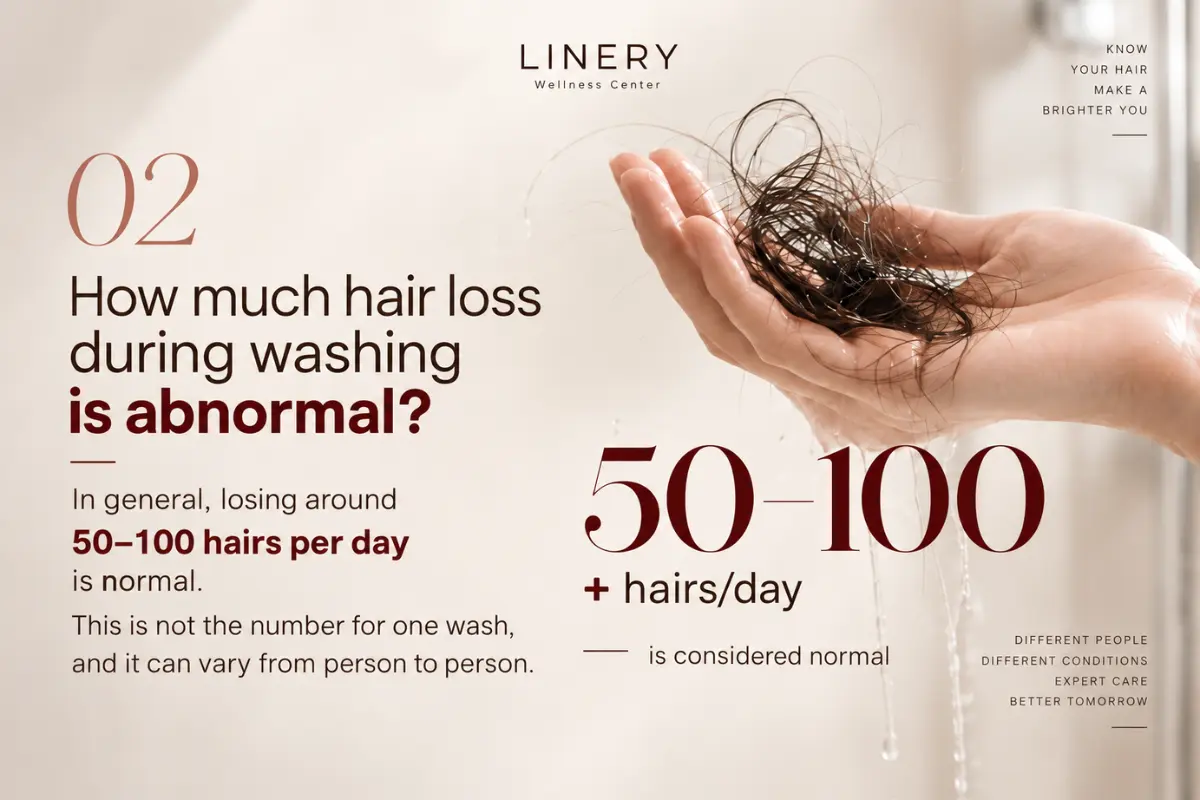
How Much Hair Loss During Washing Is Abnormal?
There is no single number of hairs shed per wash that applies to everyone. The amount you see depends on the interval between washes and your hair characteristics. Consider whether shedding has increased from your usual pattern or whether hair density is also decreasing.
Daily Hair Shedding Is Not the Same as Shedding During One Wash
The American Academy of Dermatology, or AAD, states that shedding around 50–100 hairs per day can occur as part of the normal hair cycle. This figure refers to the whole day, not just the time spent washing your hair. Therefore, avoid assuming that “more than 100 hairs per wash is definitely abnormal” or “fewer than 100 hairs means there is no problem” without considering washing intervals and other changes in your hair.
Why You Should Not Compare Your Shed Hair With Someone Else’s
Hair length, the amount of hair on the scalp, and care routines differ between people. The pile of hair left after washing is therefore not a reliable way to compare who has more abnormal shedding. Instead, compare with your own previous pattern. For example, with similar intervals between washes, are you shedding noticeably more hair or seeing more of your scalp than before?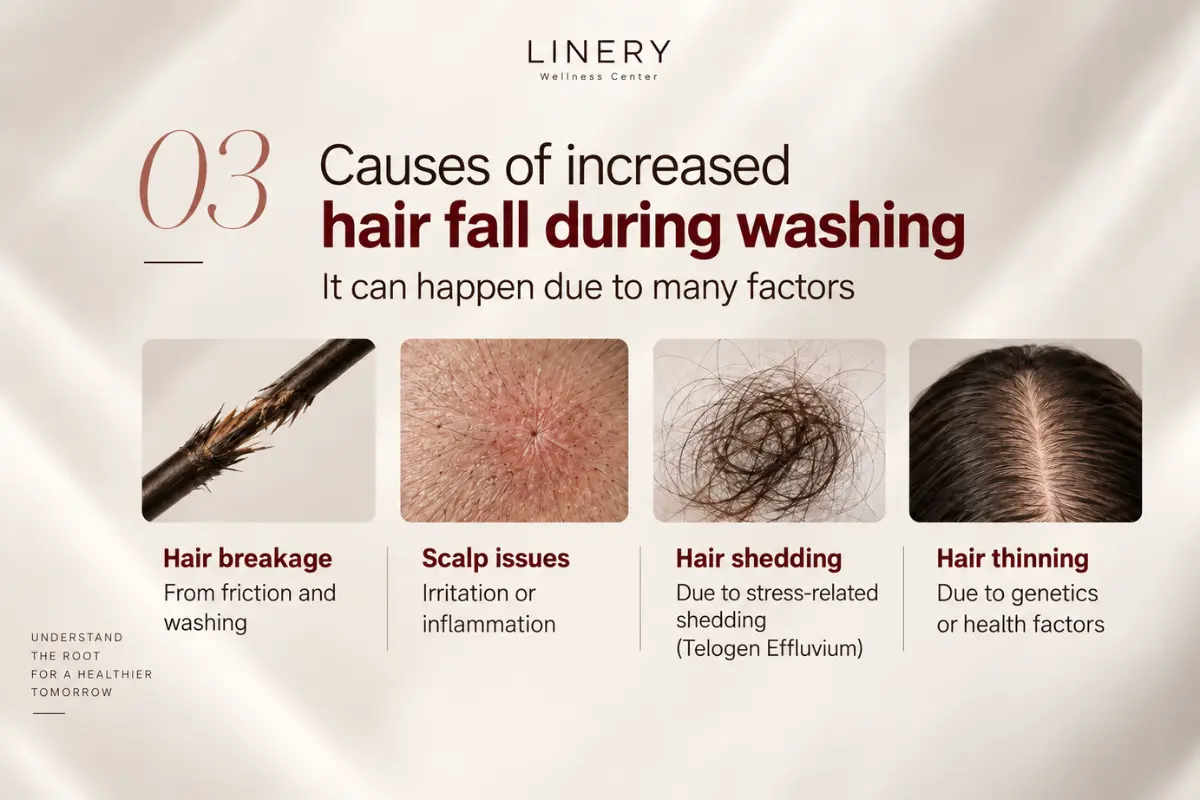
What Can Cause More Hair to Fall Out During Washing?
Hair seen during washing may result from breakage, scalp problems, or increased shedding related to health factors. Identifying the type of problem is more important than immediately changing shampoo.
Hair Breakage From Damage and Friction
Colouring, perming, straightening, heat styling, or vigorous rubbing and pulling can make hair brittle and cause it to break during washing or detangling. Short strands may be broken hairs, but length alone cannot confirm this. Hair condition, brittleness, and the scalp should also be assessed.
Irritation or Scalp Conditions
Itching, redness, burning, or flaking may be related to irritation from products or certain scalp conditions. Not every episode of shedding should be attributed to a shampoo allergy. If a rash, burning, or itching develops after using a new product, stop using the suspected product. If symptoms do not improve, see a doctor to identify the cause.
Shedding After Illness, Stress, Childbirth, or Weight Loss
These factors may cause more hairs to enter the resting phase, resulting in telogen effluvium. Increased shedding is often noticed during washing or brushing. Symptoms may begin around three months after the trigger, rather than immediately. Review your health over the preceding months instead of focusing only on what changed when you first noticed the shedding.
Hereditary Thinning or Other Health Factors
Hereditary hair thinning can cause individual hairs to become progressively finer and provide less scalp coverage. Thyroid disorders, iron or protein deficiency, and certain medications may also be associated with hair loss. Some people have more than one cause, such as hereditary thinning alongside temporary shedding after illness. Treatment should therefore not be selected based only on what happens during washing.
Read more: What Causes Thinning Hair?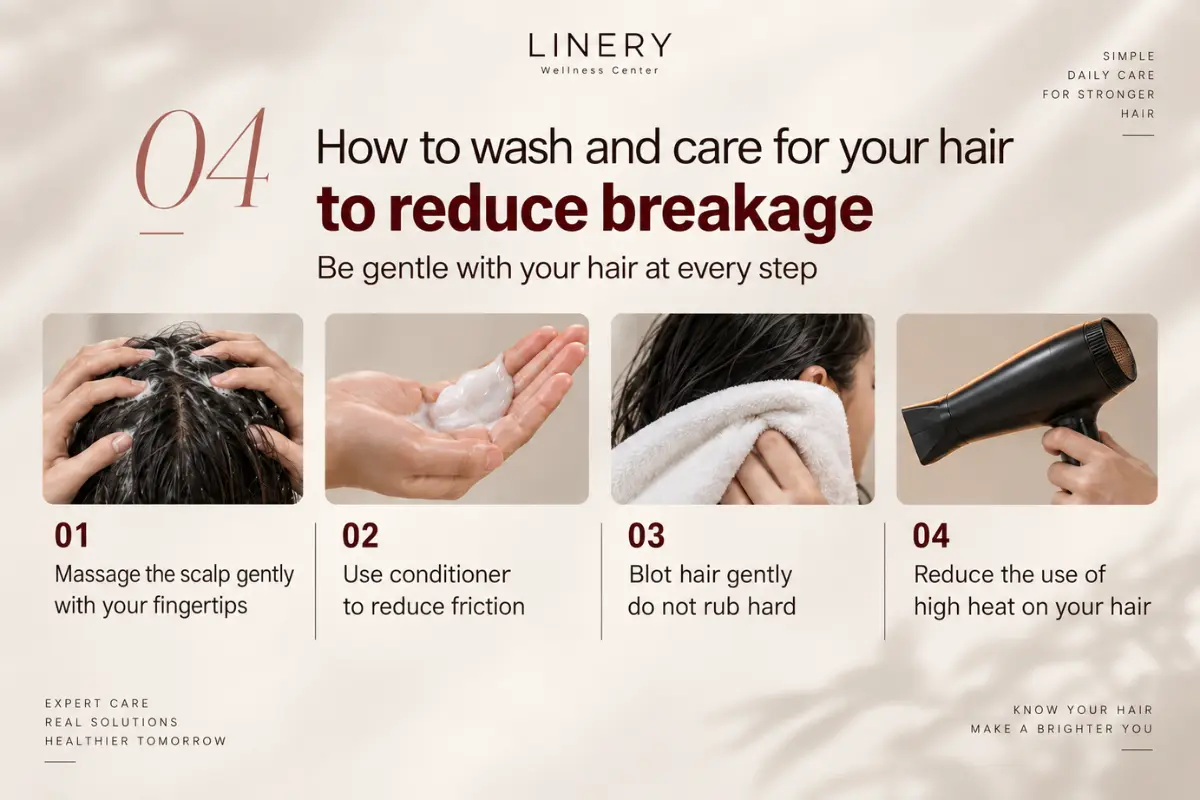
How Should You Wash and Care for Your Hair to Reduce Breakage?
Gentle washing helps reduce hair damage and breakage. However, it does not stop hairs that are ready to shed naturally, nor can it replace treatment for an underlying health condition.
Choose Shampoo and Washing Frequency to Suit Your Scalp
Choose products according to your scalp and hair condition, rather than relying only on an “anti-hair loss” label. Look for a formula that does not cause dryness or irritation. Washing frequency depends on oiliness and how dirty your hair becomes. People with straight hair and an oily scalp may wash daily, while those with dry or curly hair may need to wash less frequently.
Read more: Which Hair Loss Shampoo Should You Choose?
Clean the Scalp Without Rubbing the Hair Vigorously
Apply shampoo mainly to the scalp and massage gently. Avoid rubbing it throughout the length of your hair. When rinsing, let the lather flow through the strands without repeatedly scrubbing them. Use conditioner after shampooing to help reduce tangles and breakage. For fine or straight hair, focus on the ends. For dry or curly hair, conditioner may be applied throughout the lengths as appropriate.
Blot, Detangle, and Limit Heat After Washing
Use a towel to blot or wrap the hair and absorb water rather than rubbing it. If you use a hair dryer, choose a low heat setting and limit frequent use of straighteners or curling tools. For straight hair, let it dry partially before combing gently. Curly or tightly curled hair may be detangled while wet and coated with conditioner. Use a wide-tooth comb, start at the ends, and work upwards without pulling through knots.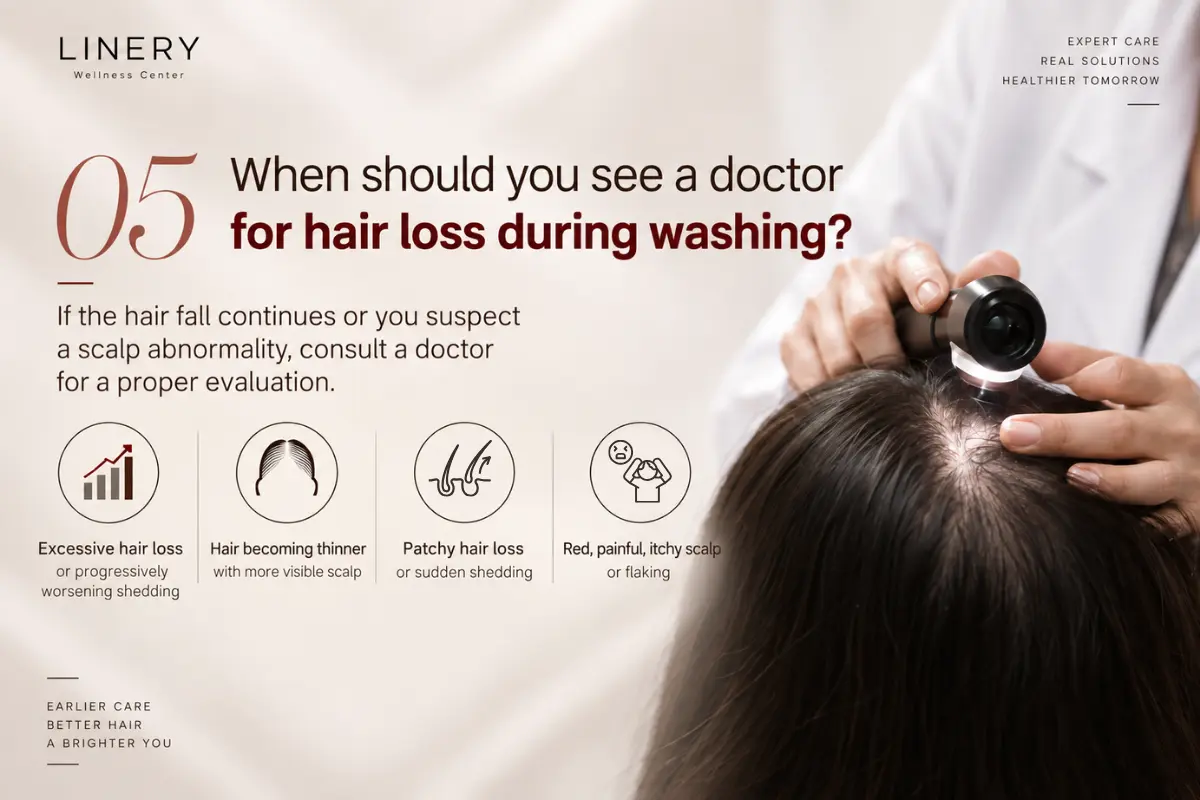
What Else Should You Watch For, and When Should You See a Doctor?
See a doctor if shedding increases noticeably, bald patches develop, or hair density continues to decrease. Scalp symptoms also warrant attention. You do not need to wait until the number of shed hairs reaches a particular threshold.
Track Changes From Your Usual Pattern
Record when you first noticed the symptoms and how long you leave between washes. Check whether your part or crown has changed. The timing and pattern of thinning help a doctor assess the cause. You may also photograph the same areas using similar lighting, camera angles, and hair parting. This provides a record to show your doctor rather than relying only on your memory of the hair left after washing.
Read more: Crown Hair Thinning
Which Symptoms Should Not Be Left Without Assessment?
The following changes should be assessed, particularly if they develop quickly or continue to worsen. Avoid repeatedly switching products while waiting for improvement.
| What You Notice | What to Do |
|---|---|
| Shedding continues to increase compared with your usual pattern, or your concern affects daily life | Arrange a medical consultation to assess the cause |
| A widening part, thinning crown, or increasingly visible scalp | Have the thinning pattern and hair density assessed |
| Sudden hair loss, hair coming out in clumps, or bald patches | See a doctor promptly rather than waiting for a shampoo change to work |
| Scalp redness, pain, swelling, crusting, sores, or pus-filled bumps alongside hair loss | Have the scalp examined before choosing products or undergoing a procedure |
What Will the Doctor Assess, and What Information Should You Prepare?
A doctor will ask when the symptoms began, review your medical history and medications, and examine your hair and scalp. This helps distinguish breakage, increased shedding, and any hair thinning that may occur alongside them. Blood tests are not necessary for everyone. They may be considered if problems such as iron deficiency or thyroid dysfunction are suspected. Bring a list of your medications and information about previous illnesses. If you suspect that a medication is causing hair loss, do not stop or adjust it yourself. Speak with the prescribing doctor first.
Read more: How to Manage Thinning Hair
Frequently Asked Questions About Hair Loss When Washing Hair
Will Avoiding Hair Washing Reduce Shedding?
Avoiding washing does not address the cause of hair loss. It may also make accumulated shed hairs more noticeable during the next wash. Base your washing schedule on your scalp condition rather than avoiding washing because you are worried about seeing hair fall out.
Should You Stop Using Conditioner if You See Hair Shedding After Applying It?
You do not need to stop simply because you see hairs during rinsing. Handling and rinsing the hair can release strands that are ready to shed, while conditioner helps reduce tangles and breakage. However, if itching, burning, or a rash develops after use, stop using the suspected product and seek advice if the symptoms persist.
Does a White Bulb on a Shed Hair Mean the Follicle Is Dead?
A white bulb at the base of a shed hair does not mean that the entire follicle has been pulled out. It is usually the keratinised end of a resting-phase hair, known as a club hair, rather than the entire follicle structure beneath the skin. A white bulb alone therefore does not confirm that the follicle is dead or identify the cause of hair loss.
Do You Need an Anti-Hair-Loss Shampoo if a Lot of Hair Falls Out During Washing?
Not everyone needs one. Choose a shampoo that suits your scalp and does not dry out or damage your hair. Changing products alone may not solve the problem if the cause involves the hair cycle, genetics, or health factors.
Conclusion: Hair Loss During Washing Is About More Than the Number of Strands
Seeing a lot of hair fall out during washing does not necessarily mean that washing is the cause. Consider the interval between washes, changes from your usual pattern, and hair density together, rather than judging from the hair left after one wash. Gentle washing and after-wash care can help reduce breakage. However, if shedding continues to increase, bald patches develop, or scalp symptoms appear, see a doctor to identify the cause and choose appropriate care.
Read more: Hair Transformation Program
Results may vary between individuals. Consult a doctor for advice appropriate to your condition.
References
- American Academy of Dermatology. Do you have hair loss or hair shedding? — Information on normal shedding and the distinction between shedding and hair loss.
- American Academy of Dermatology. Tips for healthy hair and 10 hair care habits that can damage your hair — Guidance on washing, conditioning, combing, and reducing hair damage.
- British Association of Dermatologists. Telogen effluvium — Triggers, the timing of increased shedding, and assessment of the cause.
- Cleveland Clinic. Here’s Why Your Hair Falls Out in the Shower — Why shedding is more noticeable on wash days and what to watch for.
- Mayo Clinic. Hair loss: Symptoms and causes — Patterns of hair loss and signs that warrant medical advice.
- DermNet. Hair shedding — The hair cycle and the characteristics of resting-phase hairs, or club hairs.