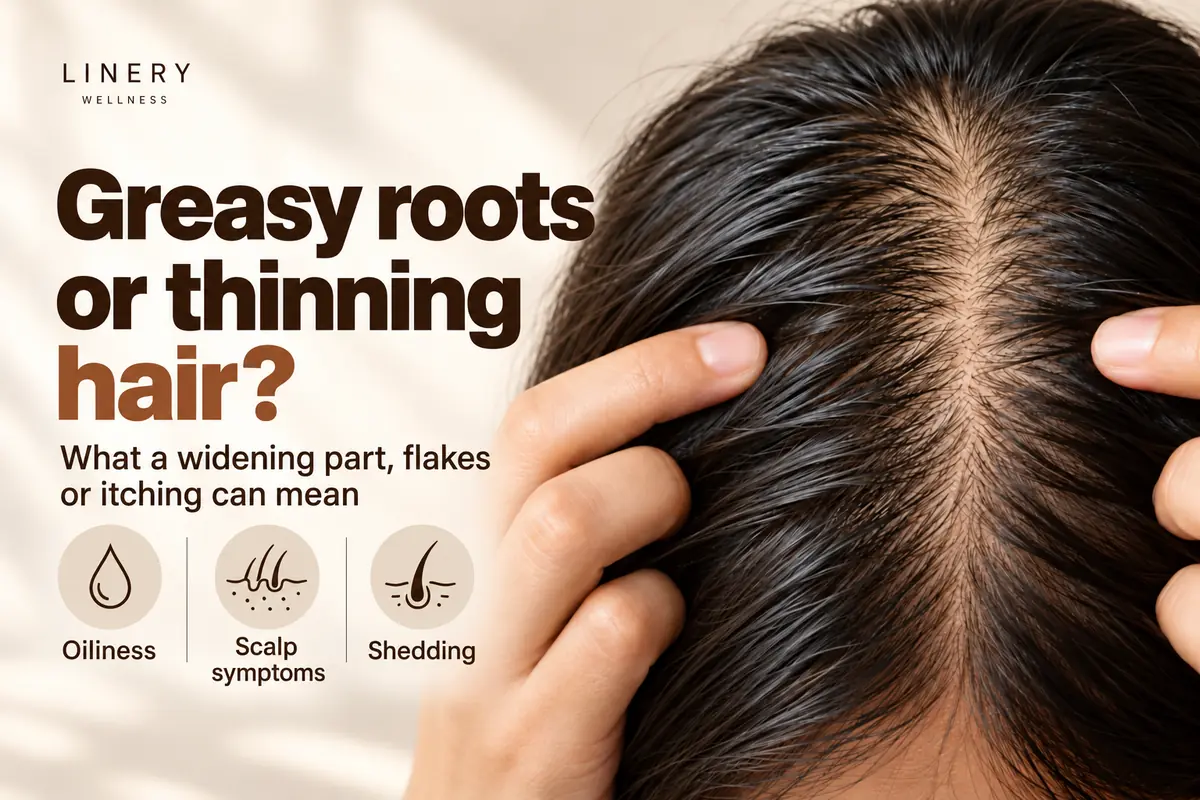
An oily scalp does not, by itself, explain hair loss. First separate greasy, flat-looking hair from increased shedding or a genuinely widening part. If there is itching, flaking, a rash or pain as well, the scalp symptoms and loss of density may need separate assessment.
The 30-second summary
Compare hair density in similar lighting and hair condition; greasy or wet hair can look different from dry hair.
Choose washing and shampoo use for your scalp and hair texture, following the product instructions.
Improved dandruff does not establish regrowth. Persistent thinning needs assessment even if the scalp feels better.
Pus, sores, marked pain or spreading inflammation need prompt medical attention.
Insight Guide: Does an Oily Scalp Cause Hair Loss? Care for Greasiness and Thinning
Is your hair flat from oil, or actually thinning?
Scalp glands produce an oily substance called sebum. Oiliness describes the oil on your scalp and hair; it does not measure follicle activity. Hormones can influence oil production, but greasy roots alone cannot establish a hormonal disorder.
Describe what has changed before choosing a product:
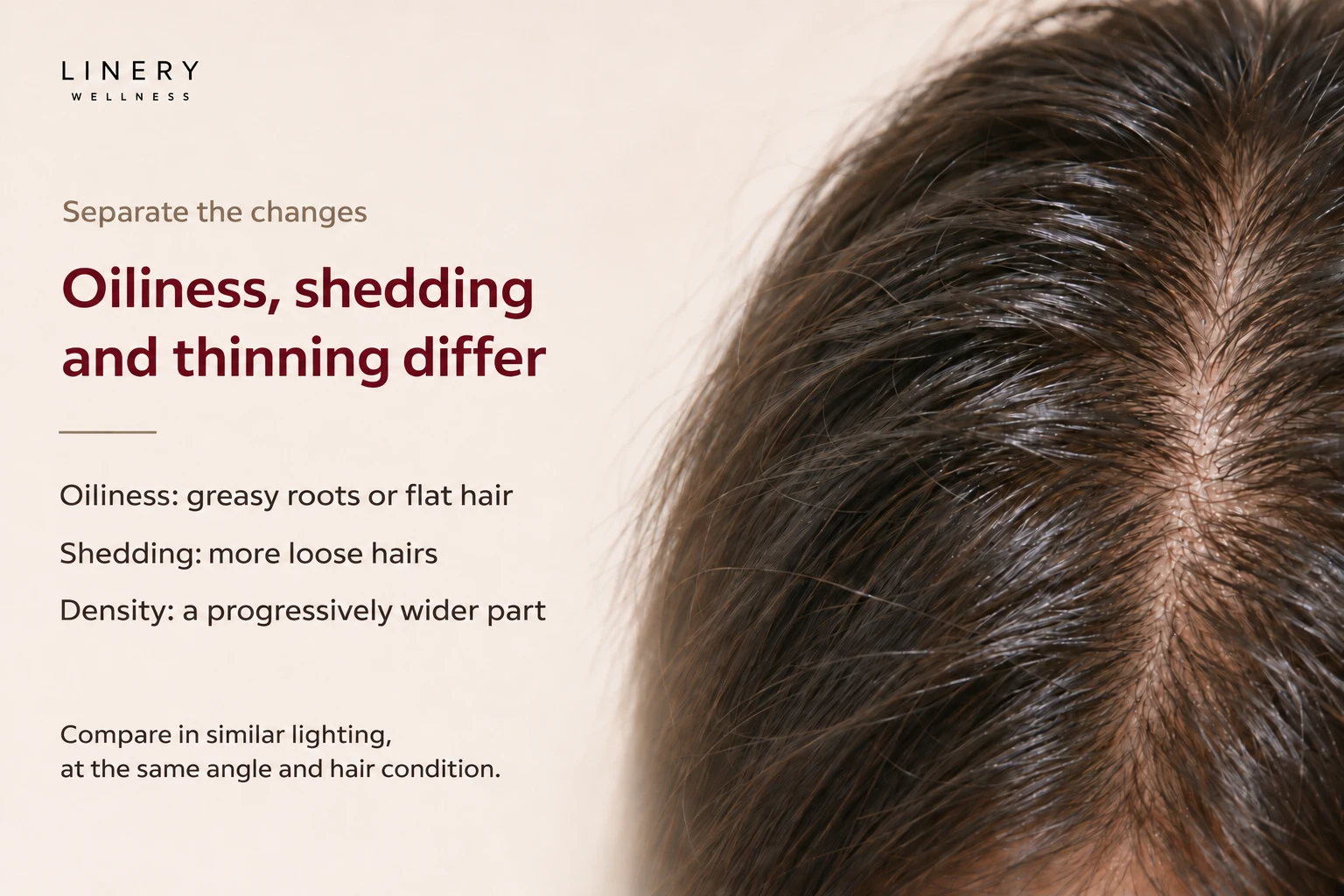
Oiliness: roots become greasy sooner or the hair looks flatter.
Shedding: you find more loose hairs than usual.
Density: the part or hairline looks progressively thinner.
More than one can apply. Compare photographs with similar lighting, parting and hair condition; wet or product-coated hair is difficult to compare with dry hair.
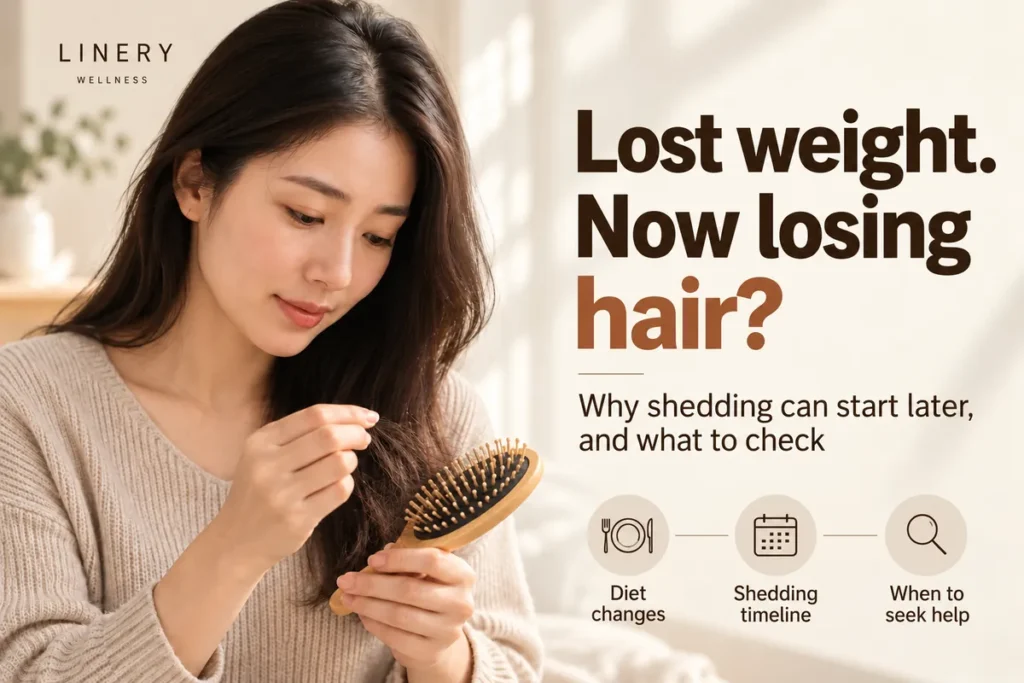
If your main concern is the hair you see in the shower, note the interval between washes as well. Linery’s guide to hair loss when washing covers that question in more detail.
What if oiliness comes with itching or flakes?
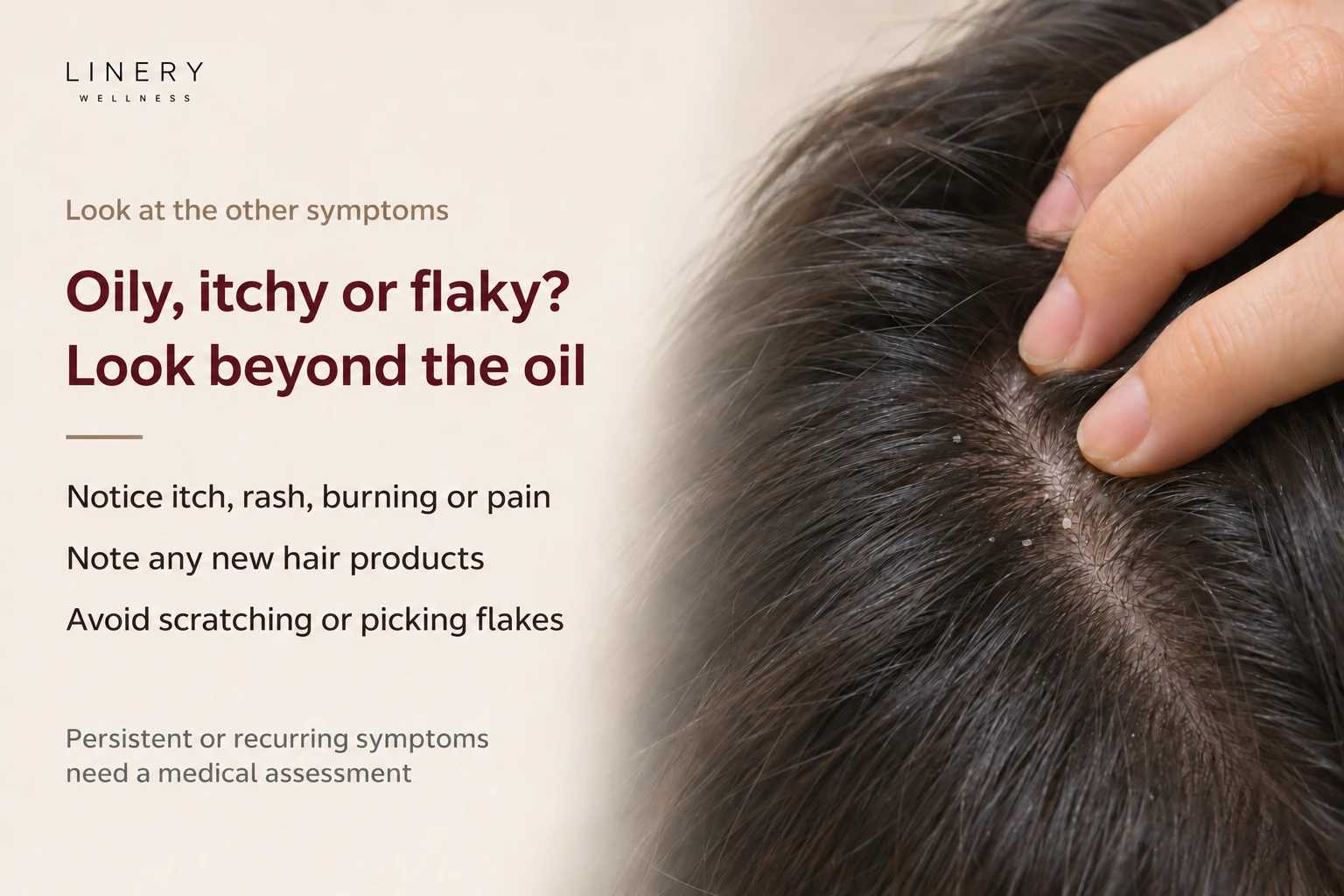
Seborrheic dermatitis is an inflammatory skin condition that commonly affects the scalp and other oily areas. Flakes may look dry or greasy, and symptoms can also occur around the eyebrows, nose or ears. Other skin conditions can look similar, so these features are clues to discuss rather than a diagnosis to make from photographs.
If itching or a rash started after a new shampoo, colouring treatment or styling product, that exposure is relevant. Symptoms that improve and repeatedly return need care for their cause rather than progressively harsher washing. Itching that disturbs sleep, soreness, bumps or sores are reasons to have the scalp examined.
“Dry flakes” do not necessarily mean that the whole scalp needs more oil. Equally, a greasy scalp is not proof of poor hygiene. Describing the combination of symptoms is more helpful than assigning yourself a scalp type and buying products around that label.
How often should you wash, and which shampoo should you use?
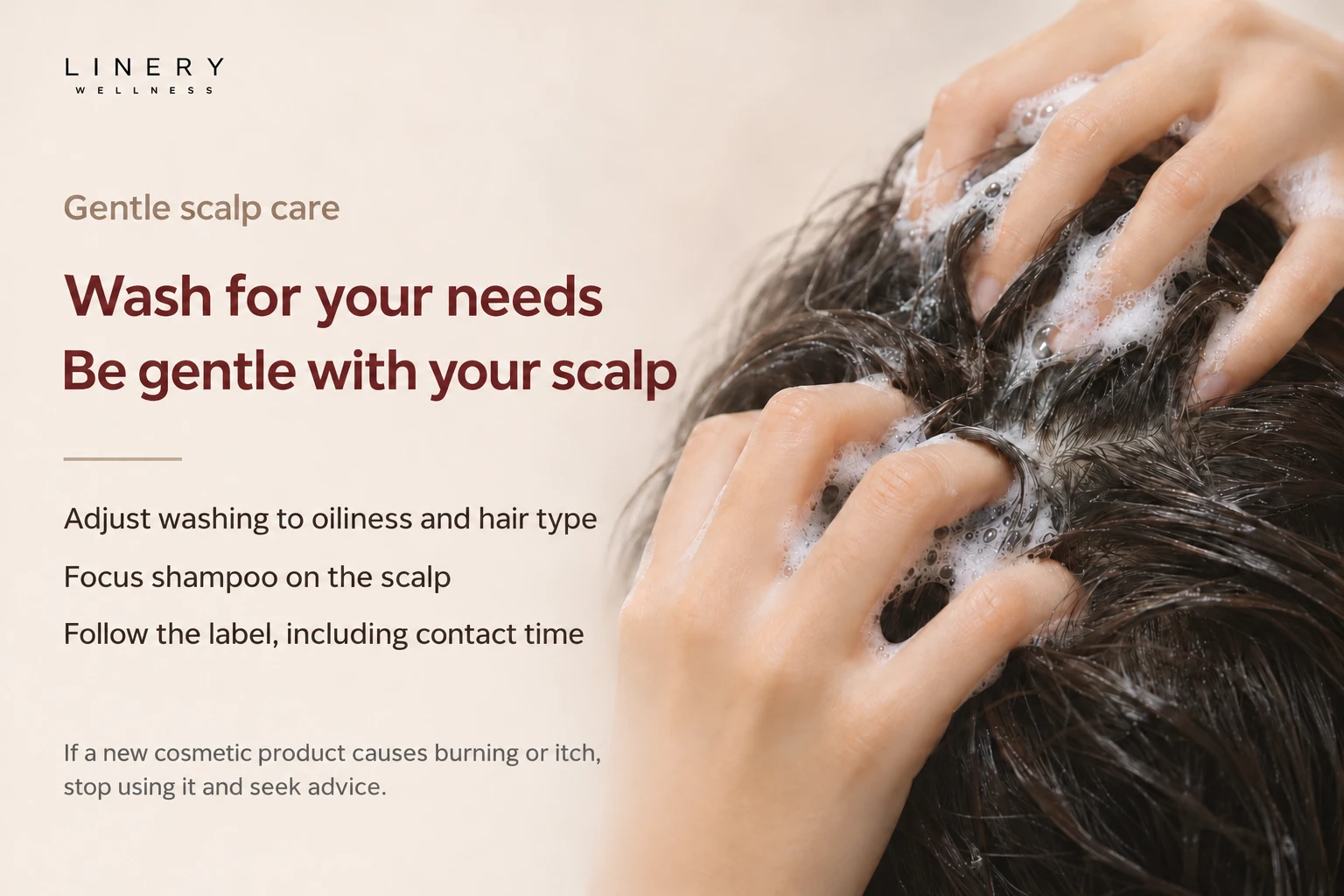
Choose a washing routine that suits your scalp, hair texture and activities. People with straight hair and an oily scalp may need more frequent washing than people with dry or tightly curled hair. Focus shampoo on the scalp and handle the lengths gently. There is no need to copy someone else’s wash schedule simply because they also describe their hair as oily.
If a new cosmetic hair product causes burning, itching or a rash, stop the suspected product and seek advice if symptoms persist. Keep the packaging or photograph the ingredient label, especially if several shampoos, tonics or styling products are used together. For a prescribed scalp treatment, ask the prescriber about symptoms rather than changing it yourself.
Anti-dandruff products contain different active ingredients and have different instructions. A pharmacist or doctor can help you choose an appropriate option. Follow the relevant label or clinical instructions rather than increasing contact time or frequency in the hope of faster results. Persistent symptoms may require a diagnosis and a plan for managing recurrences.
What if the flakes improve but your hair keeps thinning?
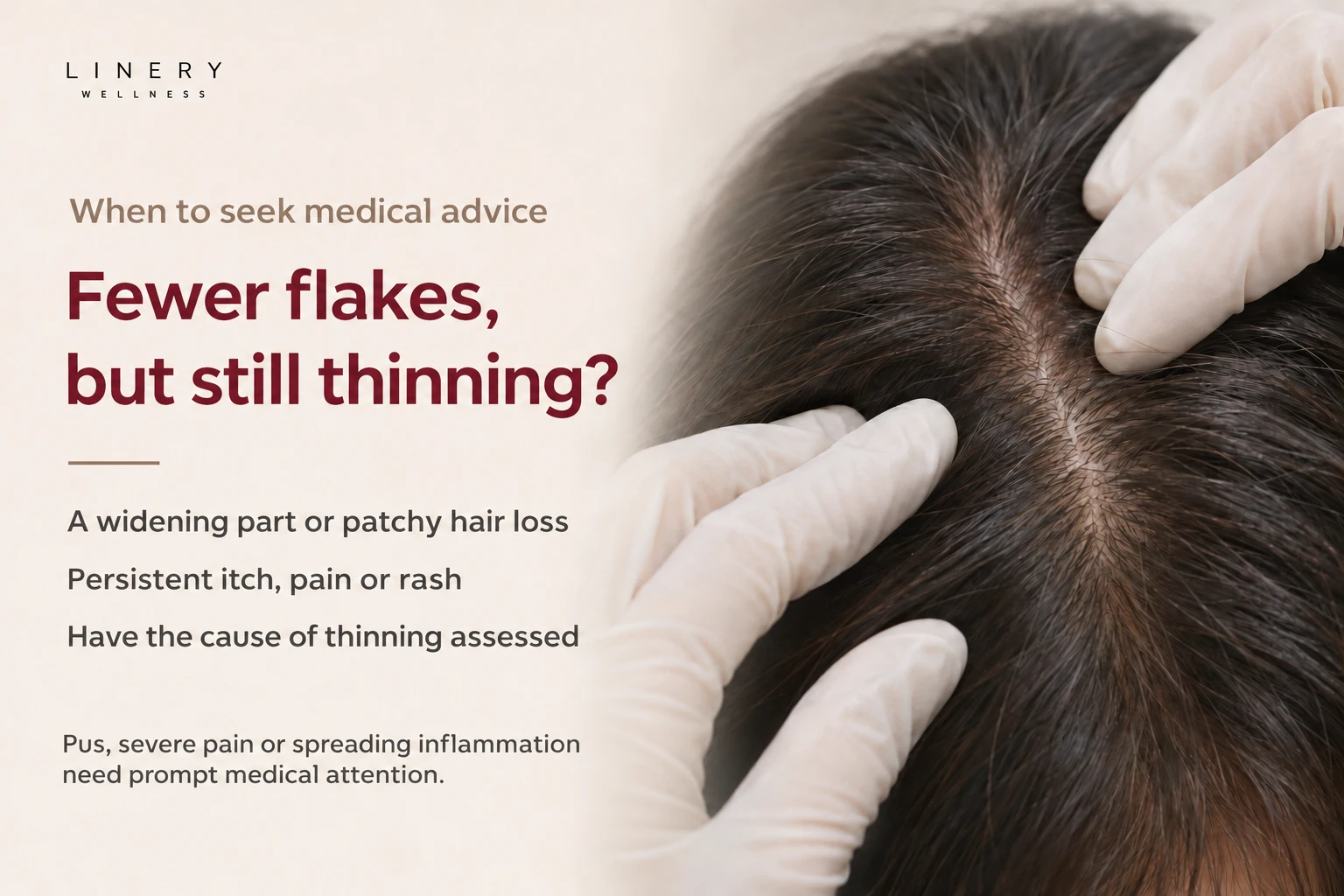
If the part is widening or a thin patch is developing, have the hair loss assessed even when dandruff has improved. An anti-dandruff shampoo may ease flakes and itch without treating the reason for thinning; scalp comfort and hair density are separate outcomes.
Hair loss has several possible causes, including hereditary thinning, changes after illness or other physical stress, and conditions affecting discrete areas of the scalp. Finding one scalp problem does not establish that it explains every change.
For a broader overview, see common causes of hair thinning. Bring the history of both scalp symptoms and shedding to your consultation, even if they started at different times.
Which symptoms need medical attention?
Seek medical advice for a clear increase in shedding, patchy loss, progressive thinning, or persistent itching, pain, scaling or abnormal scalp skin. Painful or spreading inflammation, pus or sores warrant prompt attention. You do not need to wait until the scalp is less oily before asking for help.
Bring a brief timeline of when the oiliness, scalp symptoms and shedding began, together with your product and medication list and comparable older photographs. If the symptoms began at different times, record them separately rather than assuming one cause explains them all.
Before considering a hair procedure
Tell the clinician about any rash, discomfort or scalp lesions before considering a procedure. An active scalp problem and a loss of hair density may need different care; oiliness alone cannot determine which treatment suits you.
Linery’s Hair Transformation page has general service information. Contact the clinic about assessment and explain both the scalp symptoms and the thinning, including when each began.