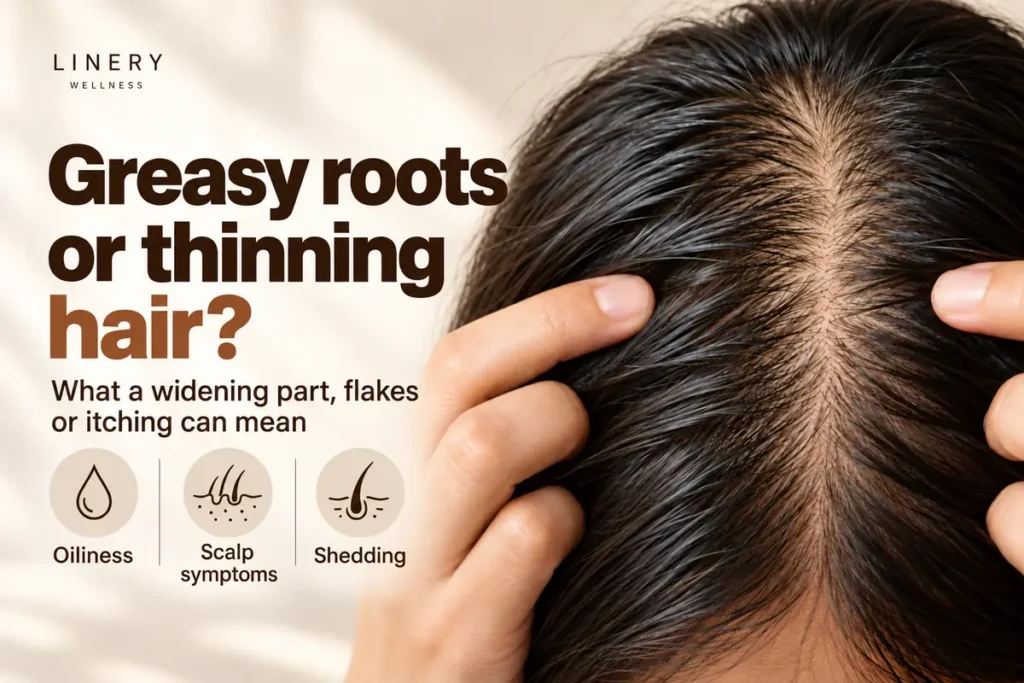
Why can hair shed after your weight has stabilized?
Hair follicles cycle through growth and rest. Certain triggers can cause more hairs than usual to enter the resting phase, with increased shedding appearing later. Telogen effluvium generally causes diffuse shedding rather than a single clearly defined bald patch.
Hair-cycle changes can become visible months after a trigger. This delay helps explain why someone might notice shedding after eating patterns or weight have already become more settled. It does not, by itself, mean that efforts to restore adequate nutrition have failed.
Rapid weight change and restrictive eating are relevant parts of the history, but not everyone who loses weight develops shedding. Hair loss also does not automatically establish a nutrient deficiency. Surgery, illness or another event may have occurred during the same period.
A retrospective study described 140 patients diagnosed with weight-loss-associated telogen effluvium. The group included intentional and health-related weight loss. Because the researchers studied people already diagnosed with the condition, the findings cannot tell every person losing weight their chance of developing it. The group’s average weight change is also not a “safe versus unsafe” threshold.
When might hair recover, and when should you seek help?
When the diagnosis is telogen effluvium and the trigger is addressed, shedding often settles gradually. Reduced shedding and a visibly fuller hairstyle are different milestones. BAD describes a shedding phase of roughly three to six months, with fullness taking longer to recover. This is general context for the condition, not a deadline for your own recovery.
Arrange a medical review for patchy loss, pain, a rash or other abnormal scalp changes, progressive thinning, or shedding that fails to improve. Mention unintentional weight loss and any wider health symptoms, too. Those concerns should not be reduced to a cosmetic hair problem.
Build a timeline before your appointment
Record what changed before the shedding and what the hair loss looks like now. This gives the clinician more useful context than assuming a deficiency from the diet alone:
- Reduced meals, excluded food groups, poor appetite or nausea are reasons to review nutritional intake.
- Fever, surgery, childbirth, significant stress or changes in a long-term condition may have occurred in the same period.
- New medicines or dose changes should be discussed with the prescriber. Include supplements; do not stop prescribed treatment to test a theory about shedding.
- Patches, a widening part, breakage, itching or a rash may point to a separate or overlapping concern that needs examination.
Bring dated blood results you already have and older hair photographs. Include when the diet, weight or medication changed, even if that was well before the shedding became obvious. There is no need to buy a large test panel or count every loose hair before seeking advice.
If you first noticed the change in the shower, see hair loss when washing. Wash-day shedding still needs to be considered alongside the weight and health changes.
What if medication is part of your weight-loss plan?
Do not stop or alter prescribed medication on your own because shedding has started. Contact the prescribing clinician with the timeline of treatment, weight change, appetite and hair symptoms. A time association alone cannot distinguish medication effects from nutritional changes, weight loss or another cause.
If different clinicians manage your weight and hair concerns, give both the same medication list and relevant reports. The aim is a coordinated assessment, rather than making a major change to an existing treatment plan based on the hair symptom alone.
Do you need blood tests, biotin or other supplements?
Testing should answer a specific clinical question. A doctor starts with the history and examination, then may investigate suspected contributors such as iron deficiency or thyroid disease. The appropriate tests differ between people; a larger package is not automatically more informative.
Biotin, iron and multivitamins are not automatic treatments for post-weight-loss shedding. Discuss whether your diet or medical history suggests a deficiency before combining supplements. Excessive amounts of some nutrients can be harmful, and biotin can interfere with certain laboratory tests. Tell the clinician and testing service what you take.
If intake has become difficult or your diet is highly restricted, a doctor or dietitian can review nutritional adequacy in the context of your health. This is particularly important after surgery affecting the digestive system. A general hair article cannot set an individual calorie, protein or supplement target.

Would a hair procedure address the cause?
Ask whether the pattern looks like temporary shedding, whether another form of thinning may coexist, and whether a health or nutritional issue needs attention first. A procedure cannot replace that assessment.
You can read Linery’s Hair Transformation information or contact the clinic to ask about assessment and suitability. Explain the weight change and any ongoing treatment before booking. For general options by cause, see how thinning hair is managed.