What Should You Check Before Choosing a Hair Loss Solution?
Before choosing a product, medication, or clinical treatment, check where the thinning occurs, when it began, how quickly it is progressing, and whether scalp symptoms are present. This information provides a clearer picture of the concern and reduces the risk of choosing an unsuitable approach.
A preliminary assessment is not intended for self-diagnosis. Its purpose is to collect useful information before consulting a doctor or qualified professional, particularly when thinning continues or begins to affect confidence.
Where Is the Hair Thinning?
The location of reduced hair density may provide useful information about the pattern. Check whether thinning affects the hairline, part line, crown, central scalp, or the entire scalp.
Patchy or circular hair loss should be distinguished from gradual, diffuse thinning. This pattern may require further assessment rather than selecting products based only on visible symptoms.
Read more: Crown Hair Thinning
When Did You First Notice the Change?
The timeline may help distinguish a temporary change from a progressive concern. Consider whether the thinning began after illness, surgery, childbirth, rapid weight loss, or a period of significant stress.
Hair that gradually becomes thinner over several months or years may require different considerations from sudden shedding. Recording when the change began can make a professional assessment more informative.
Are There Any Scalp Symptoms?
Check for itching, redness, pain, burning, flaking, crusting, or sores on the scalp. These symptoms may indicate that scalp health requires attention in addition to changes in hair density.
When inflammation, a rash, or persistent discomfort is present, avoid trying several products at the same time. Doing so may increase irritation and make it more difficult to identify what is affecting the scalp.
How to Photograph and Track Hair Changes
Photograph the thinning area from the same angle, under similar lighting, and with the hair parted in the same way. Consistent images make changes in hair density easier to compare.
Taking photos every one to two months is usually more useful than checking every day because hair changes occur gradually. Standardised images provide a clearer record than relying on memory or visual impressions alone.
Read more: Thinning Hair in Women
7 Ways to Address Thinning Hair Based on the Problem
The appropriate hair loss solution depends on the cause, severity, and condition of the hair follicles. Options may range from changing daily habits and supporting overall health to medical treatment or hair transplantation.
Starting several approaches at once without understanding the problem may make progress difficult to assess. Care should begin with the options that are necessary and appropriate for the individual.
1. Adjust Hair-Care Habits
Reduce tight ponytails, braids, extensions, and other hairstyles that repeatedly pull on the roots. Ongoing tension may weaken the hair or contribute to repeated shedding in the same areas.
Limit heat from hair dryers, straighteners, and curling tools. Allow more time between colouring, perming, and chemical straightening to reduce further breakage and damage.
Massage the scalp gently while washing. Avoid scratching, rubbing, or drying the hair aggressively, particularly when it is wet and more vulnerable to breakage.
2. Support Sleep, Stress Management, and Nutrition
Prolonged stress, insufficient sleep, illness, and rapid weight loss may affect the natural hair growth cycle in some people.
Eat a varied and adequate diet that includes protein, iron, zinc, vitamins, and minerals from appropriate food sources.
Avoid taking high doses of biotin, iron, or other supplements without professional advice. Thinning hair is not always caused by a nutritional deficiency, and excessive intake of certain nutrients may be harmful.
3. Choose Products Suitable for the Scalp
Hair-care products should be selected according to scalp condition, such as oiliness, dryness, flaking, or sensitivity. Marketing claims and reviews alone may not reflect individual needs.
Shampoo primarily cleans the scalp, while volumising products may temporarily make the hair appear fuller. This cosmetic effect does not mean that the number of hair follicles has increased.
Stop using a product if it causes itching, redness, burning, or increased flaking. Avoid introducing several new products at once, as this can make the cause of irritation difficult to identify.
Read more: What to Use for Thinning Hair
4. Assess and Manage Relevant Health Factors
Hair thinning may occur alongside hormonal changes, childbirth, illness, surgery, rapid weight loss, or the use of certain medications. Reviewing recent health changes can therefore be helpful.
Blood tests are not required for everyone. A doctor may recommend them based on the medical history and symptoms, such as when anaemia, thyroid dysfunction, or nutritional deficiency is suspected.
Do not stop a prescribed medication without medical advice if you believe it may be contributing to hair loss. Speak with the prescribing doctor about the benefits, risks, and possible alternatives.
5. Use Medical Treatments Under Professional Guidance
Certain topical or oral medications may be considered for specific types of hair thinning. The choice depends on the cause, sex, age, medical conditions, and pregnancy plans.
Medical treatment often requires consistent use and periodic monitoring. Avoid changing the dose, switching treatments, or stopping medication based only on results seen over a brief period.
Before starting treatment, discuss contraindications, possible side effects, and whether ongoing use may be required. This supports a more informed decision.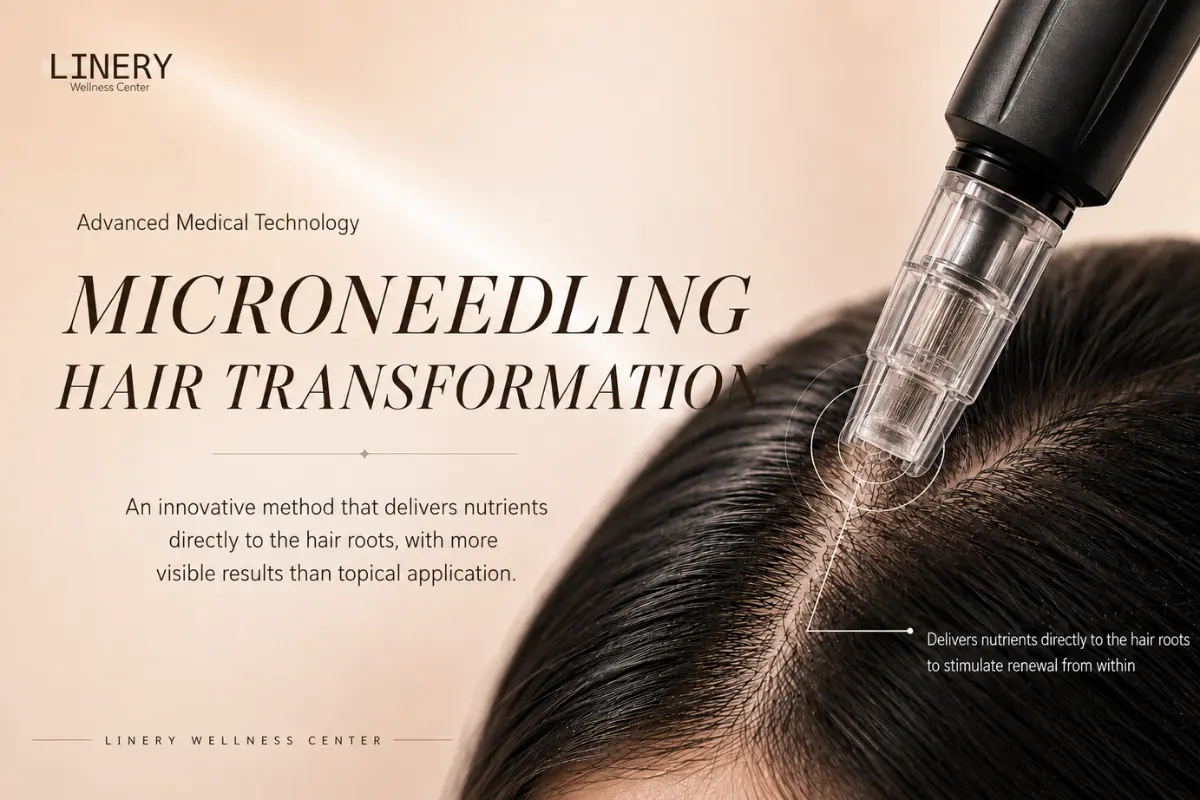
6. Consider Non-Surgical Scalp and Hair-Follicle Treatments
Non-surgical approaches may include microneedling, specialised scalp formulations, low-level light therapy, or platelet-rich plasma. Each option has a different mechanism and set of limitations.
These treatments may aim to support the scalp environment, maintain existing hair, or complement the primary treatment plan when active follicles are still present.
Suitability, treatment frequency, and response vary between individuals. The scalp and hair should therefore be assessed before selecting a procedure.
Read more: Hair Transformation
7. Consider Hair Transplantation When Appropriate
Hair transplantation relocates follicles from an area with sufficient density to an area affected by thinning. It may be suitable for certain stable patterns of permanent hair loss.
Before proceeding, the donor area, severity of thinning, scalp health, and expected progression of the existing hair should be evaluated.
A transplant is not usually the first option for temporary shedding or unexplained hair loss. Some people may also need continued care to protect their existing hair after the procedure.
Choosing a Hair Loss Solution Based on Your Symptoms
Different patterns of thinning hair may require different starting points. This table provides general guidance, but it is not a substitute for diagnosis because the cause and condition of the hair follicles vary between individuals.
| What You Notice | Suggested Starting Point | Further Assessment May Be Needed When |
|---|---|---|
| Dry, brittle, or broken hair after colouring or heat styling | Reduce heat, allow time between chemical treatments, and handle the hair gently | Hair density continues to decrease after damaging habits have been reduced |
| Shedding after illness, surgery, stress, or rapid weight loss | Review possible triggers and support sleep and nutrition | Shedding continues for several months or the scalp becomes more visible |
| A widening part or gradual thinning over the central scalp | Track the changes and assess the thinning pattern | Thinning continues to progress or there is a family history of hair loss |
| Hair loss associated with tight hairstyles, braids, or extensions | Reduce or stop hairstyles that create repeated tension | Pain, bumps, redness, or poor recovery develops in the affected area |
| An itchy, red, flaky, or crusted scalp | Stop potentially irritating products and use gentle scalp care | Symptoms recur or occur with sores, pain, or hair loss |
| Sudden, circular, or patchy hair loss | Consult a doctor for further assessment | Self-treatment and prolonged observation should be avoided |
| Long-standing or advanced thinning with visible scalp areas | Assess follicle health and available medical options | Medication, clinical procedures, or transplantation may need to be considered |
When it is unclear which pattern applies, a hair and scalp assessment may help identify the affected areas, evaluate hair density, and clarify which factors should be considered before planning care.
Which Types of Thinning Hair Can Be Managed With Initial Home Care?
Thinning associated with hair breakage, heat, chemical treatments, or tension from hairstyles may initially be managed by adjusting daily habits and handling the hair gently. However, changes in overall hair density should still be monitored.
Initial care is more appropriate when there is no patchy hair loss, scalp inflammation, or rapid progression. If the condition does not improve or thinning becomes more noticeable, further assessment may be needed.
Dry, Brittle, and Easily Broken Hair
Hair damaged by heat, sun exposure, colouring, or chemical treatments may break along the shaft, making it appear thinner even when the number of follicles has not directly decreased.
Reduce heated styling, allow more time between chemical treatments, and apply conditioning products mainly to the mid-lengths and ends to limit further breakage.
Hair Damage From Tight or Traction Hairstyles
Tight ponytails, braids, extensions, or repeatedly securing the hair in the same position may place tension on the hairline or temples and gradually weaken the affected hair.
Choose looser hairstyles, alternate where the hair is secured, and avoid accessories that pull on or create excessive friction against the hair.
An Oily or Dry Scalp Caused by Unsuitable Care
Harsh products, excessive cleansing, or accumulated product residue may disrupt the scalp’s balance and contribute to oiliness, dryness, or irritation.
Choose cleansing products according to scalp condition, rinse thoroughly, and avoid introducing several new products at the same time.
Flat or Fine Hair That Appears Thinner
Naturally fine or flat hair may appear sparse under bright lighting or with certain hairstyles. This does not always mean that the number of active follicles has decreased.
Volumising products and suitable hairstyles may temporarily create a fuller appearance. Consistent photographs can help determine whether the part line or visible scalp area is genuinely changing.
How Long Should You Track the Changes?
Photograph the same area under similar lighting and from the same angle every one to two months. Record whether shedding increases or scalp symptoms develop.
If thinning continues despite reducing damaging habits, or the part line widens and the scalp becomes increasingly visible, further assessment is more appropriate than repeatedly changing products.
When Should You Avoid Waiting to See Whether Thinning Hair Improves?
Hair thinning or shedding that develops rapidly, occurs in patches, or appears with abnormal scalp symptoms should be assessed by a doctor. Some patterns may require investigation and targeted care rather than prolonged observation.
Seeing a doctor does not necessarily mean that the condition is severe. An assessment helps distinguish temporary shedding from concerns that may require medication, testing, or an individual treatment plan.
Rapid Hair Shedding or Thinning
When hair density decreases noticeably within a few weeks or months, consider whether it began after illness, surgery, rapid weight loss, a new medication, or significant physical stress.
Some cases may be related to temporary triggers. However, rapid progression should be assessed, particularly when the scalp becomes increasingly visible or shedding continues.
Circular or Patchy Hair Loss
Circular or clearly defined areas of hair loss differ from gradual thinning across the scalp. Avoid relying on shampoos, serums, or supplements while waiting for the hair to recover without an assessment.
Observe whether the affected skin appears smooth, contains short broken hairs, or involves several areas. This information may be useful during a medical evaluation.
An Itchy, Red, Painful, or Damaged Scalp
Itching, burning, pain, bumps, crusting, discharge, or sores may suggest scalp inflammation or another concern that requires further care.
Avoid scratching, removing crusts, or applying harsh products. These actions may increase irritation and make the scalp’s original condition more difficult to assess.
Thinning Hair With Other Physical Symptoms
Tell a doctor when thinning hair occurs with fatigue, heart palpitations, unusual weight changes, menstrual changes, or other health symptoms.
These signs do not confirm any specific condition. However, they may help the doctor decide whether further history-taking, examination, or testing is appropriate.
Hair Thinning After Starting Medication or Treatment
Certain medications and treatments may affect the hair growth cycle in some individuals. Do not stop, reduce, or change prescribed treatment without medical advice.
Record the medication name, the date it was started, and when the shedding began. The prescribing doctor can then assess whether the timing may be related and discuss appropriate options.
Ongoing Thinning With a Noticeable Loss of Density
A progressively widening part, thinning over the central scalp, or increasingly visible scalp areas should be assessed even when excessive daily shedding is not obvious.
Evaluation while hair still covers the area may make it easier to track progression, plan care, and compare changes systematically rather than waiting until thinning becomes advanced.
Can Thinning Hair Become Fuller Again?
Some types of thinning hair may regain density when the trigger is addressed and the follicles can still produce hair. The likelihood of recovery depends on the cause, how long the problem has been present, and the extent of follicle damage.
Hair that does not return immediately does not necessarily mean that care has been ineffective. Changes occur according to the natural hair growth cycle, so shedding, hair shaft thickness, and density in the affected area should be monitored together.
Thinning Hair Caused by Temporary Factors
Thinning that develops after stress, illness, surgery, rapid weight loss, or physical changes may improve when the trigger resolves and overall health returns to balance.
Other contributing factors should still be considered. When shedding continues or density keeps decreasing, further assessment is more appropriate than assuming the condition is temporary.
Hereditary or Hormone-Related Thinning
Hereditary thinning usually progresses gradually. Individual hairs may become finer and provide less scalp coverage over time. Care may therefore focus on slowing progression, preserving existing hair, and supporting follicles that can still respond.
Starting care at an earlier stage may help preserve more active follicles. However, the original hair density may not be restored in every case.
When Hair Follicles Are Damaged or No Longer Active
When follicles have been destroyed or completely replaced by scar tissue, the affected area may no longer produce hair normally. Standard hair-care products are unlikely to restore growth from a destroyed follicle.
Scalp inflammation and signs of scarring should therefore be assessed early. Regrowth becomes more difficult once permanent follicle damage has occurred.
How Can You Tell Whether the Follicles Are Still Active?
Follicle activity cannot be confirmed by visual inspection alone. An assessment may consider the thinning pattern, hair shaft diameter, scalp condition, duration of symptoms, and additional tests when appropriate.
The presence of fine hairs in a thinning area may suggest that some follicles remain active. A doctor should still evaluate the area before medication, clinical procedures, or hair transplantation are considered.
Read more: Can Hair Loss Be Treated
Common Misconceptions About Thinning Hair Solutions
Some approaches can improve the appearance of the hair, but this does not mean they increase the number of follicles or treat every cause of thinning. Distinguishing cosmetic improvement from treatment of the underlying cause helps prevent unrealistic expectations and unsuitable care.
Does Cutting or Shaving the Hair Make It Grow Back Thicker?
Cutting or shaving does not increase the number of hair follicles or stimulate the production of additional hairs. The visible hair shaft is above the skin, so trimming it does not change follicle activity underneath.
Newly cut ends may feel firmer and look thicker because they are blunt. This creates a temporary fuller appearance but does not increase actual hair density.
Can an Expensive Shampoo Treat Every Type of Thinning Hair?
The main purpose of shampoo is to cleanse the hair and scalp. Certain formulas may help manage oil, remove residue, or make the hair appear more voluminous.
However, ordinary shampoo cannot address every genetic, hormonal, or health-related cause of thinning hair. A higher price does not necessarily mean that the product is appropriate for every condition.
Will Biotin or Vitamins Make the Hair Thicker?
Vitamins and minerals may be helpful when a genuine deficiency is present. Taking additional supplements without a confirmed need does not make the hair thicker in every person.
Some supplements may interfere with laboratory test results or lead to excessive nutrient intake. Their use should be considered alongside diet, medical history, and appropriate professional advice.
Should You Avoid Washing Your Hair to Reduce Shedding?
Washing does not normally cause healthy follicles to release their hair. Strands seen during washing are often hairs that have already entered the shedding phase and are removed by water or gentle contact.
Wash according to scalp oiliness and individual needs using a gentle technique. Allowing excess oil, sweat, or styling products to accumulate may irritate the scalp in some people.
Will One Clinical Treatment Make the Hair Immediately Fuller?
Hair follows a growth cycle that takes time. A clinical procedure should not be expected to create an immediate and noticeable increase in density after a single session.
The number of sessions and follow-up period depend on the treatment, cause of thinning, and individual response. Some approaches may also need to complement primary treatment or ongoing care.
Will the Same Treatment Produce the Same Result as Someone’s Review?
Another person’s results cannot predict your own. The pattern of thinning, follicle condition, age, genetics, and any accompanying treatment may all be different.
Reviews can provide supporting information, but decisions should also consider the treatment mechanism, limitations, possible risks, and suitability for the individual’s hair and scalp.
How Long Does a Hair Loss Solution Take to Work?
Thinning hair should be evaluated over months rather than a few days or weeks. Hair must progress through its natural growth cycle, and the response time varies according to the cause, chosen treatment, and condition of the follicles.
Some people may notice less shedding first, while visible improvements in density or new growth may take longer. Results should not be judged from the amount of hair seen during a single wash.
Why Does Hair Change Slowly?
Individual hairs do not grow at the same time. They continuously move through growth, resting, and shedding phases, so the hair may need time to enter a new cycle even after a trigger has been addressed.
Progress includes more than visible new hairs. Reduced shedding, stronger existing strands, and stabilised density around the part line or central scalp may also be relevant changes.
Do All Treatments Take the Same Amount of Time?
Changing daily habits may reduce breakage relatively early, but changes in overall density require longer monitoring. Certain medications and medical treatments may need to be used consistently for several months before their response can be properly assessed.
For example, minoxidil used for certain types of thinning hair may take approximately 6–12 months to produce assessable results. Hair transplant results are often seen at around 6–9 months, although individual timelines vary.
How Should Progress Be Monitored?
Use a consistent method, such as photographing the same area from a similar angle and under similar lighting every one to two months. Compare the width of the part line and the amount of visible scalp.
When using medication or undergoing clinical treatment, record the starting date, consistency of use, irritation, and any other treatments used at the same time. This makes it easier to understand which approach may be associated with the changes.
Avoid Changing Treatments Too Frequently
Introducing several products, medications, or procedures within a short period may make it difficult to identify which approach is suitable or which one is causing irritation.
Follow the recommended evaluation period unless side effects or unusual symptoms develop. In that situation, follow the given safety instructions and contact the treating professional rather than waiting for the next appointment.
When Should the Care Plan Be Reassessed?
A reassessment may be appropriate when thinning continues to progress, shedding increases, or no meaningful trend is observed after following the plan consistently for the recommended period.
The review may consider whether the original cause remains likely, how consistently the plan was followed, whether health factors have changed, and whether another approach should be adjusted or added under professional guidance.
How Does a Hair and Scalp Assessment Help Select the Right Solution?
A hair and scalp assessment helps distinguish between hair breakage, reduced density, scalp abnormalities, and concerns caused by several factors. This information supports a more appropriate care plan than relying on appearance alone.
The purpose is not only to determine the severity of thinning. It also establishes a baseline for monitoring whether the condition remains stable, improves, or continues to progress after care begins.
Reviewing Medical History and Relevant Factors
A doctor may ask when the thinning began, how it has changed, whether hair loss runs in the family, and whether illness, childbirth, rapid weight loss, stress, or medication may be relevant.
This information helps connect the symptoms with possible triggers and determine whether the next step should involve lifestyle changes, additional testing, or targeted treatment.
Examining the Scalp and Hair Density
The examination may assess oiliness, dryness, inflammation, scaling, scarring, and the appearance of follicular openings. Hair density can also be compared across different areas of the scalp.
Some people have breakage that creates the appearance of thinning, while others have finer hairs or a genuine reduction in density. Distinguishing these patterns affects the choice of care.
Assessing the Pattern and Likely Follicle Activity
A doctor may examine hair shaft diameter, differences between affected and unaffected areas, and the presence of fine hairs within regions of reduced density.
Magnified scalp examination may provide useful information about follicle activity. However, it should not be used alone to confirm the cause and may need to be considered with medical history, symptoms, and additional testing.
Deciding Whether Additional Tests Are Needed
Blood tests and other medical investigations are not required for everyone with thinning hair. The decision depends on the pattern, medical history, and accompanying symptoms.
Testing for anaemia, thyroid function, or nutritional factors may be considered when the available information suggests that these issues could be relevant.
Creating a Care Plan Based on Severity
The assessment may indicate whether care should begin with habit changes, scalp management, products, medication, clinical procedures, or referral for another treatment option.
Some people may need only one approach, while others may benefit from a combination based on the cause and severity. It is not always necessary to begin several treatments at the same time.
Establishing a Baseline for Follow-Up
Before treatment begins, photographs, part-line width, density in key areas, and scalp symptoms can be recorded for future comparison.
Using similar angles, lighting, and hair parting during follow-up makes changes easier to assess and reduces reliance on memory or photographs taken under different conditions.
Hair Transformation Programme at Linery Wellness
Hair Transformation is a non-surgical hair and scalp care approach that begins with an assessment of scalp condition, hair density, and relevant contributing factors. The programme aims to support the scalp environment and care for existing hair in areas where follicles remain active.
The Linery Wellness approach combines scalp assessment, microneedling with a specialised serum, and low-level light therapy. Suitability and treatment frequency depend on the individual thinning pattern and assessment findings.
Hair and Scalp Assessment
Before the programme begins, the history, scalp condition, hair density, and location of thinning are reviewed. This helps distinguish between breakage, increased shedding, and a genuine reduction in hair density.
The assessment supports decisions about treatment frequency and the care plan. It does not replace medical diagnosis, and referral for further evaluation may be recommended when concerning signs are identified.
Microneedling With a Specialised Scalp Serum
This step uses controlled microneedling on the scalp together with a specialised serum to support scalp and hair care in the selected areas.
The depth, treatment area, and frequency should be adjusted to scalp condition. Unsuitable devices or overly frequent treatment may increase the risk of irritation or inflammation.
Low-Level Light Therapy
Low-level light therapy may be used after scalp care as a complementary part of the programme to support the scalp environment.
Light therapy is not appropriate for every cause of thinning hair and should not replace treatment for underlying health factors or medication considered necessary by a doctor.
Who May Be Suitable for Assessment?
The programme may be considered by people who notice progressive thinning, a widening part, reduced density over the central scalp, or those seeking a non-surgical hair-follicle care option.
People who have previously undergone hair transplantation may also be assessed for additional care of their existing hair. The timing after transplantation and advice from the treating doctor should be considered.
Limitations and Points to Consider
This programme is intended for areas where active follicles are still present. Non-surgical care may have limitations when follicles have been destroyed, replaced by scar tissue, or are no longer present.
Response, treatment duration, and the number of sessions vary between individuals. Progress should be evaluated through consistent photographs, hair-density changes, and scalp condition rather than expecting a significant result from one session.
Frequently Asked Questions About Hair Loss Solutions
Can Thinning Hair Be Managed at Home?
Thinning associated with unsuitable hair care, heat damage, or repeated tension may initially be managed by changing daily habits. Further assessment is advisable when the part line continues to widen, density progressively decreases, or the cause remains unclear.
Should You Wash Thinning Hair Every Day?
Washing frequency should depend on scalp oiliness, daily activities, and individual scalp condition. An oily scalp may require more frequent cleansing than a dry scalp, using gentle products and avoiding aggressive scratching.
Washing less often does not necessarily stop shedding. Hairs seen during washing may already have entered the natural shedding phase.
Can Anti-Hair-Loss Shampoo Treat Thinning Hair?
Shampoo can cleanse the scalp, manage oil, or support certain scalp conditions. However, it cannot address every genetic, hormonal, or health-related cause of thinning hair.
Choose shampoo according to scalp needs and distinguish between improvements in cleanliness, softness, or volume and a genuine increase in hair density.
Should You Take Vitamins or Supplements for Thinning Hair?
Vitamins and supplements may be useful when a nutritional deficiency is present. They should not be taken randomly because thinning hair is not always caused by inadequate nutrient intake.
People following restrictive diets, experiencing rapid weight loss, or concerned about nutrient deficiency should seek medical advice before choosing supplements.
Should You Start Hair-Loss Medication on Your Own?
Topical or oral medication should not be started without understanding the type of hair thinning. Some treatments are intended for specific conditions and may have limitations related to sex, medical history, or pregnancy plans.
Treatment decisions should include clear information about use, side effects, follow-up periods, and whether ongoing treatment may be required.
Can Hereditary Hair Thinning Be Managed?
Hereditary thinning may be managed by slowing progression, preserving existing hair, and supporting follicles that can still respond. The degree of improvement varies between individuals.
An earlier assessment may provide more options than waiting until a large amount of density has already been lost.
How Long Should You Wait After Postpartum Hair Shedding?
Postpartum shedding may be associated with changes in the hair cycle following hormonal shifts. Its duration and severity are not the same for everyone.
Consult a doctor when heavy shedding continues, density does not begin to recover, or symptoms such as fatigue, unusual weight changes, or other health concerns occur at the same time.
When Should Hair Transplantation Be Considered?
Hair transplantation may be considered when the pattern is relatively stable, the donor area has sufficient density, and other approaches do not meet the individual’s goals.
The decision should not be based on severity alone. Age, cause, scalp health, and the expected progression of existing hair should also be assessed.
What Should Be Assessed Before Hair Transformation?
The assessment should review the location and pattern of thinning, hair density, scalp condition, duration of symptoms, and relevant health factors.
This information helps determine whether a non-surgical approach is suitable and supports decisions about the treatment area, frequency, and individual follow-up period.
How Can You Arrange a Hair Assessment at Linery Wellness in Thonglor?
An appointment can be scheduled with Linery Wellness Center for a consultation and hair and scalp assessment in the Thonglor Soi 15 area of Bangkok.
Contact the clinic in advance to confirm opening hours, booking channels, directions, and any information to prepare before the appointment.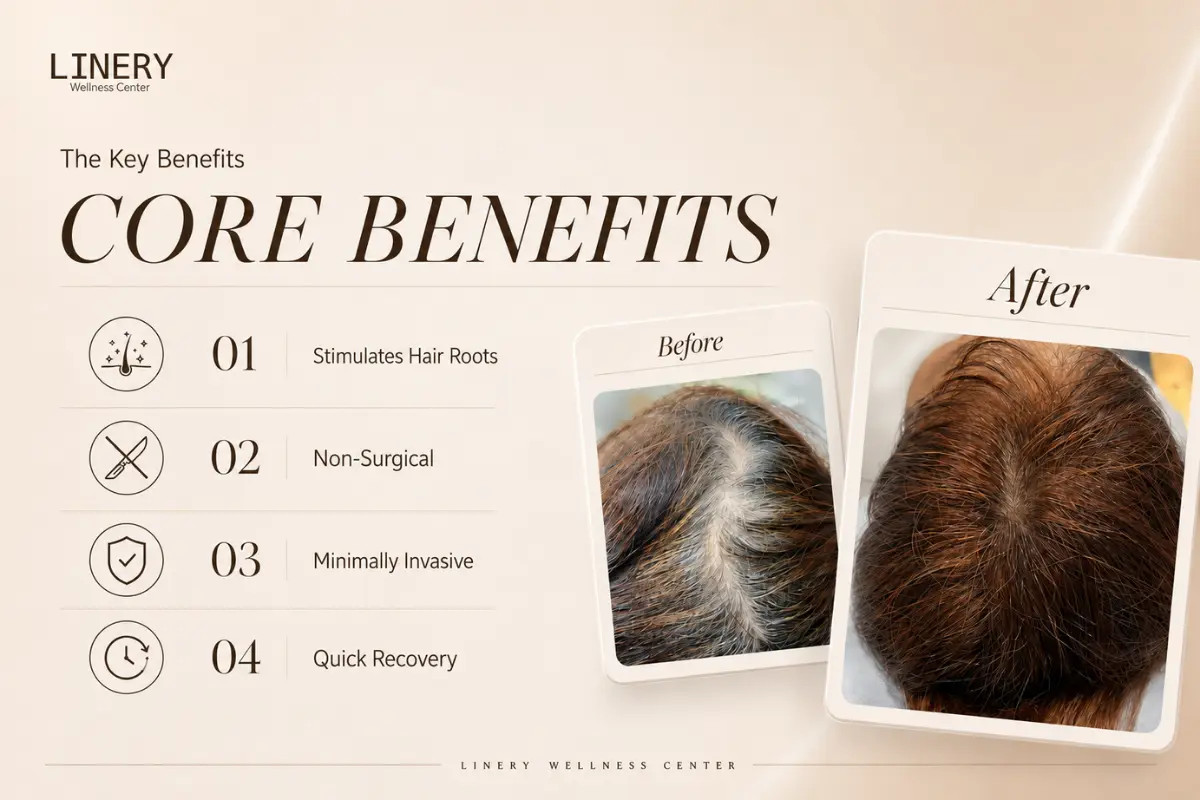
Conclusion: Choose a Hair Loss Solution That Matches the Problem
Thinning hair can be managed in several ways, but the chosen approach should reflect the cause, thinning pattern, and condition of the hair follicles. Initial care may include changing damaging habits, supporting nutrition, and selecting products suited to the scalp.
When thinning continues, the part line widens, or the scalp becomes increasingly visible, a hair and scalp assessment should be considered before starting medication, clinical procedures, or hair transplantation. This supports a more suitable individual care plan.
People seeking a non-surgical hair-follicle care option may schedule an assessment at Linery Wellness Center in Thonglor to discuss the condition, limitations, and available options before beginning treatment.
Schedule a hair and scalp assessment at Linery Wellness Center to discuss an individual care plan based on your hair-follicle condition.
Results may vary between individuals. Please consult a doctor for advice appropriate to your condition.
References
- AADA: Hair Loss: Who Gets and Causes.
- AADA: Hair Loss: Diagnosis and Treatment.
- AADA: Hair Loss: Tips for Managing.
- AADA: Do You Have Hair Loss or Hair Shedding?
- Pubmed: Efficacy and Safety of Combined Microneedling Therapy for Androgenetic Alopecia: A Systematic Review and Meta-analysis. Journal of Cosmetic Dermatology. 2024.
- Pubmed: Low-Level Laser and LED Therapy in Alopecia: A Systematic Review and Meta-analysis. Dermatologic Surgery. 2025.
- Pubmed: The Role of Platelet-Rich Plasma in Androgenetic Alopecia: A Systematic Review. Journal of Cosmetic Dermatology. 2024.