What is the difference between silicone gel and sheets?
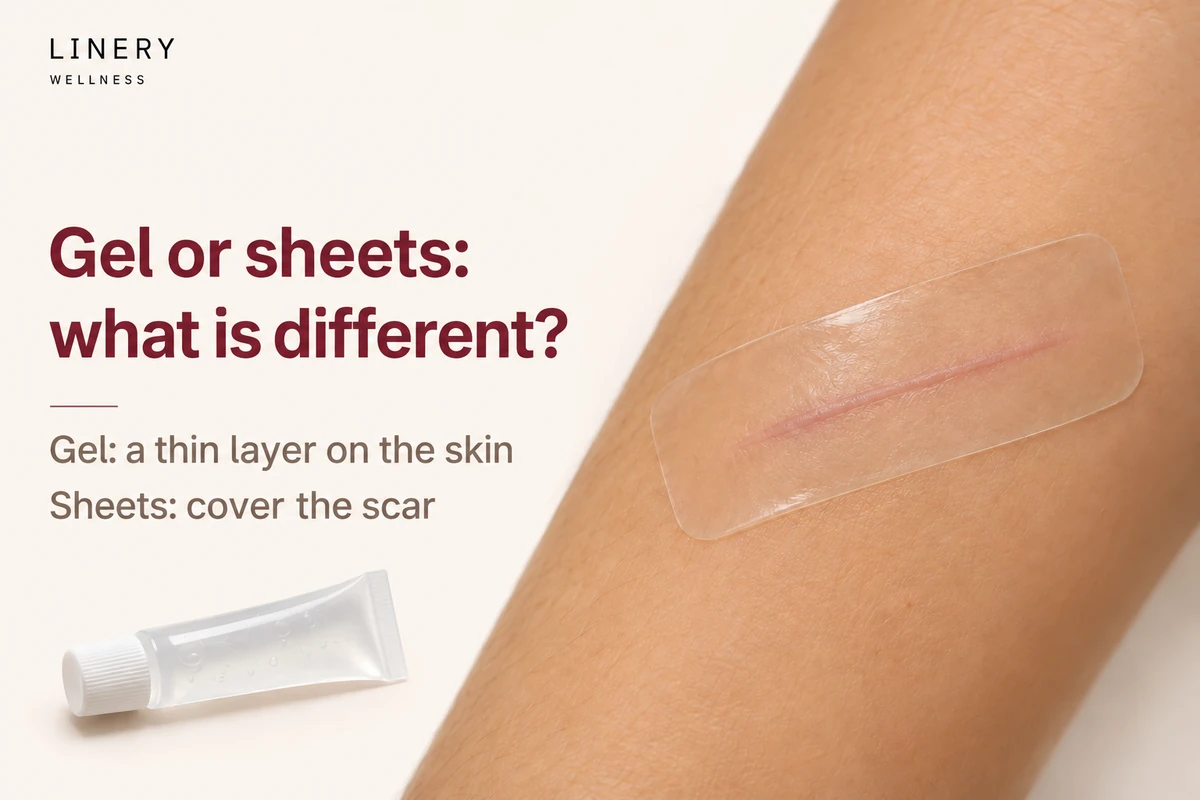
Both help maintain moisture around the scar. The main everyday difference is how you apply and wear them.
Silicone gel is spread thinly over the scar and left to dry. There is no patch to keep in place, but you need to allow drying time and reapply it as directed.
Silicone sheets are soft patches placed over the scar. Some can be washed and reused. They need to sit comfortably against the skin, and you must remove them regularly to clean the sheet and check your skin.
Check that the product is intended for scar care on healed skin. A wound dressing that contains silicone is not necessarily the same as a silicone scar sheet.
Which surgical scars can silicone help?
Silicone may help soften and flatten raised scars and reduce itching. It is also used as part of care to help prevent raised scarring after surgery. It cannot guarantee an invisible scar.
- Hypertrophic scars are raised but stay within the original wound.
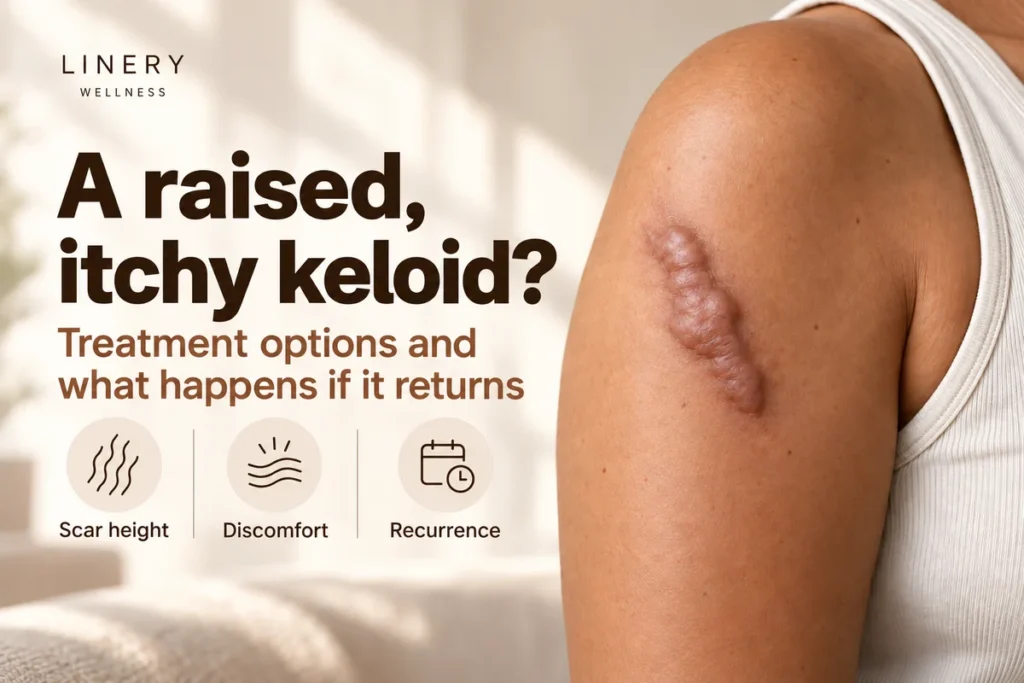
- Keloids grow beyond the original wound and may need additional treatment. A doctor can assess the scar and discuss suitable options.
- Flat dark marks or indented scars need a different assessment. Do not assume silicone will address them in the same way as a raised scar.
Although silicone is widely used, some studies have limitations. It should not be presented as a guaranteed way to prevent raised scars in everyone.
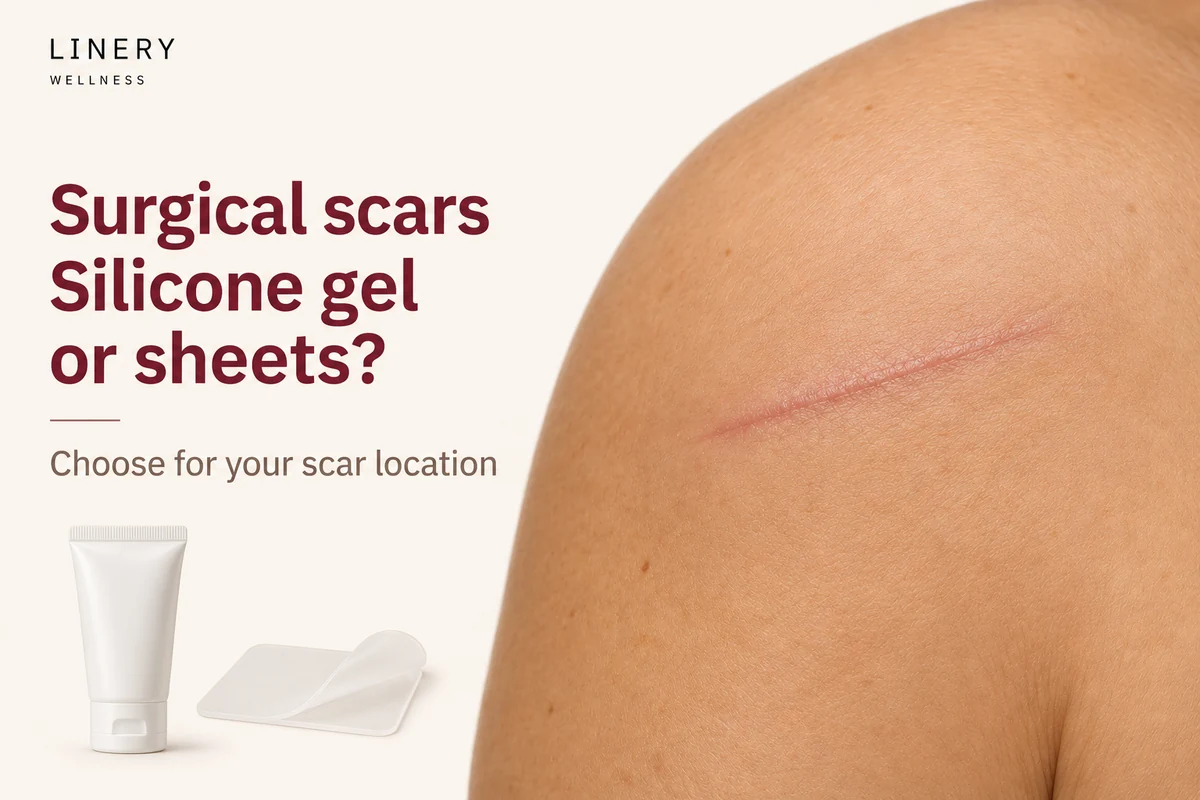
Which option suits your scar’s location?
These are practical considerations rather than rules about which treatment works best.
On the face or another visible area: Gel may be less noticeable. Let it dry before applying sunscreen or makeup, and check the product instructions first.
Near a joint or skin fold: Consider whether a sheet stays flat as you move. If its edges repeatedly lift or roll, gel may be easier to use consistently.
On the abdomen or under clothing: A sheet may be convenient if it covers the scar comfortably without rubbing or slipping. Gel is an alternative if wearing a patch feels uncomfortable.
In Thailand’s hot weather, consider whether sweat or daily activities make a sheet difficult to keep clean and in place. Choose a routine you can follow without irritating your skin.
If your surgeon has prescribed tape or another dressing, do not replace it with silicone without checking first.
When can you start after surgery?
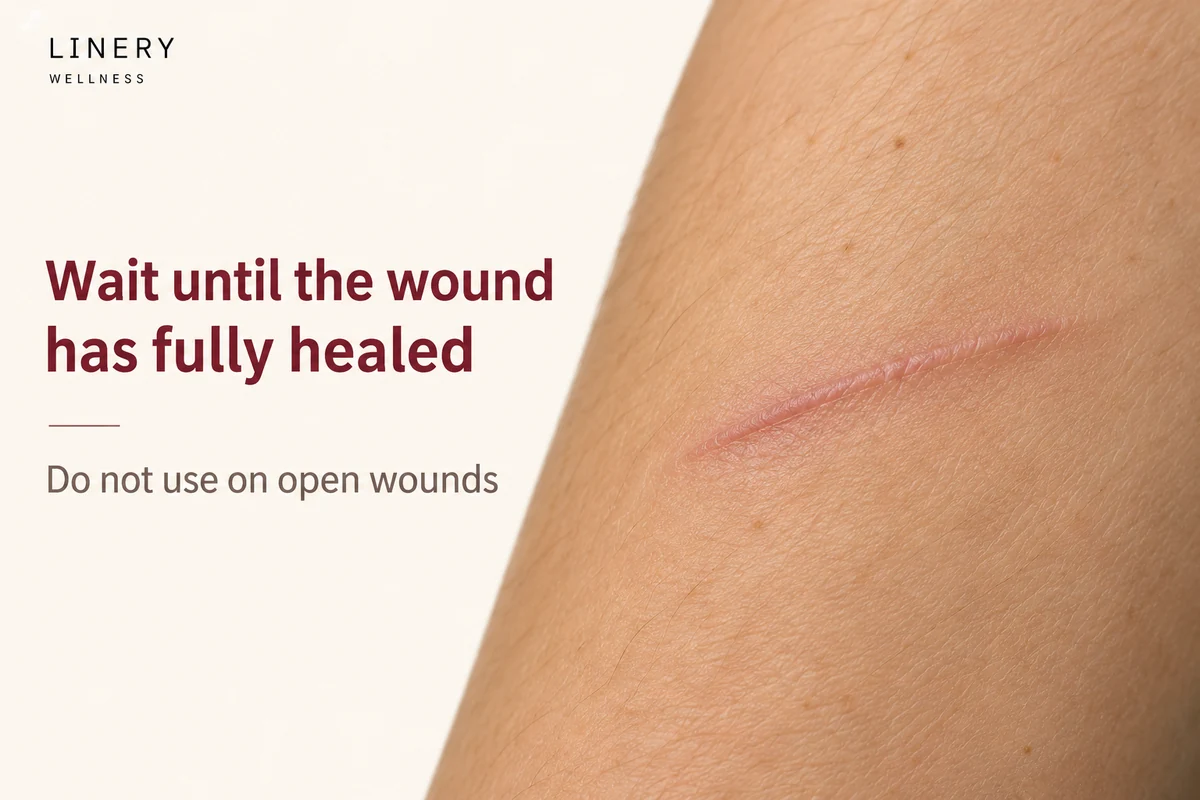
Wait until the wound is fully closed and healed. Having stitches removed does not necessarily mean every part of the wound is ready.
Do not apply scar-care silicone to open areas or a wound that is bleeding or leaking fluid. If scabs, surgical glue or dressings remain, ask your surgical team when you can begin. Do not pick or remove them to make room for a scar product.
Silicone scar care does not replace wound dressings or treatment for an infection.
How to use silicone gel and sheets
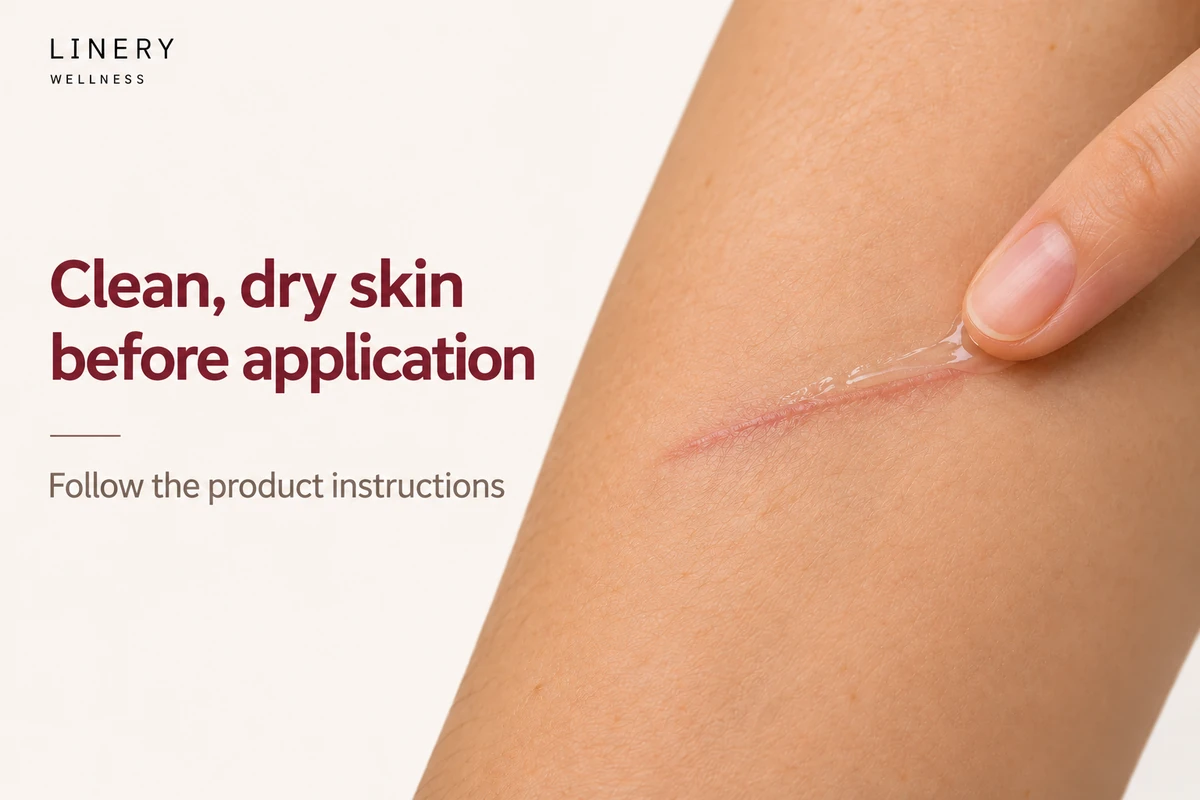
Using silicone gel
- Clean the area and dry it gently.
- Spread a thin layer over the scar.
- Let it dry before covering it with clothing or applying other products.
- Reapply according to the label or your clinician’s instructions.
More is not necessarily better. If the gel stays sticky, check the recommended amount rather than adding another layer.
Using silicone sheets
- Start with clean, dry skin.
- Use a size that covers the scar, following the product instructions.
- Apply without stretching the sheet or pulling the skin.
- Follow the recommended wear time rather than immediately wearing it all day.
- Remove it regularly to check your skin and clean it as instructed.
Reuse and replacement schedules vary. Follow the instructions for your particular product rather than assuming every brand has the same wear time or lifespan.
Can you use gel by day and sheets at night?
Before alternating, check both products’ instructions or ask your clinician or pharmacist how to fit them into one routine. Using two formats does not necessarily produce better or faster results.
Clean off residual gel and dry the skin before applying a sheet. Do not layer a sheet over freshly applied gel unless the specific instructions permit it; sheets should normally go onto clean, dry skin.
If one format is comfortable and suits your routine, you do not need to buy both simply to make treatment more complete.
How long does treatment take?
Think in months, not days. The time needed depends on the type and age of the scar and how your skin responds. Follow the product instructions or your clinician’s advice and review your progress regularly.
Look for changes in softness, height and discomfort, not just colour. Photos taken occasionally in similar lighting may make gradual changes easier to compare.
Scars also change naturally over time, so not every improvement can be attributed to a product. Once the skin has healed, protect the scar from the sun with clothing or sunscreen of at least SPF 30.
Can silicone help an older scar?
Age alone does not tell you whether silicone is appropriate. Consider whether the scar is still raised, thick, firm or itchy. A longstanding raised scar needs a different assessment from an old scar that is flat but darker, lighter or indented.
If the scar has been present for years, ask a doctor about its type and realistic options before buying a product. The aim is improvement, not a promise to restore completely unmarked skin.
What if your skin becomes itchy or irritated?
Stop using the product if you develop a rash, burning or soggy, softened skin beneath a sheet. Remove the sheet, gently clean the area and dry it. Do not keep wearing it simply to meet the recommended hours.
Ask your clinician or pharmacist before restarting, especially if irritation persists or keeps returning. You may need a different routine or treatment.
Seek prompt medical care if the area becomes swollen, hot, increasingly painful or produces pus. These symptoms should not be dismissed as a reaction to the product.
When should you see a doctor?
Do not wait months if the scar keeps growing, spreads beyond the original wound, becomes painful or restricts movement.
It is also worth having it reviewed if consistent use has not helped. Bring the product and any comparison photos so your doctor can assess both the scar and your routine. Some scars need additional treatment rather than simply changing from gel to sheets.
The best place to start is to ask: Has my wound healed, what type of scar do I have, and which option can I use comfortably as directed?
References
- American Academy of Dermatology: Scars—Diagnosis and treatment
- Cochrane: Silicone gel sheeting for hypertrophic scars
- Great Ormond Street Hospital: Scar care after surgery
- South Tees Hospitals: Scar management
- Chelsea and Westminster Hospital: Silicone gel sheets
- Cambridge University Hospitals: Silicone for scars
- NHS: Scars