Do keloids go away on their own?
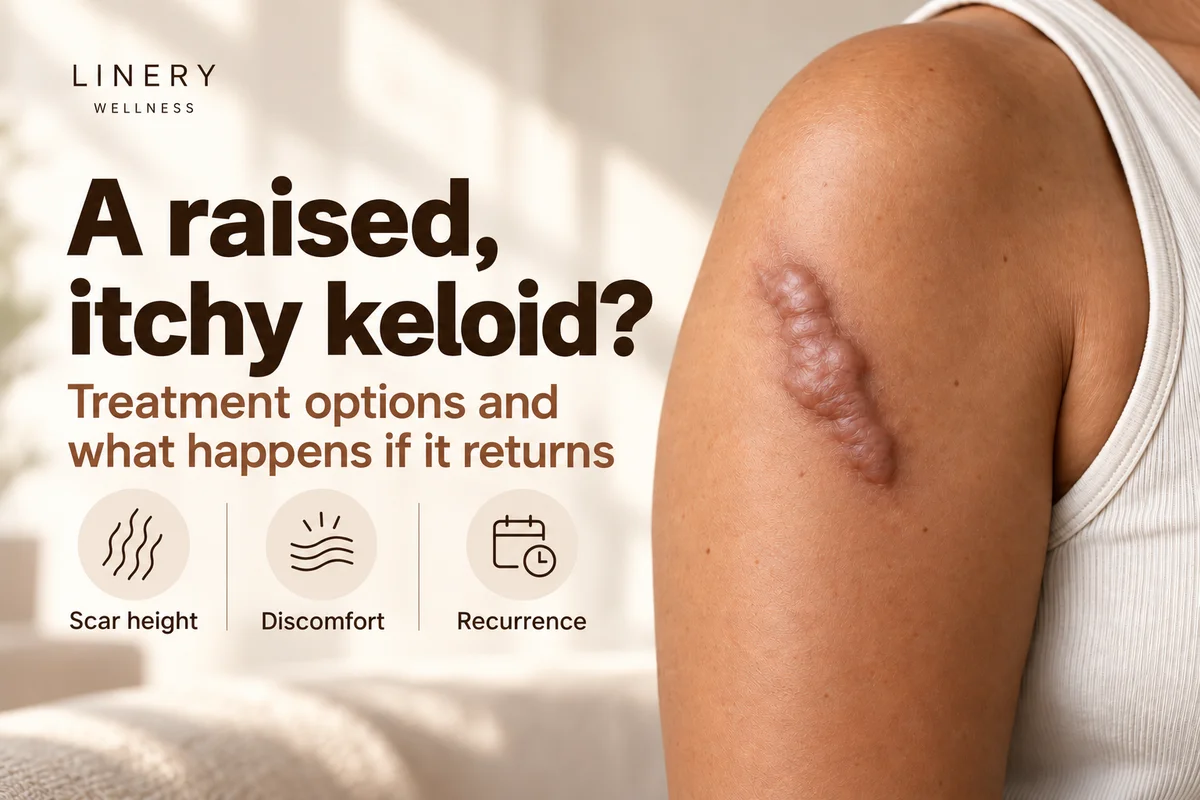
Keloids usually do not disappear on their own, even if they stop growing. Treatment may help reduce their height and discomfort.
A keloid can grow beyond the original wound. A hypertrophic scar usually stays within it, but some scars look similar. Have the scar checked before choosing treatment. Our raised scar guide explains the difference.
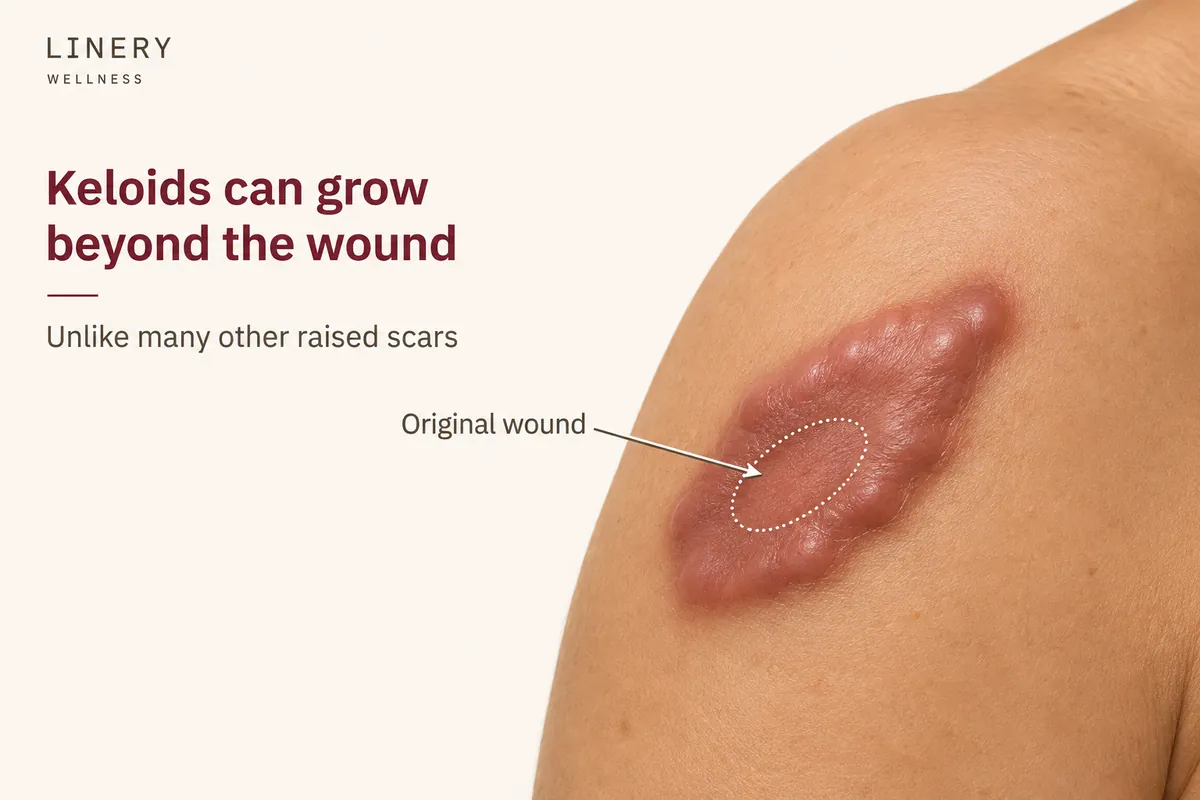
What treatments can help flatten a keloid?
Treatment may flatten or soften a keloid and ease itching or pain. It may not remove the scar completely, and it can grow back. Your clinician will consider its size, location, your skin tone and previous treatment. Some scars need more than one treatment.
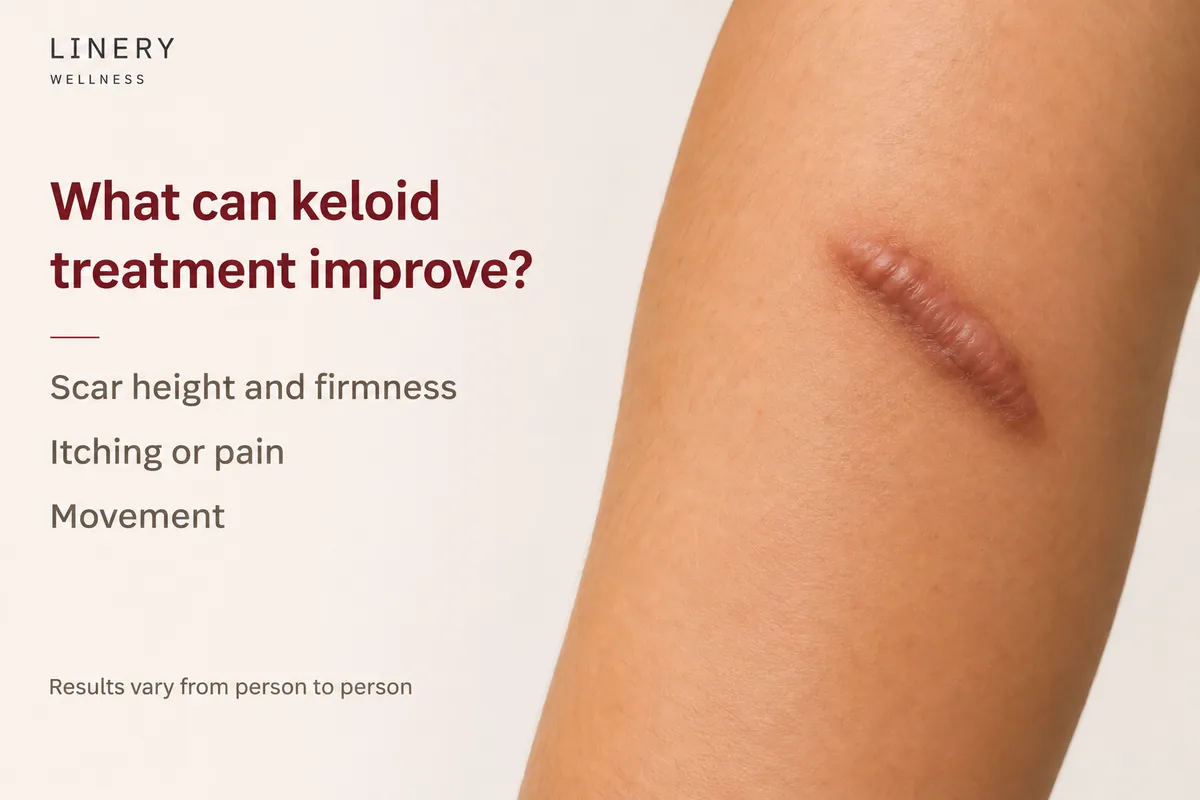
Options include injections, silicone, pressure devices, laser, freezing and surgery. Not every option suits every scar.
Silicone sheets and pressure devices
These may be used alongside other treatments. Evidence that silicone sheets reliably flatten established keloids is still uncertain. Use sheets only on fully healed skin, following your clinician’s and the product’s instructions. Do not apply them over an open wound or scab.
Laser, freezing and surgery
Some lasers may help scar colour or height. Freezing is an option for selected scars. Both can cause skin colour changes, particularly lighter patches after freezing.
Surgery removes the scar but does not guarantee it will not return, so recurrence prevention needs to be planned. Radiation after surgery is considered in some cases, with a specialist weighing the benefits and longer-term risks.
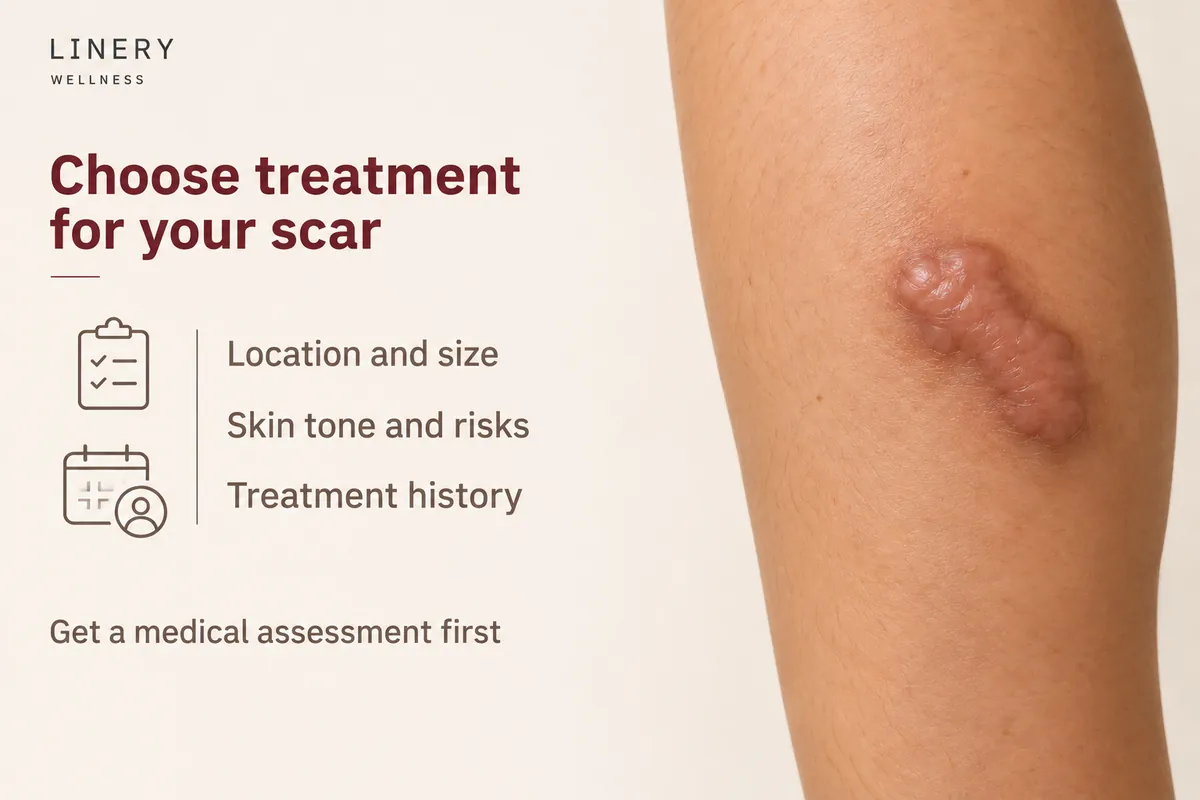
How many keloid injections will you need?
There is no fixed number. Treatment usually takes several visits, with the plan adjusted to your response. Itching may ease or the scar may soften before it looks flatter. Another treatment may also be needed.
Medicines such as corticosteroids may reduce scar height and itching. Possible side effects include skin thinning, colour changes and visible small blood vessels. Injections must be given by a clinician, not attempted at home.
Can a keloid come back after treatment?
Yes. A keloid can return even after it has flattened. If it thickens, itches or hurts again, have it reassessed. Repeating the same treatment is not always the best next step.
Ask about follow-up and who to contact if a problem develops. If you are visiting Bangkok or travelling home after treatment, arrange follow-up in advance and confirm the language available for consultations and aftercare.
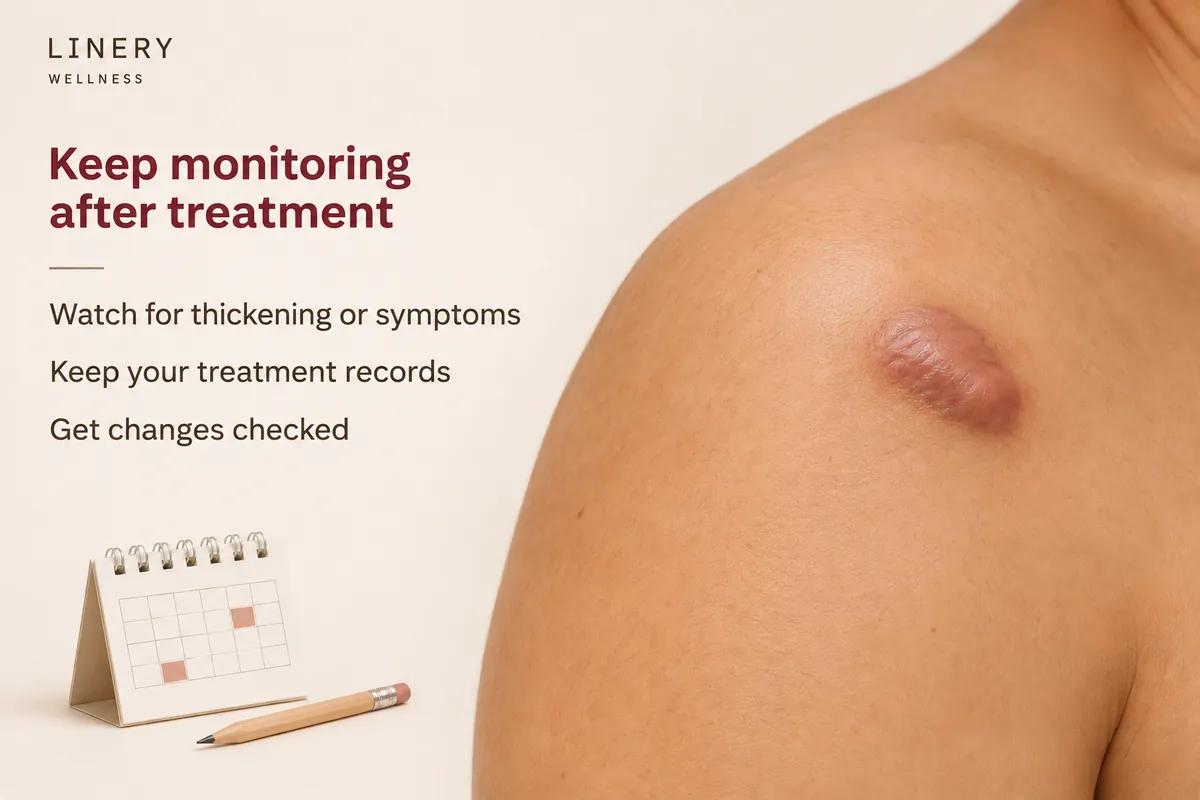
When should you see a clinician about a keloid?
See a clinician if the scar keeps growing, itches, hurts or limits movement. A scar that breaks open, bleeds or develops a wound that will not heal also needs assessment.
Bring earlier photos, treatment records and the names of any medicines injected into the scar. Note when it started growing, when it improved or returned, and any side effects. Useful questions include:
- How much might this treatment help the height, itching or pain?
- What are the risks, and what follow-up will I need?
- What does the price cover? Are follow-up or referral fees extra?
Can you have microneedling if you have keloids?
The American Academy of Dermatology (AAD) advises against microneedling if you have, or have ever had, a keloid. Tell your provider about this history before any procedure. This article does not recommend Scar Regen for keloid treatment.
Contact Linery before booking to check whether it can assess your keloid or whether you need another service. The treatments described here are not a list of services available at the clinic.