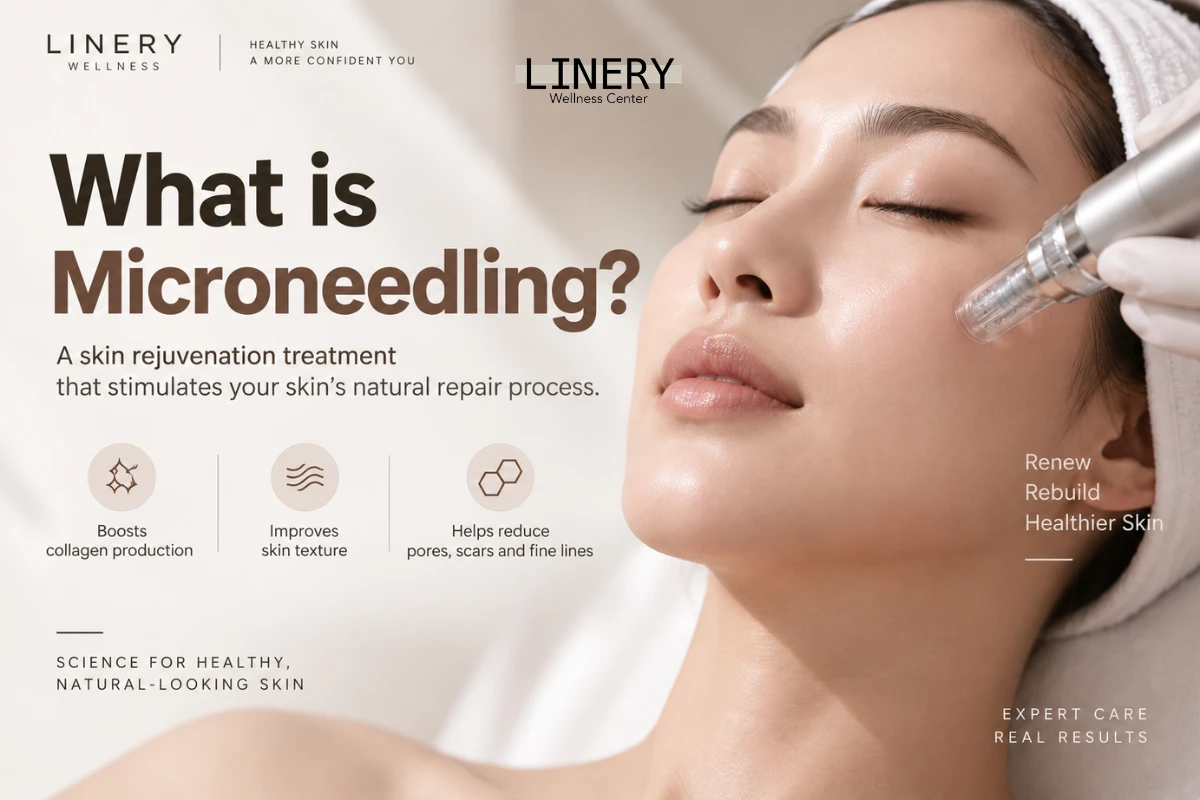
Microneedling is a skin rejuvenation technique that uses very fine needles to create controlled microchannels in the skin. This triggers the skin’s natural repair response and supports new collagen and elastin production.
It is commonly used to improve uneven skin texture, visible pores, fine lines, and certain types of scars. Results and recovery can vary depending on the device, needle depth, treatment area, and individual skin condition.
Quick Answer: What Is Microneedling?
- Microneedling uses fine needles to create controlled microchannels in the skin.
- It stimulates the skin’s natural healing process and supports collagen and elastin production.
- It may help improve visible pores, uneven texture, fine lines, and certain types of acne scars.
- Different types include traditional microneedling, microneedling pens, and RF microneedling.
- Temporary redness, tightness, or mild irritation may occur after treatment.
- The number of sessions needed depends on the skin concern and treatment depth.
Insight Guide: What Is Microneedling? Benefits, Risks & Aftercare
What Is Microneedling?
Microneedling, also known as Collagen Induction Therapy, is a minimally invasive technique that creates tiny, controlled channels in the skin using fine needles.
These microchannels trigger the body’s natural repair process, encouraging the production of collagen and elastin. Over time, this can help improve skin texture, firmness, and overall skin quality.
Microneedling is used for several skin concerns, including enlarged pores, mild acne scars, fine lines, and uneven skin texture. The appropriate technique and needle depth should be selected according to the individual’s skin condition and treatment goals.
How Does Microneedling Work?
Microneedling creates controlled microchannels in the skin using fine needles. These tiny injuries trigger the skin’s natural repair response without relying on heat.
Creating Controlled Microchannels
The needles create very small channels in the skin at a controlled depth. This signals the body to begin repairing the treated area.
The Skin’s Natural Healing Response
As the skin repairs itself, new tissue is formed and the skin structure gradually becomes smoother and stronger.
Collagen and Elastin Production
Microneedling supports the production of collagen and elastin, two key proteins that help maintain skin firmness, elasticity, and texture.
Some treatments also combine microneedling with serums or skin boosters to deliver active ingredients through the temporary microchannels.
What Are the Benefits of Microneedling?
Microneedling may help improve several common skin concerns by supporting collagen production and skin remodeling. Results vary depending on the skin condition, treatment depth, and number of sessions.
Enlarged Pores and Uneven Skin Texture
By improving collagen support around the skin, microneedling may help pores appear less visible and make the skin surface look smoother.
If enlarged pores are your main concern, see our guide to enlarged pores treatment for more targeted options.
Acne Scars and Superficial Scarring
Microneedling may help improve the appearance of some mild to moderate acne scars by encouraging new collagen formation and gradual skin remodeling.
Fine Lines and Early Wrinkles
As collagen and elastin production increases, fine lines may appear softer and the skin can look firmer over time.
Loss of Skin Elasticity
Microneedling may help support skin firmness by stimulating the structures that contribute to elasticity and resilience.
Uneven Skin Texture and Tone
Skin texture may gradually become smoother as the treated area heals and remodels. Pigmentation concerns, however, may require a different or combined treatment approach depending on the cause.
What Types of Microneedling Are Available?
Microneedling comes in several forms. The main differences are the device used, treatment depth, and whether additional energy or serums are combined with the procedure.
Traditional Microneedling
Traditional microneedling uses fine needles to create controlled microchannels in the skin without heat or radiofrequency energy.
Microneedling Pen or Dermapen
A microneedling pen uses a motorized needle tip that allows more precise control over needle depth and treatment speed. It is commonly used on the face and targeted areas.
RF Microneedling
RF microneedling combines fine needles with radiofrequency energy delivered into the skin. This adds controlled heat to the treatment and is often used when deeper collagen stimulation or skin tightening is the goal.
Microneedling with Serums or Skin Boosters
Some treatments combine microneedling with serums or skin boosters. The temporary microchannels created during treatment can support the delivery of selected ingredients into the skin.
The best option depends on the skin concern, treatment goal, and individual skin condition.
Microneedling vs RF Microneedling: What’s the Difference?
Both treatments use fine needles to stimulate skin repair, but RF microneedling also delivers radiofrequency energy into the skin. This means the two treatments differ in how they stimulate collagen and in the type of skin concerns they may target.
| Factor | Microneedling | RF Microneedling |
|---|---|---|
| How it works | Fine needles create microchannels | Fine needles + RF energy |
| Heat | No | Yes |
| Main focus | Texture, pores, fine lines | Texture, collagen, skin tightening |
| Treatment depth | Depends on needle setting | Can target deeper tissue with RF energy |
| Downtime | Usually shorter | May be longer depending on settings |
Traditional microneedling may be suitable when the main goal is to improve texture and stimulate collagen without heat. RF microneedling may be considered when deeper collagen stimulation or additional skin tightening is needed.
Neither option is automatically better for everyone. The choice should depend on the skin concern, skin type, treatment depth, and individual risk factors.
Microneedling vs Laser: What’s the Difference?
Microneedling and laser treatments can both support skin rejuvenation, but they work in different ways. Microneedling uses fine needles to trigger the skin’s repair response, while laser treatments use light or heat energy to target specific layers of the skin.
| Factor | Microneedling | Laser |
|---|---|---|
| How it works | Creates controlled microchannels | Uses light or heat energy |
| Heat | No heat in traditional microneedling | Commonly involved |
| Main focus | Texture, pores, fine lines, collagen stimulation | Depends on laser type, such as pigment, redness, resurfacing, or texture |
| Downtime | Usually mild to moderate | Varies widely by laser type and intensity |
| PIH consideration | Still possible | Can be more relevant with some heat-based treatments |
For people with Asian or darker skin tones, the risk of post-inflammatory hyperpigmentation should be considered when choosing any resurfacing treatment.
The better option depends on the main skin concern, skin tone, treatment depth, and tolerance for downtime rather than on the technology alone.
Who Is Microneedling Suitable For?
Microneedling may be suitable for people who want to improve overall skin quality and stimulate collagen production, especially when the main concern is mild to moderate textural change.
It may be considered for people with:
- Uneven skin texture
- Visible or enlarged pores
- Fine lines and early wrinkles
- Mild to moderate acne scars
- Reduced skin elasticity
- Skin that appears rough or less firm
The ideal treatment depth and technique depend on the individual’s skin condition, skin tone, and treatment goals, so a proper skin assessment is recommended before treatment.
Who May Not Be Suitable for Microneedling?
Microneedling may not be appropriate for everyone, particularly when there is a higher risk of irritation, infection, or abnormal healing.
People who may need extra caution include those with:
- Active skin infections or open wounds
- Severe inflammatory acne in the treatment area
- A history of keloids or abnormal scarring
- Certain uncontrolled skin conditions
- Bleeding disorders or medications that affect blood clotting
- Medical conditions that may impair wound healing
Pregnancy, breastfeeding, and the use of certain medications should also be discussed before treatment.
Suitability should be assessed individually, especially if you have a medical condition, take regular medication, or have a history of poor wound healing.
Does Microneedling Hurt?
The level of discomfort varies depending on needle depth, treatment area, and individual skin sensitivity. Most people describe the sensation as mild prickling, pressure, or a warm, tingling feeling.
A topical numbing cream may be used before treatment, especially when deeper needle settings are needed.
After treatment, the skin may feel warm, tight, or slightly sensitive for a short period as it begins to recover.
How Many Microneedling Sessions Do You Need?
The number of sessions depends on the skin concern, treatment depth, and how the skin responds over time.
Some people may notice smoother skin after a few sessions, while concerns such as acne scars or uneven texture may require a longer treatment plan.
Microneedling is usually spaced out to allow enough time for skin recovery and collagen remodeling between sessions. The exact interval should be adjusted to the individual rather than following the same schedule for everyone.
What Are the Side Effects of Microneedling?
Microneedling commonly causes temporary skin reactions as part of the recovery process. The intensity depends on needle depth, treatment area, and individual skin sensitivity.
Common side effects may include:
- Redness
- Mild swelling
- Skin sensitivity
- Tightness or dryness
- Light peeling
- Temporary warmth or irritation
Less commonly, improper technique, poor hygiene, or unsuitable treatment depth may increase the risk of infection, prolonged inflammation, or post-inflammatory hyperpigmentation (PIH).
These risks are especially important to consider in people who are prone to pigmentation or have more reactive skin.
Microneedling Aftercare
After microneedling, the skin may be more sensitive than usual. Gentle skincare and sun protection are important during the early recovery period.
The First 24 Hours
Avoid touching the skin unnecessarily, applying makeup, or using products that may cause irritation. Keep the routine simple while the skin begins to recover.
Skincare Ingredients to Avoid
Temporarily avoid strong active ingredients such as AHA, BHA, retinoids, exfoliating scrubs, and other potentially irritating products until the skin has settled.
Sun Protection
Avoid strong sun exposure and use sunscreen regularly, as recently treated skin may be more sensitive to UV exposure and more prone to pigmentation.
When Can You Wear Makeup Again?
It is generally best to wait at least 24 hours, or until redness and sensitivity have improved, before applying makeup.
Is Microneedling Safe?
Microneedling is generally considered safe when performed with sterile equipment, appropriate needle depth, and proper skin assessment.
Safety depends on several factors, including skin type, treatment area, medical history, and the experience of the practitioner. Using excessive depth or treating irritated or infected skin may increase the risk of prolonged redness, infection, or pigmentation changes.
People with sensitive skin, a history of post-inflammatory hyperpigmentation, or certain skin conditions should be assessed carefully before treatment.
At-Home Microneedling vs Professional Microneedling
At-home microneedling and professional microneedling differ mainly in needle depth, control, hygiene, and the level of skin assessment involved.
| Factor | At-Home Microneedling | Professional Microneedling |
|---|---|---|
| Needle depth | Usually shallower | Adjustable based on the concern |
| Precision | User-dependent | More controlled |
| Sterility | Must be managed by the user | Performed in a controlled setting |
| Skin assessment | Limited | Assessed before treatment |
| Treatment goals | Basic surface-level care | More targeted concerns |
At-home devices should not be used at excessive depth or on inflamed, infected, or damaged skin, as improper use may increase the risk of irritation, infection, or pigmentation changes.
For concerns such as acne scars, deeper texture irregularities, or more intensive collagen stimulation, professional assessment is generally more appropriate.
How Is Linery Microneedling Skin Booster Different?
Linery’s Microneedling Skin Booster combines microneedling with Medical Grade Serum and peptides to support skin hydration, texture, and collagen production.
The treatment is designed for concerns such as visible pores, uneven skin texture, early fine lines, and dehydrated skin. A skin assessment is performed before treatment so the approach can be adjusted to individual needs.
Unlike basic microneedling that may focus mainly on mechanical stimulation, this approach also incorporates selected skincare ingredients during the treatment process.
Frequently Asked Questions About Microneedling
Can Microneedling Make Pores Look Smaller?
Microneedling may help pores appear less visible by stimulating collagen and improving skin texture. Results depend on the cause of enlarged pores and the individual skin condition.
Does Microneedling Help Acne Scars?
Microneedling may improve certain mild to moderate acne scars by encouraging collagen formation and gradual skin remodeling. Deeper or tethered scars may require other treatments or a combination approach.
Does Microneedling Make the Skin Thinner?
Microneedling does not normally thin the skin. Its purpose is to stimulate repair and collagen production. However, overly aggressive or too-frequent treatment may cause irritation and delay recovery.
Can I Wear Makeup After Microneedling?
It is generally recommended to wait at least 24 hours, or until redness and sensitivity have improved, before applying makeup.
How Often Can You Have Microneedling?
The interval between sessions depends on needle depth, skin concern, and recovery time. The skin should be allowed to heal properly before the next treatment.
Microneedling or Laser: Which Is Better?
Neither treatment is better for everyone. Microneedling is often used for texture, pores, and collagen stimulation, while lasers can target different concerns depending on the device, including pigmentation, redness, and resurfacing.
What Is the Difference Between Microneedling and RF Microneedling?
Traditional microneedling uses fine needles to stimulate skin repair, while RF microneedling adds radiofrequency energy to deliver controlled heat into the skin. RF may be considered when deeper collagen stimulation or skin tightening is a treatment goal.
Is Microneedling Suitable for Asian Skin?
Microneedling can be suitable for Asian skin, but the treatment depth and technique should be selected carefully. People prone to post-inflammatory hyperpigmentation (PIH) should have their skin assessed before treatment to reduce the risk of unwanted pigmentation changes.
Is Microneedling Right for You?
Microneedling may be a suitable option if your main concerns are uneven skin texture, visible pores, fine lines, mild acne scars, or loss of skin firmness.
The best results depend on choosing the right technique, needle depth, and treatment plan for your skin. A proper assessment is especially important if you have sensitive skin, a history of PIH, active acne, or other skin conditions.
If you are considering microneedling with added skin hydration and peptide support, you can learn more about Linery Microneedling Skin Booster.
References
- U.S. Food & Drug Administration (FDA) — Microneedling devices, benefits, risks, safety, contraindications, and post-treatment care. U.S. Food and Drug Administration Microneedling Devices – FDA
- American Academy of Dermatology (AAD) — Microneedling, collagen induction therapy, acne scars, large pores, wrinkles, skin texture, and treatment expectations. American Academy of Dermatology Microneedling – AAD
- U.S. Food & Drug Administration (FDA) — Safety information on RF Microneedling, including reported risks such as burns, scarring, fat loss, and nerve damage. RF Microneedling Safety Communication – FDA