Can Enlarged Pores Be Treated?
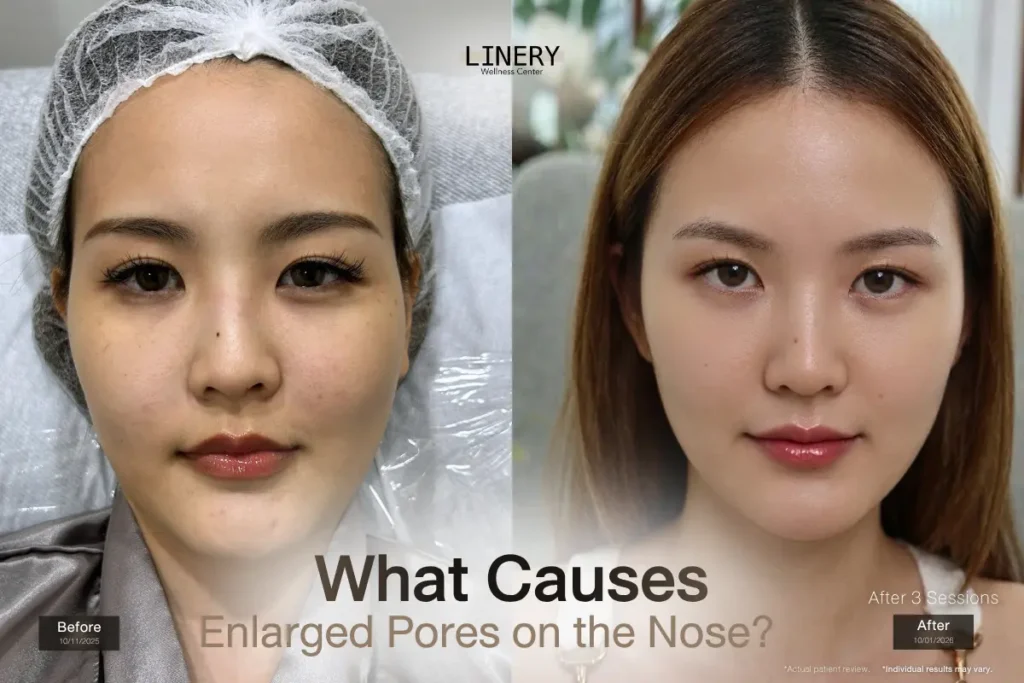
Yes. Enlarged pores can be treated to make them appear smaller and less noticeable while improving the overall texture of the skin. The most appropriate approach depends on what is making the pores appear prominent, such as excess sebum, congestion, reduced skin elasticity, or changes in skin quality.
Because pores are a natural part of the skin’s structure, treatment does not permanently “remove” or close them. Instead, the goal is to reduce the factors that make pore openings look more visible and improve the surrounding skin so the overall surface appears smoother and more refined.
Results vary depending on the underlying cause, skin condition, treatment method, and individual response.
Do Pores Actually Become Smaller, or Just Less Visible?
The term “pore tightening” generally refers to making pores appear smaller and less noticeable rather than physically closing or permanently removing them.
When excess oil and congestion are better controlled, or when the quality and elasticity of the surrounding skin improve, pore openings can appear smaller and the overall skin texture may look smoother.
Treatment results should therefore be assessed together with overall skin texture rather than pore size alone.
Why Do Enlarged Pore Treatment Results Vary?
The causes of visible pores are not the same for everyone. A medical review identifies major contributing factors such as high sebum production, reduced elasticity around the pores, and increased hair follicle volume, with acne, hormones, and skincare habits also potentially playing a role.
Someone with oily, congested skin may therefore require a different approach from someone whose main concern is uneven texture or reduced skin elasticity.
In summary: enlarged pores can be treated to appear smaller, but the treatment plan should be based on the factors causing the pores to look prominent rather than applying the same approach to everyone.

Before Treating Enlarged Pores, Identify the Contributing Cause
Before choosing an enlarged pore treatment, it is important to identify why the pores appear prominent. Excess sebum, congestion, reduced skin elasticity, and follicular characteristics may contribute to visible pores to different degrees in each person.
Understanding the contributing factors can help guide treatment more accurately than selecting a procedure based only on a device name or online review. Some people may also have several factors at the same time and therefore require treatment that addresses more than one concern.
Excess Sebum and Oily Skin
High sebum production is one of the major factors associated with enlarged facial pores. Research has found a positive relationship between sebum secretion and the appearance of facial pores.
When excess oil is a major contributor, treatment should include oil and congestion management rather than focusing only on collagen stimulation.
How Congestion Can Make Pores Look Larger
When excess oil and dead skin cells accumulate around a pore, the opening may become more noticeable. The American Academy of Dermatology recommends non-comedogenic products and gentle cleansing as part of managing visible pores.
However, dark dots or uneven texture around pores do not always represent enlarged pores alone. Comedonal acne or other skin concerns may coexist, so identifying the underlying problem remains important.
Reduced Collagen Support and Skin Elasticity
When the skin surrounding a pore loses elasticity, the pore can appear more open and prominent. Research has shown an association between reduced skin elasticity and increased visibility of facial pores.
If enlarged pores are accompanied by uneven texture or reduced skin quality, treatments designed to support skin remodeling can be considered to help improve the surrounding skin and make pores appear less noticeable.
Can Sun Exposure Make Pores More Visible?
Accumulated sun damage can reduce skin firmness. As the supporting skin around the pores becomes less firm, pores may appear more noticeable. The AAD therefore recommends daily broad-spectrum sunscreen with SPF 30 or higher as part of a pore-conscious skincare routine.
Sunscreen is important not only for preventing pigmentation but also for limiting ongoing UV-related changes that can affect overall skin quality and elasticity.
Genetics and Natural Skin Structure
The appearance of facial pores can also vary according to individual skin structure and hair follicle characteristics. A medical review identifies increased hair follicle volume as one of the major clinical factors associated with enlarged facial pores.
This means that two people following similar skincare routines may still have noticeably different pore patterns. Treatment goals should therefore be based on the individual’s skin rather than comparisons with other people’s results.
Expert Insight: Pores that look similar on the surface may have different contributing factors. When excess oil and congestion are dominant, sebum management may be particularly important, while uneven texture and reduced elasticity can benefit from approaches that support skin remodeling.
Read More: Why Are Nose Pores Enlarged

What Are the Treatment Options for Enlarged Pores?
Enlarged pores can be treated with approaches ranging from an appropriate skincare routine to in-clinic procedures that improve skin texture and remodeling.
The most suitable option depends on whether excess sebum, congestion, reduced elasticity, uneven texture, or several factors together are making the pores appear more prominent.
1. Adjust Your Cleansing Routine
Cleansing can help reduce excess oil and debris that may make pores appear more prominent. A gentle, non-comedogenic cleanser is generally preferred, while aggressive scrubbing, squeezing, or picking can irritate the skin and make pores more noticeable.
For oily skin, a consistent cleansing routine and appropriate daily skincare are important foundations for reducing factors that make pores appear enlarged.
2. Manage Excess Oil and Congestion With Skincare
When visible pores occur alongside oily or congested skin, reducing buildup within the pores becomes an important treatment goal. Salicylic acid is one ingredient commonly used to help unclog pores.
Using multiple active ingredients at the same time is not always necessary and may increase irritation. Products should be selected according to individual skin tolerance and introduced gradually.
3. Retinol and Retinoids
Retinol may be considered for people with oily skin, mild acne, or skin that has started to appear less firm. The American Academy of Dermatology notes that retinol-containing skincare may help make pores appear less noticeable in some cases.
Retinol may cause dryness or irritation, and the AAD advises against retinol or retinyl palmitate during pregnancy or breastfeeding. Individual suitability should therefore be considered before use.
4. Chemical Exfoliation
Appropriate exfoliation can help reduce accumulated dead skin cells and make pores appear less noticeable. Chemical peels are also among the treatment approaches discussed in the medical literature for enlarged facial pores.
The type and strength of exfoliation should match the skin condition, as excessive exfoliation can compromise the skin barrier and increase irritation.
5. Microneedling
Microneedling is one of the in-clinic treatments used to improve skin texture and make enlarged pores appear smaller and less noticeable.
It creates controlled microscopic injuries in the skin to initiate the natural repair response and collagen remodeling. This makes it particularly relevant when visible pores occur together with uneven texture or reduced skin quality.
If excess sebum or congestion is also present, these contributing factors should be managed alongside treatment.
6. RF Microneedling
RF microneedling combines microneedles with radiofrequency energy delivered into targeted layers of the skin. Clinical research on fractional microneedle radiofrequency has reported improvement in enlarged facial pores among studied participants.
Treatment depth, energy settings, and treatment areas should be selected according to individual skin condition, skin type, and treatment goals.
7. Laser and Energy-Based Treatments
Lasers and other energy-based devices include multiple technologies with different mechanisms for addressing skin texture and remodeling. Reviews of enlarged facial pore treatments include several laser- and device-based approaches that have been investigated in clinical studies.
Different laser systems can produce different effects on the skin, so the appropriate technology should be selected according to the treatment target, skin type, device characteristics, and acceptable downtime.
8. Combination Treatment
Some people have several contributing factors at the same time, such as excess oil, congestion, uneven texture, and reduced skin elasticity.
A treatment plan may therefore address more than one factor when necessary, with each skincare or procedure component selected for a clear purpose.
Expert Insight: Effective enlarged pore treatment begins by identifying the dominant factor making the pores appear prominent and choosing an approach that addresses that factor first, rather than selecting a procedure based only on popularity.
Which Enlarged Pore Treatment Is Suitable for Each Skin Concern?
Enlarged pore treatment should be selected according to the factor making the pores appear prominent. Major contributing factors can include excess sebum, congestion, reduced skin elasticity, uneven texture, or a combination of several concerns.
| Skin Concern | What to Assess | Options That May Be Considered |
|---|---|---|
| Oily skin with visible pores | Sebum production and daytime oiliness | Gentle skincare, non-comedogenic products, oil management |
| Visible pores with clogged pores or comedones | Blackheads, whiteheads, and follicular congestion | Salicylic acid, retinoids, or appropriate acne treatment |
| Enlarged pores with uneven texture | Skin texture, acne-related changes, and structural irregularities | Microneedling or resurfacing procedures after assessment |
| Visible pores with reduced firmness | Skin elasticity and overall skin quality | Microneedling, RF microneedling, or selected energy-based treatments |
| Multiple contributing factors | Sebum, congestion, texture, and elasticity | A targeted combination approach |
| Naturally prominent pores | Genetics, follicular characteristics, and baseline skin structure | Reduce pore visibility and improve overall skin quality |
Oily Skin With Enlarged Pores
When excess oil is a major contributor, managing sebum and congestion should form part of the treatment plan. Gentle cleansing and non-comedogenic products can help reduce factors that make pores appear more noticeable.
If uneven texture or reduced skin quality is also present, an in-clinic skin-remodeling treatment may be considered as an additional part of the plan.
Enlarged Pores With Comedonal Acne
When visible pores occur alongside blackheads or whiteheads, addressing follicular congestion becomes important. Salicylic acid can help unclog pores and exfoliate the skin, while retinoids are another treatment category used for comedonal acne when appropriate.
If inflammatory acne is persistent or extensive, acne itself should also be assessed so the treatment plan addresses both acne and pore visibility.
Enlarged Pores With Uneven Skin Texture
When enlarged pores occur together with uneven texture or structural skin concerns, treatments that support skin remodeling, such as Microneedling, are one option that can be considered.
Studies of fractional microneedle radiofrequency have also reported improvement in enlarged facial pores, although treatment parameters and suitability should be individualized.
Enlarged Pores With Reduced Skin Elasticity
Reduced elasticity around the pores is recognized as one of the major contributing factors to enlarged facial pores.
When reduced firmness or overall skin quality is also a concern, procedures designed to support dermal remodeling can be considered. Depending on the skin condition, goals, and acceptable downtime, options may include Microneedling, RF Microneedling, or selected energy-based treatments.
When Several Factors Are Present
Some people have oily skin, congestion, uneven texture, and reduced elasticity at the same time.
A treatment plan can prioritize the dominant concern first and then add other approaches when appropriate so each part of the plan has a clear purpose.

How Does Microneedling Help With Enlarged Pores?
Microneedling is an in-clinic procedure used to help enlarged pores appear smaller and less noticeable while improving uneven skin texture.
It creates controlled microscopic injuries that trigger the skin’s natural wound-healing response and collagen remodeling. This helps improve the quality of the skin surrounding the pores so the overall surface can appear smoother and more refined.
Clinical research has reported improvements in pore appearance following Microneedling. A 2024 comparative study also observed improvement in its Microneedling group, although the degree of change depends on technique, number of sessions, skin characteristics, and individual response.
How Does Microneedling Affect Skin Structure?
The microscopic channels created during Microneedling initiate a natural repair response involving new collagen formation and remodeling.
When enlarged pores occur alongside uneven texture, improving the structure of the surrounding skin can help create a smoother overall surface and make the pores appear less prominent.
What Types of Enlarged Pores May Be Suitable for Microneedling?
Microneedling is particularly relevant when visible pores occur together with uneven texture, reduced skin quality, or other textural concerns and skin remodeling is one of the main treatment goals.
If excess oil, clogged pores, or acne are also present, these concerns should be managed alongside treatment so the plan addresses the contributing factors more completely.
When Should Other Factors Be Managed Alongside Microneedling?
When excess sebum or congestion is the main contributing factor, oil and acne management should remain part of the treatment plan together with any procedure used to improve texture.
People with active inflammatory acne, infection, or significant inflammation in the treatment area should also be assessed before Microneedling to determine appropriate timing.
How Does Linery’s Microneedling Skin Booster Work?
Linery Wellness Center’s Microneedling Skin Booster combines Microneedling with Medical Grade Serum containing ingredients such as Hyaluronic Acid and Peptides to support hydration, skin texture, overall skin quality, and collagen remodeling.
The program is designed not only to make visible pores appear smaller, but also to improve the overall quality and smoothness of the skin.
Treatment depth, number of sessions, and the overall plan are adjusted according to individual skin condition.
Read more: Microneedling Skin Booster for Enlarged Pores
Microneedling vs Laser for Enlarged Pores: What’s the Difference?
Both Microneedling and Laser-based treatments can help improve skin texture and reduce the appearance of enlarged pores, but they work through different mechanisms.
Microneedling creates controlled microscopic injuries with fine needles to stimulate skin remodeling, while Laser treatments use light-based energy that interacts with the skin differently depending on the technology.
Treatment selection should consider the factors contributing to visible pores, skin condition, skin type, treatment goals, and acceptable downtime.
| Comparison | Microneedling | Laser / Energy-Based Treatment |
|---|---|---|
| Mechanism | Creates controlled microscopic injuries with fine needles | Uses light or device-specific energy |
| Main targets | Skin remodeling, texture, and collagen | Varies by technology, including texture, photoaging, and remodeling |
| Thermal energy | Conventional Microneedling does not rely on thermal energy | Many laser systems create tissue effects through light-derived energy |
| Downtime | Varies with treatment depth and technique | Can vary substantially between ablative, non-ablative, and other systems |
| Skin type considerations | Requires assessment of skin condition and contraindications | Device type, parameters, and skin type are important considerations |
| Best suited for | Often considered when texture and skin remodeling are key goals | Depends on the specific laser and the concern being treated |
How Does Microneedling Treat Visible Pores?
Microneedling initiates a controlled wound-healing response that involves collagen formation and remodeling.
For people whose enlarged pores occur alongside uneven texture, this process can help improve skin quality and make pores appear less noticeable. Excess oil, acne, or congestion should be managed alongside treatment when relevant.
How Do Lasers Treat Enlarged Pores?
“Laser treatment” includes multiple technologies with different wavelengths, treatment depths, and tissue effects. Reviews of enlarged facial pore treatments include several laser- and device-based approaches.
For example, fractional CO₂ laser has been studied for enlarged facial pores, while fractional picosecond lasers have also been investigated for dermal remodeling and improvements in visible pores.
Is Microneedling or Laser Better for Enlarged Pores?
The choice should be based on the primary skin concern, skin type, and the specific technology being considered.
Different laser systems vary considerably in energy delivery, recovery time, and adverse-effect profiles, while Microneedling has its own suitability and contraindications.
Skin type also matters. For example, a small study involving Chinese patients with Fitzpatrick skin types III–IV treated with fractional CO₂ laser reported post-inflammatory hyperpigmentation in some participants. This does not mean that all lasers cause pigmentation, but it illustrates why device selection, treatment parameters, and individual skin characteristics are important.
Before treatment, the clinician should consider whether the main concerns are visible pores, uneven texture, excess oil, acne-related changes, or reduced elasticity, together with the amount of downtime the individual is comfortable with.
How Many Treatments Are Needed for Enlarged Pores?
For Linery Wellness Center’s Microneedling Skin Booster, the current program generally recommends approximately 3–6 sessions spaced around 2–4 weeks apart.
The actual number of treatments depends on pore visibility, skin texture, oil production, other skin concerns, and how the skin responds during the course.
How Many Microneedling Sessions Are Usually Needed?
A typical Microneedling Skin Booster course at Linery involves approximately 3–6 sessions, spaced around 2–4 weeks apart.
Changes in texture and overall skin quality develop gradually as the skin undergoes healing and collagen remodeling.
People with excess oil, congestion, or other skin concerns may also require additional skincare or treatment strategies alongside Microneedling.
Why Are Multiple Sessions Sometimes Recommended?
Collagen remodeling and improvements in skin texture do not occur all at once after a procedure.
The repair process continues after treatment, which is why sessions are typically spaced apart and progress is reviewed throughout the course.
Baseline skin quality, pore visibility, age, oil production, post-treatment care, and skincare used between sessions can all influence how quickly changes become noticeable.
Is Maintenance Treatment Necessary?
The need for maintenance depends on skin condition, oil production, aging, sun exposure, skincare habits, and individual treatment response.
Periodic skin assessment together with consistent skincare and sun protection can help determine whether additional treatment may be useful in the future.
How Should You Care for Your Skin After Enlarged Pore Treatment?
After an in-clinic pore treatment, aftercare should focus on minimizing irritation, maintaining hydration, and protecting the skin from sun exposure.
For Linery Wellness Center’s Microneedling Skin Booster, current aftercare guidance recommends allowing the skin to rest initially, avoiding potentially irritating products, and supporting the skin barrier during recovery.
Avoid Foaming Cleansers for the First 12–24 Hours
After Microneedling, Linery recommends allowing the skin to rest and avoiding foaming cleansers for approximately 12–24 hours.
After this period, cleansing can be resumed according to the provider’s instructions, while aggressive scrubbing or rubbing should be avoided.
Keep the Skin Moisturized
Moisturizer can help maintain hydration while the skin recovers, particularly if mild dryness or tightness develops after treatment.
Products should be chosen according to the individual’s skin condition, and introducing several active ingredients at once is generally best avoided while the skin remains sensitive.
Limit Sun Exposure and Use Sunscreen
Strong sun exposure should be avoided after treatment, and sunscreen should be used consistently once appropriate for the recovering skin.
Sun protection also remains important in long-term pore care because cumulative UV exposure can contribute to changes in overall skin quality and elasticity.
Temporarily Avoid AHA and BHA
For Linery’s Microneedling Skin Booster, current guidance recommends avoiding exfoliating products such as AHA and BHA for approximately 3–5 days after treatment.
If Retinol, Retinoids, or other active ingredients are part of your regular routine, ask your treatment provider when they can be safely restarted.
When Can You Wear Makeup Again?
Linery’s current service information recommends avoiding makeup for the first 24 hours after Microneedling Skin Booster and resuming it once the skin has recovered appropriately.
If redness, irritation, or another reaction becomes more pronounced than expected, contact the treatment provider for further assessment.

Can Enlarged Pores Become Visible Again After Treatment?
Pores can become more noticeable again over time because contributing factors such as sebum production, skin elasticity, aging, sun exposure, and structural changes in the skin continue to evolve naturally.
Consistent skincare, sun protection, and management of the factors contributing to enlarged pores can help maintain overall skin quality after treatment.
Oil Production and Congestion Can Continue
Sebum production is one of the major factors associated with enlarged facial pores. If excess oil or congestion develops again, pores may gradually become more noticeable even after previous treatment.
Using non-comedogenic products and maintaining an appropriate routine for oily skin therefore remain important, particularly for people who are prone to excess sebum or acne.
Aging and Skin Elasticity Continue to Change
As skin ages, changes in collagen support and firmness may contribute to greater pore visibility. Reduced elasticity around the pores is recognized as one of the major factors associated with enlarged facial pores.
Skin-remodeling treatments can help improve texture and skin quality, while ongoing skincare remains important because the skin continues to change naturally with age.
Can Sun Exposure Make Pores More Noticeable Again?
Cumulative sun exposure can affect skin quality and firmness over time. The American Academy of Dermatology includes sun protection as part of managing visible pores.
Consistent use of broad-spectrum sunscreen is therefore an important part of post-treatment care and long-term skin maintenance.
Is Maintenance Treatment Necessary?
The need for maintenance varies according to oil production, skin quality, aging, skincare habits, and treatment response.
Some people may maintain improvement primarily with skincare and sun protection, while others may consider additional treatment if pore visibility or uneven texture becomes more noticeable again.
Enlarged Pore Treatment at Linery Wellness Center
At Linery Wellness Center in Bangkok, enlarged pore treatment begins with an assessment of the skin and the factors contributing to pore visibility.
Skin texture, oiliness, congestion, elasticity, and overall skin quality are considered before an individualized treatment plan is selected.
One option for people with visible pores and uneven skin texture is the Microneedling Skin Booster, which combines Microneedling with Medical Grade Serum to support hydration, skin repair, collagen remodeling, and smoother overall skin texture.
Skin Assessment Before Choosing a Treatment
Pores that look similar can have different contributing factors. Some people primarily experience excess oil or congestion, while others may have uneven texture or reduced skin elasticity.
Assessment can help determine whether skincare and oil management should be prioritized or whether an in-clinic procedure aimed at improving skin quality and texture is appropriate.
Microneedling Skin Booster for Visible Pores
Linery’s program combines Microneedling with Medical Grade Serum containing ingredients including Hyaluronic Acid and Peptides to support hydration, texture, overall skin quality, and collagen remodeling.
The treatment goal is to help pores appear smaller, improve skin smoothness, and refine the overall appearance of skin texture.
The current program generally recommends around 3–6 sessions spaced 2–4 weeks apart, with the treatment plan adjusted according to individual skin response.
If excess oil, comedonal acne, or other skin concerns are also present, these factors can be managed alongside the treatment plan.
To understand which approach may be suitable for your skin, schedule a skin assessment at Linery Wellness Center for an individualized treatment plan.
Read more: Microneedling Skin Booster for Enlarged Pores
Frequently Asked Questions About Enlarged Pore Treatment
Can Enlarged Pores Be Permanently Removed?
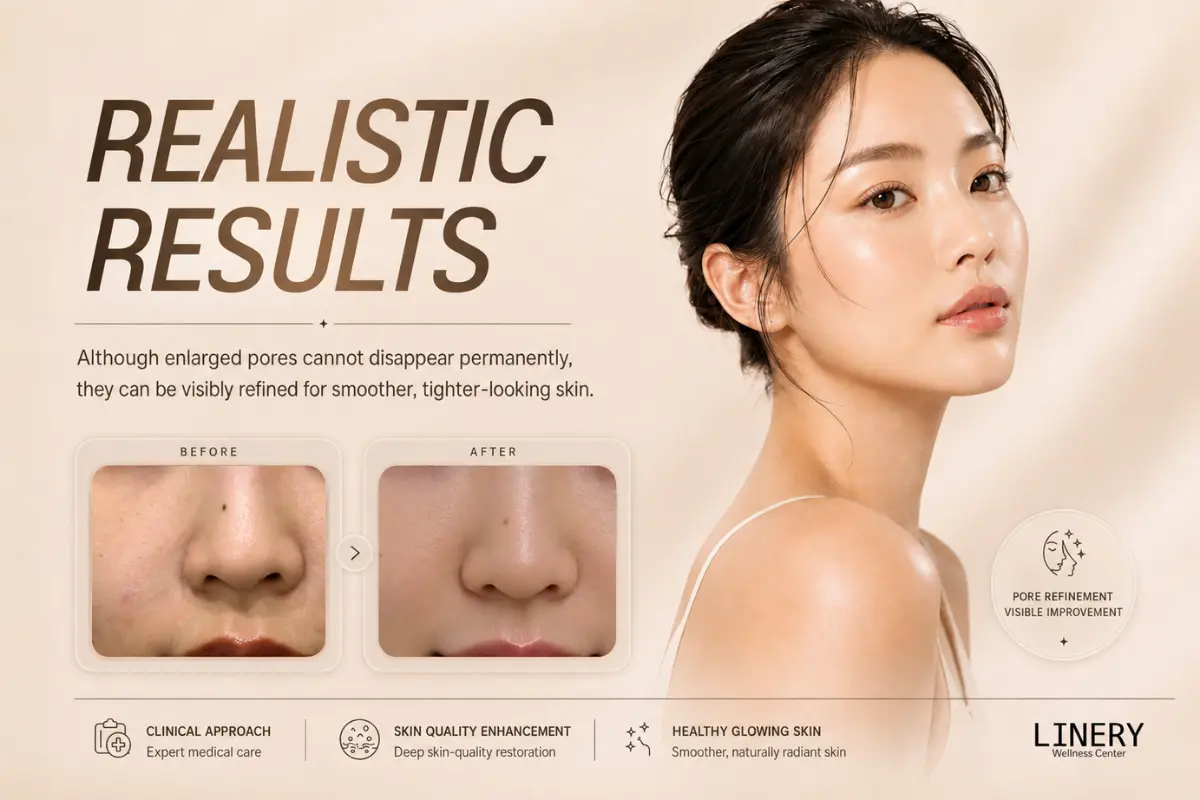
Pores are a natural part of the skin and cannot be completely removed. However, enlarged pores can be treated to make them appear smaller and less noticeable while improving overall skin texture.
The degree of improvement depends on factors such as excess oil, congestion, skin elasticity, skin quality, and individual response.
What Can I Use to Make Pores Look Smaller?
The appropriate approach depends on your skin condition. For oily or congested skin, non-comedogenic products, gentle cleansing, Salicylic Acid, or Retinol may be considered when appropriate.
If uneven texture or reduced skin quality is also present, treatments that stimulate skin remodeling, such as Microneedling, may also be considered.
Daily sun protection remains an important part of long-term pore care.
What Procedures Can Be Used for Enlarged Pores?
The most appropriate procedure depends on the contributing factors and skin condition.
When uneven texture or reduced skin quality is a concern, Microneedling or RF Microneedling may be considered. Several Laser and Energy-Based technologies are also used to improve skin texture and visible pores.
Skin assessment helps determine which approach is most appropriate for the individual.
Does Microneedling Help Enlarged Pores?
Yes. Microneedling is one of the in-clinic treatments used to help enlarged pores appear smaller and improve uneven skin texture.
It creates controlled microscopic injuries that stimulate the skin’s repair response and collagen remodeling.
If excess oil or congestion is also present, these contributing factors should be managed alongside treatment.
Is Microneedling or Laser Better for Enlarged Pores?
Both Microneedling and Laser-based treatments can help improve skin texture and reduce the appearance of enlarged pores, but they work differently.
The choice depends on the contributing factors, skin type, treatment goals, acceptable downtime, and the specific technology being considered.
How Many Sessions Are Needed for Enlarged Pores?
For Linery Wellness Center’s Microneedling Skin Booster, the current program generally recommends approximately 3–6 sessions spaced around 2–4 weeks apart.
The actual number of treatments depends on skin condition, pore visibility, texture, associated skin concerns, and individual response.
When Can I Wear Makeup After Microneedling?
For Linery Wellness Center’s Microneedling Skin Booster, current aftercare guidance recommends avoiding makeup for the first 24 hours and resuming it once the skin has recovered appropriately.
Can Oily Skin With Enlarged Pores Be Treated?
Yes. Treatment should also include management of excess oil and congestion because these factors can make pores appear more prominent.
Gentle cleansing, non-comedogenic skincare, and appropriate treatment of texture or other skin concerns can be combined according to individual skin condition.
Choose an Enlarged Pore Treatment That Fits Your Skin
Enlarged pores can be treated to appear smaller and less noticeable while improving the overall texture and quality of the skin.
The most appropriate approach depends on whether the main contributing factors are excess sebum, congestion, uneven texture, reduced elasticity, or a combination of these concerns.
For people with visible pores and uneven skin texture, Linery Wellness Center’s Microneedling Skin Booster is one option designed to support hydration, skin texture, and collagen remodeling so the skin appears smoother and more refined.
If you would like to understand which approach may be suitable for your skin, schedule a skin assessment at Linery Wellness Center for an individualized treatment plan.
Read more: Microneedling Skin Booster
References
- American Academy of Dermatology Association (AAD): Guidance on making enlarged pores less noticeable, including cleansing, skincare, and sun protection.
- Lee SJ et al. Facial Pores: Definition, Causes, and Treatment Options — Review of major contributing factors and individualized treatment approaches for enlarged facial pores.
- Alster TS, Graham PM. Microneedling: A Review and Practical Guide — Review of microneedling mechanisms and collagen remodeling.
- Ren K et al. Clinical study of fractional microneedle radiofrequency for enlarged facial pores.
- Hou A et al. Microneedling: A Comprehensive Review — Review of clinical evidence and limitations of microneedling.
Disclaimer: This article is provided for general educational purposes and is not a substitute for medical diagnosis or professional medical advice. Results may vary between individuals. Skin assessment and consultation with an appropriately qualified healthcare professional or provider are recommended before undergoing a procedure.