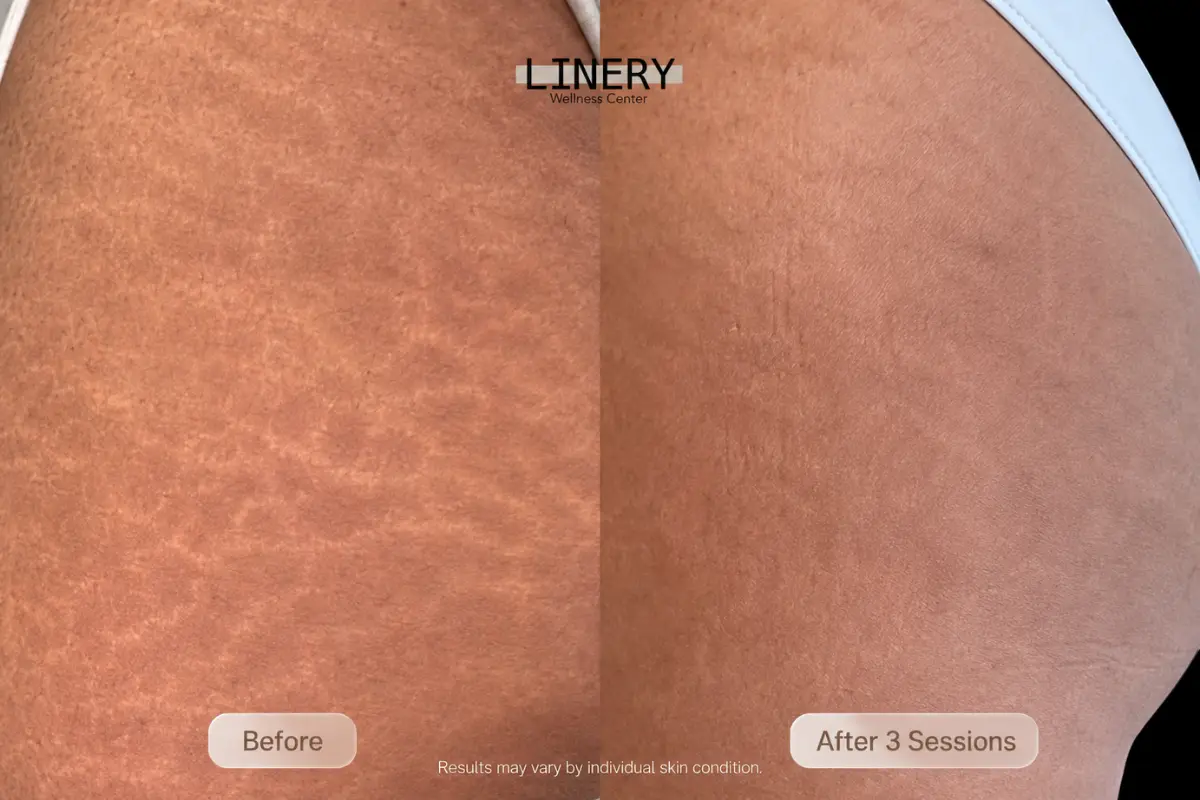
What Causes Stretch Marks on the Legs?
Leg stretch marks develop when the skin stretches faster than the underlying collagen and elastin fibers can adapt, leading to visible lines on areas such as the thighs, hips, or inner legs. They may occur during weight changes, puberty, or other periods of rapid body transformation.
Although many people associate stretch marks only with obesity, individuals with a slim body type can also develop them. Rapid growth, hormonal changes, and genetic factors may all contribute.
Rapid Weight Gain or Weight Loss
Significant changes in body weight over a short period may place stress on the skin, causing the deeper support structures to stretch beyond their capacity.
This is commonly seen in rapid weight gain, substantial weight loss, or muscle growth associated with exercise.
Growth During Adolescence
Stretch marks frequently appear during puberty, when the body experiences rapid growth and shape changes. Common areas include the thighs, hips, and calves.
Some adolescents develop stretch marks despite maintaining a normal weight, as skin stretching plays a larger role than body fat alone.
Hormonal Changes and Genetics
Certain hormones can influence skin elasticity, while genetic predisposition may increase the likelihood of developing stretch marks.
People with a family history of stretch marks may be more likely to experience similar patterns.
Pregnancy and Other Body Changes
Although pregnancy-related stretch marks are commonly associated with the abdomen, they may also appear on the thighs or hips due to simultaneous hormonal and weight changes.
Similar effects may occur during other periods of rapid physical transformation.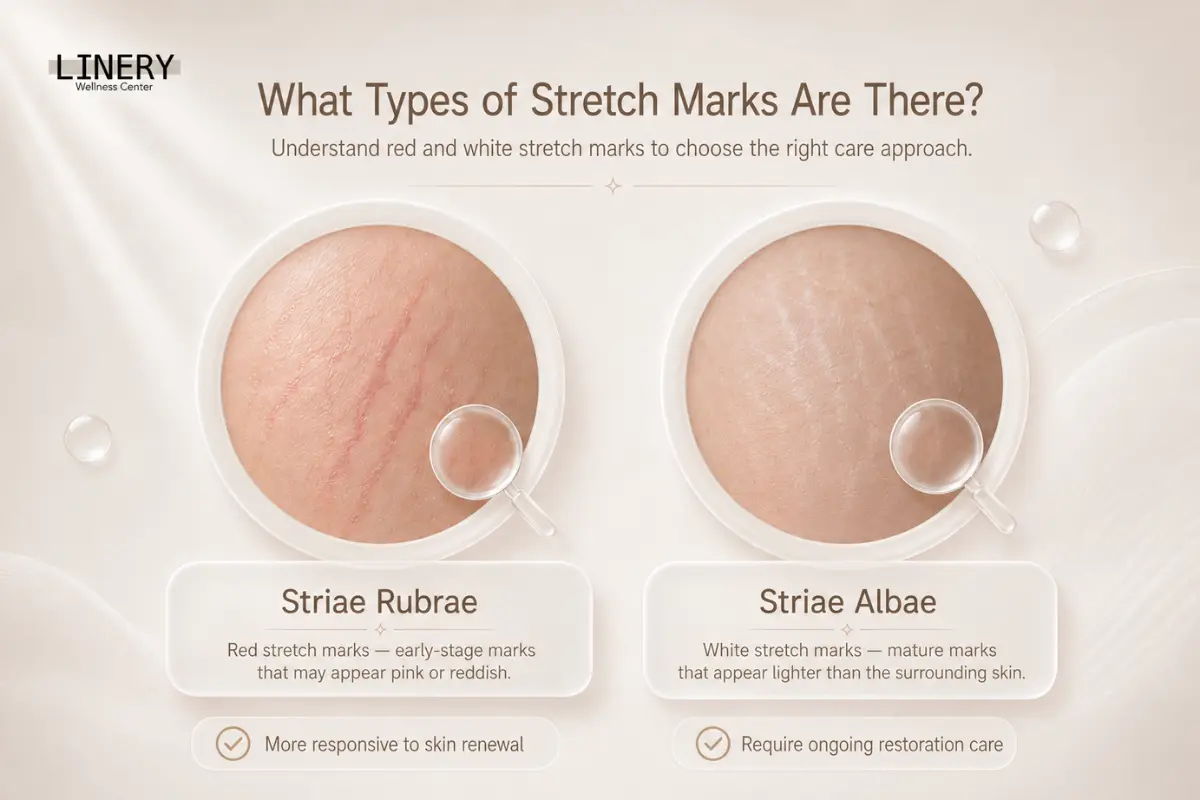
What Is the Difference Between Red and White Stretch Marks on the Thighs?
Red stretch marks are generally associated with earlier stages, while white stretch marks tend to appear in older marks. The color may reflect how long the mark has been present and can be one factor used when assessing care options.
Not all stretch marks change from red to white at the same rate, as the process may vary depending on skin type, age of the mark, and individual factors.
| Stretch Mark Type | Common Appearance | Stage |
|---|---|---|
| Red | Pink, red, or light purple | Early stage |
| Dark purple | Deeper coloration | Transitional stage |
| White | Lighter or pale compared to surrounding skin | Older stage |
What Are Red Stretch Marks?
Red or pink stretch marks often appear during the early phase when the skin has recently undergone rapid stretching.
They are commonly found on the thighs, hips, abdomen, or areas affected by significant body changes.
What Causes White Stretch Marks?
Over time, some stretch marks may gradually become lighter or appear white, which is often associated with older marks.
Many people notice stretch marks more at this stage because the contrast with surrounding skin becomes more visible, especially after sun exposure or tanning.
Are White Stretch Marks Managed Differently From Newer Marks?
The age of a stretch mark may influence how care approaches are considered, as older and newer marks can have different skin characteristics.
Assessing color, depth, and location together may help determine more suitable care options for each individual.
Can Stretch Marks on the Legs Fade Naturally?
Some stretch marks may become less noticeable over time, but this does not necessarily mean they disappear completely in every case. Changes in appearance can depend on factors such as age of the mark, color, depth, and individual skin characteristics.
Many people notice that newer stretch marks appear darker at first and gradually fade. However, the degree of change varies, and some marks may remain visible for years.
How Do New Stretch Marks Change Over Time?
Newer stretch marks often appear red or purple during the early stage. As time passes, their color may gradually become lighter as part of the skin’s natural changes.
The timeline is not the same for everyone and may differ depending on personal factors and the affected area.
Can Older Stretch Marks Become Less Visible?
Older stretch marks may lighten and appear closer to the surrounding skin tone over time. However, this does not always mean they completely disappear.
In some cases, older marks become more noticeable under certain lighting conditions or after tanning.
What Factors Affect Changes in Stretch Marks?
The appearance of stretch marks over time may be influenced by several factors, including:
- Age of the stretch mark
- Initial color of the mark
- Depth and size
- Body area affected
- Individual skin characteristics and response
Because of these factors, stretch marks may change differently from person to person, even when they occur in similar locations.
What Care Options Are Available for Leg Stretch Marks?
Care approaches for leg stretch marks depend on factors such as color, age, and overall characteristics of the marks. Newer and older stretch marks may have different skin conditions and may respond differently to various care options.
Before choosing an approach, it is important to assess the stage and location of the stretch marks to help determine suitable options.
Daily Skin Care and Maintenance
Maintaining skin hydration and reducing factors associated with rapid skin changes may support overall skin health.
While daily skin care can be part of long-term maintenance, outcomes may vary depending on the type of stretch mark and individual skin characteristics.
Skin Renewal Approaches for Stretch Marks
In some cases, approaches focused on skin renewal or supporting the skin’s repair processes may be considered. The choice depends on the characteristics of the stretch marks and individual assessment.
Red stretch marks, white stretch marks, and older marks may require different considerations at this stage.
Why Assessing Color and Depth Matters
The color, age, and location of stretch marks are commonly evaluated together, as stretch marks on the inner thighs may differ from those found in other areas.
Assessment before beginning care may help clarify limitations and individual differences.
When Should You Seek Additional Advice?
If stretch marks appear rapidly, increase unexpectedly, or cause concerns about skin changes, seeking professional advice may help identify contributing factors and guide suitable care planning.
Are Inner Thigh Stretch Marks Different From Abdominal Stretch Marks?
Inner thigh stretch marks and abdominal stretch marks may develop through similar skin stretching processes, but the triggering factors and affected areas often differ. As a result, the appearance and timing of stretch marks may vary from person to person.
Inner thigh stretch marks are commonly associated with weight changes, adolescence, or body shape changes, while abdominal stretch marks are more often linked to rapid expansion in the abdominal area.
| Area | Common Associated Factors |
|---|---|
| Inner thighs | Weight changes, adolescence, body changes |
| Abdomen | Abdominal expansion, body changes |
| Hips | Weight changes and fat distribution |
| Calves | Growth or muscle mass changes |
What Commonly Causes Inner Thigh Stretch Marks?
The inner thighs may experience increased skin tension during body changes or fluctuations in weight, making this a common area for stretch marks to appear.
Many people first notice marks in this area after weight changes or periods of rapid growth, even without being overweight.
What Types of Changes Are Associated With Abdominal Stretch Marks?
Abdominal stretch marks are often linked to periods when the skin around the abdomen expands continuously due to body changes.
However, not everyone with similar experiences develops stretch marks in the same area, as skin characteristics and genetics may also play a role.
Does the Location of Stretch Marks Matter During Assessment?
The location of stretch marks is one factor considered alongside color, age, and depth when evaluating their characteristics.
Stretch marks on the inner thighs and abdomen may have different surrounding skin conditions, which is why multiple factors are considered before choosing care options.
What Factors Affect the Cost of Leg Stretch Mark Care?
The cost of caring for leg stretch marks may vary depending on the characteristics of the marks, treatment area size, and chosen approach. This means people with stretch marks in similar locations may still receive different assessments and pricing considerations.
Comparing prices alone may not reflect differences in color, depth, or how long the stretch marks have been present.
Size of the Affected Area
The area covered by stretch marks is one factor that may influence care planning, as localized marks and wider areas may require different approaches.
For example, a small area on the inner thigh may differ from marks spread across the thighs and hips.
Color and Age of Stretch Marks
Red stretch marks, white stretch marks, and older marks may have different skin characteristics, which are often considered during assessment.
The age of a mark reflects not only time but also changes in the surrounding skin.
Number of Sessions and Personalized Planning
Some cases may involve longer-term care plans, while others may have different goals or limitations. As a result, the number of sessions and approaches can vary.
Individual assessment helps provide context before making decisions, rather than focusing on cost alone.
What Should You Ask Before Comparing Prices?
Before making a decision, consider asking:
- Is there an assessment before planning care?
- Does pricing depend on area size or number of sessions?
- Are limitations and individual differences explained?
- Which types of stretch marks are suitable for the approach?
Understanding these points alongside pricing may help make comparisons more meaningful.
Read more: Stretch Mark Regen
How Can Stretch Mark Assessment Help Plan Care for Leg Stretch Marks?
Assessing stretch marks before planning care may help provide a clearer understanding of their color, age, depth, and location. Stretch marks that appear similar on the surface can have different characteristics when evaluated more closely.
Red stretch marks, white stretch marks, and older marks may differ in skin condition and appearance, which is why multiple factors are often considered before discussing care options.
The Color and Age of Stretch Marks May Provide Useful Information
Newer and older stretch marks can have different skin characteristics, even when they appear in the same area, such as the thighs.
Evaluating color together with depth and the size of the affected area may help build a more complete understanding of the stretch marks.
The Location of Stretch Marks May Relate to Different Factors
Stretch marks on the inner thighs, hips, or abdomen may be associated with different body changes or contributing factors.
For this reason, assessment often considers more than location alone.
What Information Is Commonly Considered During Assessment?
Initial assessment may include factors such as:
- Color of the stretch marks
- Age of the marks
- Depth and affected area size
- Location on the body
- Individual skin characteristics
Reviewing these factors together may help provide a clearer picture before considering suitable care approaches.
If you are unsure whether your leg stretch marks are newer or long-standing, an initial assessment may help you better understand their characteristics and the factors worth considering before making decisions.
Online Stretch Mark Assessment / Book Consultation
What Is the Difference Between Stretch Marks and Scars?
Stretch marks and scars develop through different skin processes, even though they may appear similar in some cases. Stretch marks are generally associated with skin stretching, while scars are more commonly linked to injury, inflammation, or tissue repair.
Understanding the differences between these two types of marks may help clarify skin characteristics and support more accurate assessment.
| Comparison | Stretch Marks | Scars |
|---|---|---|
| Main cause | Skin stretching | Injury or inflammation |
| Appearance | Linear marks following skin tension | Varies depending on the wound |
| Common locations | Thighs, abdomen, hips | Any area affected by injury |
| Mechanism | Changes in skin structure | Tissue repair process |
Stretch Marks Often Begin With Skin Changes
Stretch marks may develop when the skin expands or changes rapidly, causing underlying structures to adapt differently and resulting in visible lines on the skin.
Common areas include the thighs, hips, abdomen, and regions affected by body changes.
Scars Are More Commonly Related to Tissue Repair
Scars usually form after injury, inflammation, or skin damage that triggers tissue repair processes, leading to different appearances compared with stretch marks.
Scars may appear raised, depressed, or darker depending on how the skin heals.
Why Is It Important to Distinguish Between Stretch Marks and Scars?
Although both involve visible skin marks, their underlying mechanisms differ. Understanding the type of mark is an important first step before considering assessment or care approaches.
If you are unsure whether a mark is a stretch mark or a scar, an initial assessment may help clarify its characteristics.
Frequently Asked Questions About Leg Stretch Marks (FAQ)
Can stretch marks on the legs fade naturally?
Some stretch marks may become less noticeable over time, but the degree of change varies between individuals. Factors such as age of the mark, color, depth, and skin characteristics may all influence changes over time.
Older stretch marks may remain visible even if they become lighter.
Are white stretch marks managed differently from newer ones?
White stretch marks are often associated with older marks, while red stretch marks may represent earlier stages. Multiple factors are usually considered before discussing care approaches.
Color alone may not provide the full picture, as depth and location can also matter.
Can thin people develop stretch marks on their legs?
Yes. Stretch marks are not related only to body weight. Puberty, genetics, hormones, and rapid body changes may also contribute.
This is why stretch marks can appear in people with average or slim body types.
Do teenage stretch marks disappear?
Stretch marks during adolescence may change over time, but the degree of fading varies among individuals. Skin characteristics and the age of the marks may influence these changes.
Stretch marks during puberty are relatively common due to rapid growth.
What causes stretch marks on the inner thighs?
Inner thigh stretch marks are often associated with body changes, weight fluctuations, or periods of rapid growth. This area may experience increased skin tension during certain life stages.
Genetics and individual skin characteristics may also contribute.
How long does stretch mark care usually take?
The timeline and number of sessions vary depending on individual stretch mark characteristics, including color, age, depth, affected area size, and chosen care approach.
Initial assessment may help clarify these factors before planning.
Are stretch marks and cellulite the same thing?
No. Stretch marks and cellulite are different skin conditions. Stretch marks usually appear as lines, while cellulite is associated with uneven or dimpled skin texture.
Although both may occur on the thighs or hips, their underlying mechanisms differ.
What should I do if I am unsure whether a mark is a stretch mark or a scar?
If you are unsure whether a skin mark is a stretch mark or a scar, an initial assessment may help clarify its characteristics.
Color, location, age of the mark, and surrounding skin features are often considered during evaluation.
Start an online stretch mark assessment to better understand your skin before considering care options.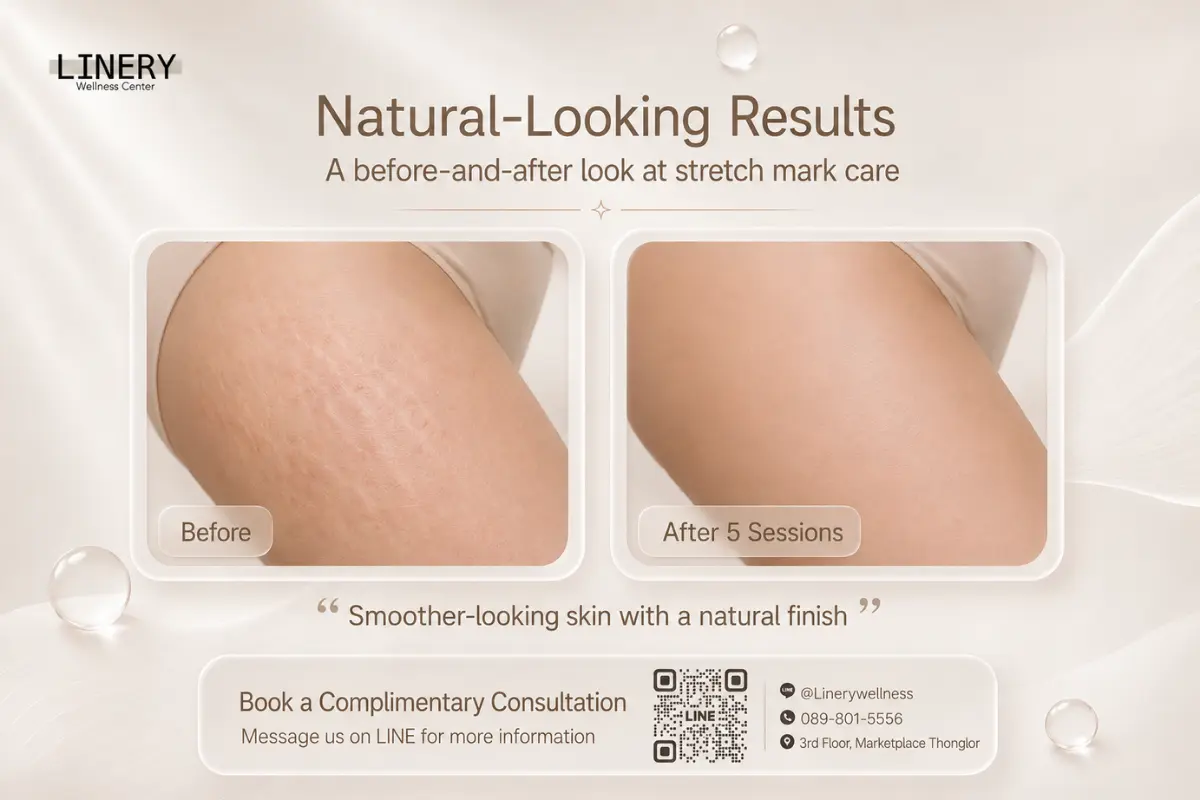
Conclusion
Leg stretch marks develop when the skin stretches faster than its underlying support structures can adapt. They may occur during puberty, weight changes, or other periods of rapid body transformation. Even people with slim body types can develop stretch marks.
Stretch marks may appear as red, purple, or white marks, often reflecting different stages or characteristics of the skin. Some marks may become less noticeable over time, although changes vary between individuals.
Assessment usually considers more than the location of the marks alone. Factors such as color, age, depth, and affected area may help provide a clearer understanding of individual characteristics before discussing care options.
If you are unsure whether your stretch marks are newer or long-standing, an initial assessment may help you better understand their features and potential considerations before making decisions.
Start an online stretch mark assessment to better understand your skin before considering care options. Click: Appointment
References
- American Academy of Dermatology (AAD): Stretch marks — Why they appear and how to get rid of them
- American Academy of Dermatology (AAD): Scars and stretch marks
- Mayo Clinic: Stretch marks — Symptoms & causes
- Mayo Clinic: Stretch marks — Diagnosis & treatment
- Cleveland Clinic: Stretch Marks — Causes & Treatments