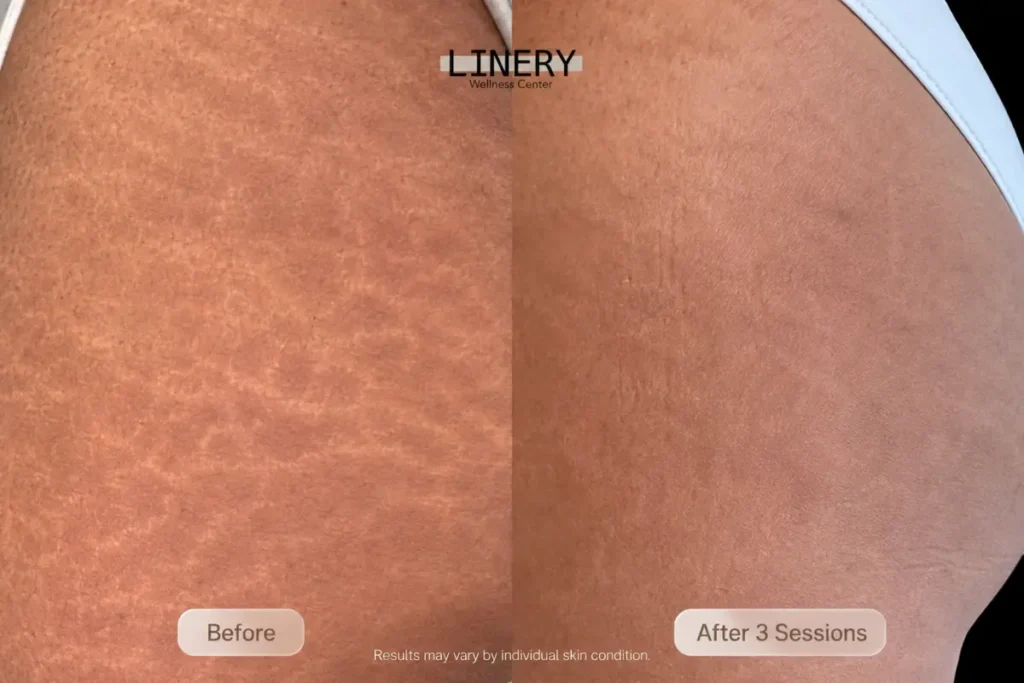
What Are White Stretch Marks?
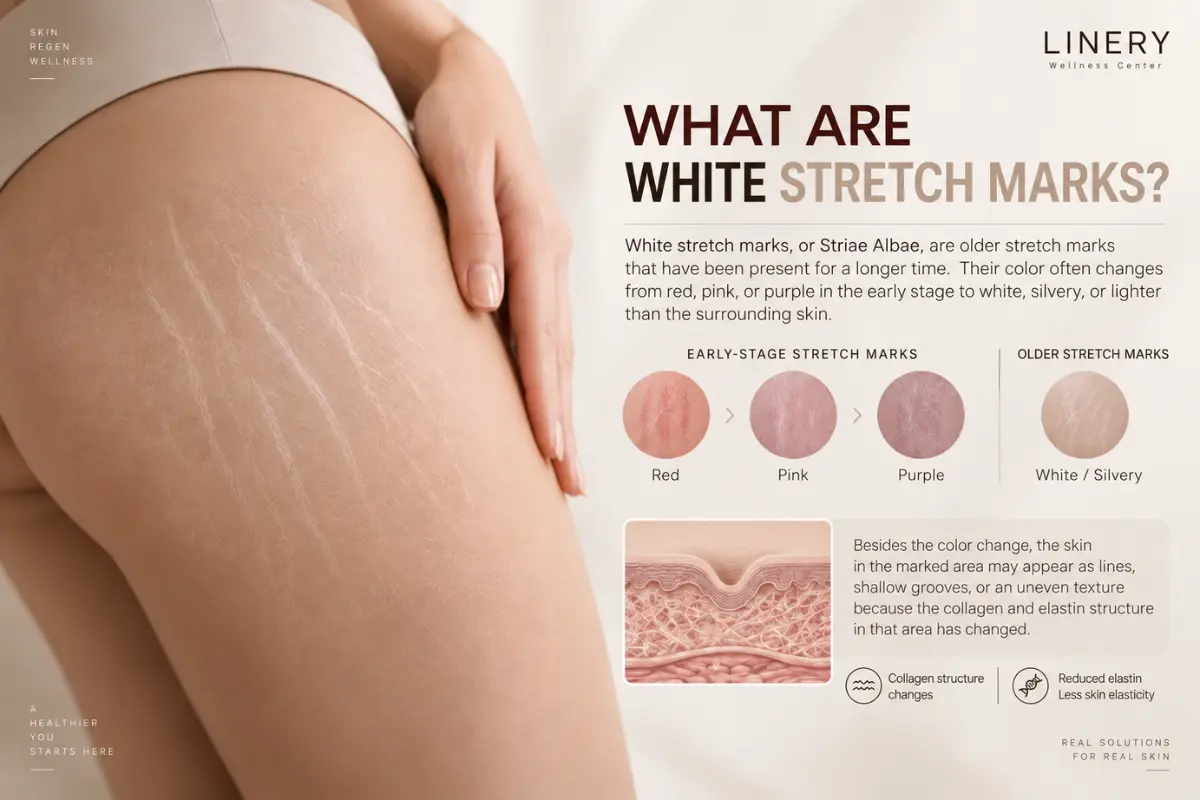
White stretch marks, or striae albae, are mature stretch marks that usually appear lighter than the surrounding skin. They may look white, silver, or pale and can sometimes appear slightly indented or uneven.
They are different from newer red or purple stretch marks, known as striae rubrae.
What Does Striae Albae Mean?
Striae albae is the medical term for older stretch marks. As stretch marks mature, their red, pink, or purple color often fades and the marks gradually become lighter.
Although the color changes, the skin structure in the area may not return completely to its original state.
Why Can White Stretch Marks Look Indented?
Stretch marks involve changes in collagen and elastin within the skin. This can leave some marks looking slightly depressed, wrinkled, or uneven.
Texture can also appear more noticeable under side lighting because shadows make differences in skin level easier to see.
What Causes White Stretch Marks?
White stretch marks usually develop when older stretch marks mature over time. Many begin as red, pink, or purple marks before gradually becoming white or silver.
The original stretch marks often form when the skin stretches or changes faster than its supporting structure can adapt.
From Red Stretch Marks to White Stretch Marks
Newer stretch marks are commonly called striae rubrae. As they mature, they may gradually lose their red or purple color and become striae albae.
White stretch marks therefore usually represent an older stage in which both the color and structure of the skin have changed.
What Can Cause Stretch Marks in the First Place?
Common factors include:
- Pregnancy
- Rapid weight gain or weight loss
- Growth spurts during adolescence
- Rapid muscle gain
- Hormonal or certain health-related factors
Not everyone with these factors develops stretch marks, and the severity can vary between individuals.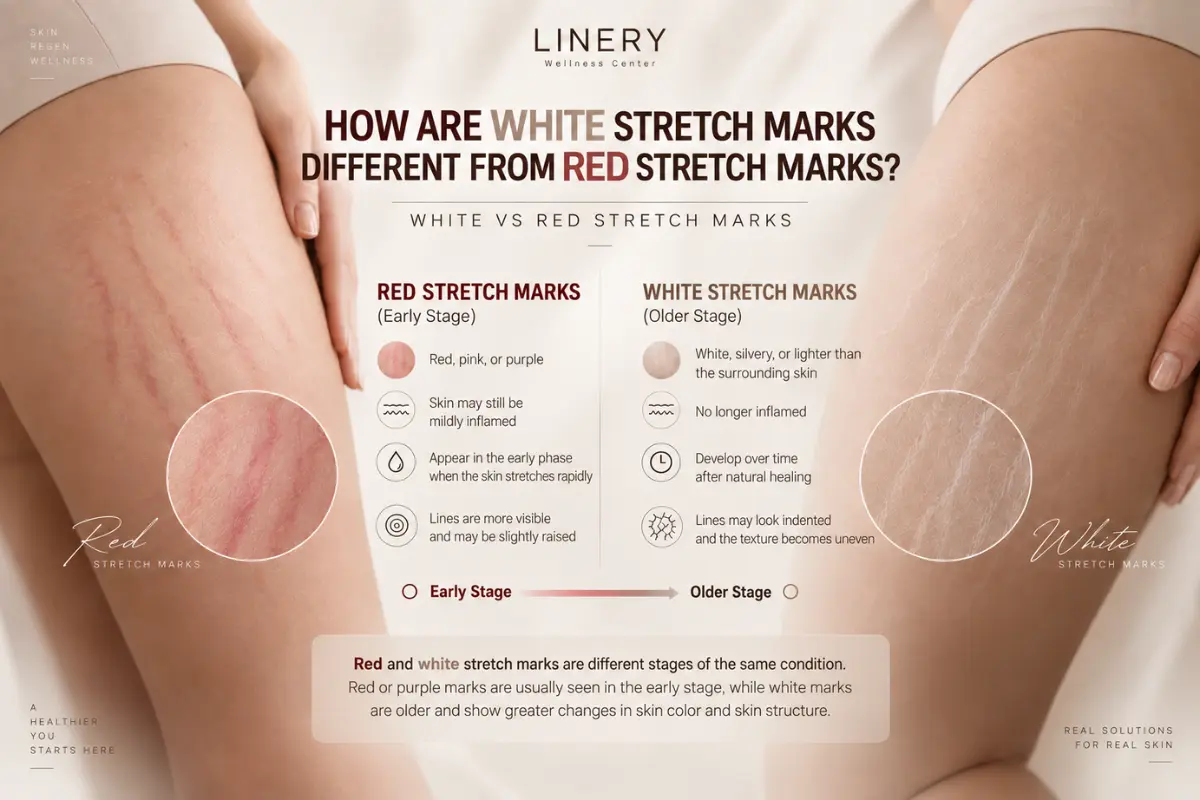
Red vs White Stretch Marks: What Is the Difference?
Red and white stretch marks generally represent different stages of the same condition. Red or purple marks are usually newer, while white stretch marks tend to be older and may involve more noticeable changes in skin texture and structure.
| Comparison | Red / Purple Stretch Marks | White Stretch Marks |
|---|---|---|
| Stage | Usually newer | Usually older |
| Color | Red, pink, purple | White, silver, pale |
| Medical term | Striae Rubrae | Striae Albae |
| Texture | Color may be more noticeable | Indentation or uneven texture may be more noticeable |
| Treatment planning | Color and stage are considered | Skin texture and structure often require more attention |
Do Red Stretch Marks Always Turn White?
Many stretch marks gradually become lighter as they mature, but the timing and final appearance vary according to skin tone, location, age of the marks, and individual skin characteristics.
Does the Age of the Stretch Marks Matter?
Yes. Newer marks and long-standing white stretch marks may respond differently to treatment.
Assessment should consider not only color but also depth, texture, treatment area, and surrounding skin before a treatment plan is selected.
Do White Stretch Marks Go Away on Their Own?
White stretch marks may become less noticeable over time, but they generally do not disappear completely on their own.
This is because the issue is not only pigmentation. The structure and texture of the skin have also changed.
Why Do They Still Show Under Certain Lighting?
Even when the color becomes less obvious, indentation or uneven texture can create shadows under side lighting.
This is why a stretch mark may look faint from one angle but much more visible from another.
Can Creams Remove White Stretch Marks?
Moisturizers and skincare can improve hydration and the overall appearance of the skin, but they have limited ability to reverse established structural changes in older white stretch marks.
If texture or indentation is the main concern, a treatment designed to stimulate skin remodeling may be considered after assessment.
Can White Stretch Marks Be Removed?
Yes, white stretch marks can be treated to make them look less visible, smoother, and better blended with the surrounding skin. Even long-standing stretch marks may respond to treatments that stimulate skin repair and remodeling.
The degree of improvement depends on several factors, including the age and depth of the marks, treatment area, body location, skin tone, previous treatments, and individual skin response. A treatment plan should therefore be tailored to the characteristics of the stretch marks rather than using the same approach for everyone.
What Affects Treatment Results?
Important factors include:
- Age of the stretch marks
- Depth and texture
- Size of the treatment area
- Body location
- Skin tone and tendency to develop post-inflammatory hyperpigmentation
- Previous procedures
- Individual healing response
Expert Insight: Even mature white stretch marks can be treated with the goal of improving skin texture and reducing their visibility. Assessing the depth, texture, color, and treatment area helps determine which approach is most appropriate and what level of improvement can realistically be targeted.
For Linery’s treatment approach, see Stretch Mark Regen.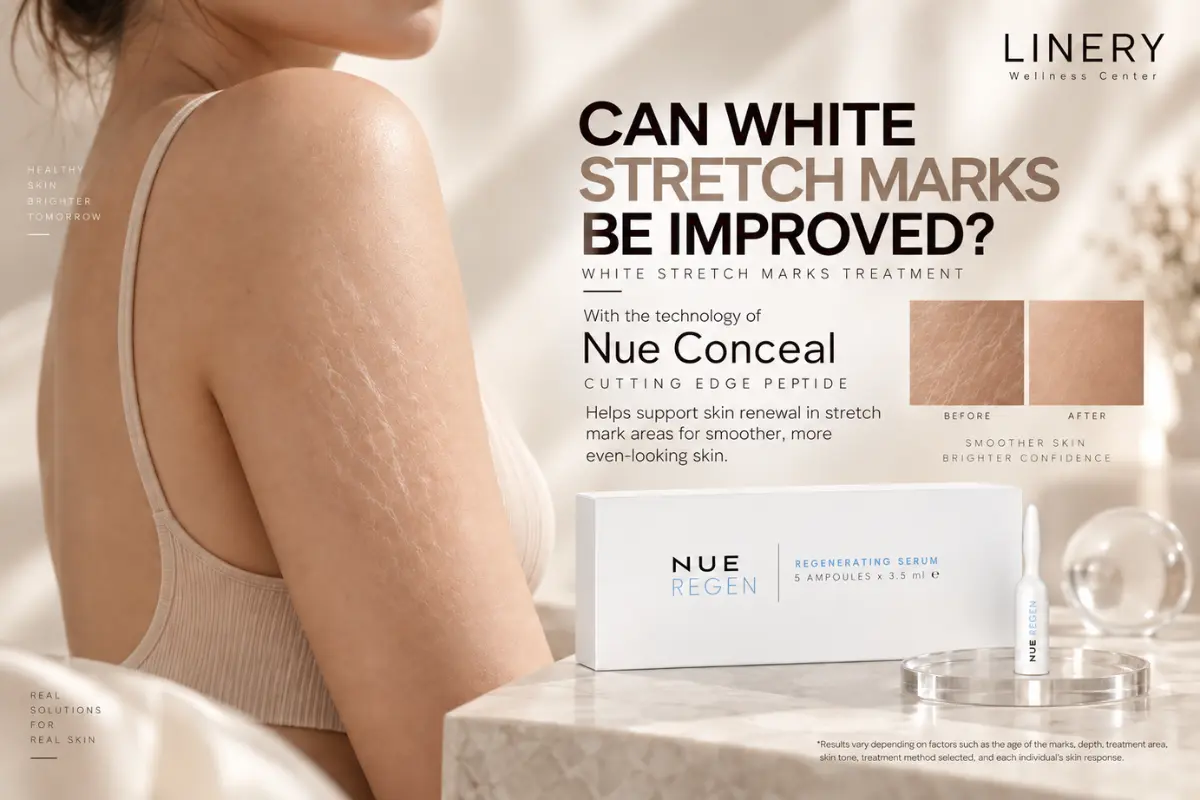
How Are White Stretch Marks Treated?
Treatment generally focuses on skin remodeling, collagen stimulation, and reducing the visibility of the marks so the treated area can appear smoother and more even.
The most appropriate option depends on the age and depth of the stretch marks, treatment area, skin tone, skin condition, and individual treatment goals.
Microneedling
Microneedling creates controlled micro-injuries in the skin to stimulate the natural healing process and collagen remodeling.
It is one of the treatment approaches used for white stretch marks, with treatment depth and number of sessions adjusted according to the characteristics of the marks and the skin.
RF Microneedling
RF microneedling combines small needles with radiofrequency energy to stimulate skin remodeling at controlled depths.
Suitability depends on the depth of the marks, skin type, treatment area, and energy settings.
Fractional Laser and Other Laser Treatments
Fractional and other laser technologies may be used to improve skin texture and stimulate collagen.
Different laser systems work differently, so treatment should be selected according to skin tone, treatment goals, expected downtime, and the risk of pigmentation changes.
Combination Treatments
When stretch marks involve a combination of texture, depth, and pigmentation concerns, more than one treatment approach may sometimes be considered.
Combination treatment should have a clear purpose for each procedure rather than simply combining several treatments for every patient.
What About Topical Products?
Topical products and moisturizers can support hydration and overall skin condition, but their ability to change the structure of long-standing white stretch marks is limited.
If the marks are visibly indented or have uneven texture, a procedure that stimulates skin remodeling may provide a more appropriate treatment option.
How Does Microneedling Help White Stretch Marks?
Microneedling is one of the treatments used for white stretch marks. It works by creating controlled micro-injuries that trigger the skin’s repair process and collagen remodeling.
The goal is to help smooth the texture, improve the appearance of indentation, and make the stretch marks less noticeable. Collagen remodeling develops gradually, so results are usually assessed over a treatment course rather than immediately after one session.
How Does Microneedling Affect Skin Structure?
The controlled micro-injuries stimulate the body’s natural healing response, which supports new collagen formation and skin remodeling.
This process can help uneven or indented stretch marks gradually appear smoother and better blended with the surrounding skin. The degree of improvement depends on the depth of the marks and individual skin response.
Is Microneedling Suitable for Everyone?
Suitability depends on the depth, location, size of the treatment area, skin tone, skin condition, and previous treatments.
Some stretch marks may be treated primarily with microneedling, while others may be better suited to laser, RF microneedling, or a combination approach after assessment.
What Can Happen After Microneedling?
Temporary redness, sensitivity, tightness, or irritation may occur after treatment.
People with a history of post-inflammatory hyperpigmentation or unusual reactions to skin procedures should mention this during consultation so the treatment and aftercare plan can be adjusted appropriately.
Microneedling vs Laser for White Stretch Marks
Both Microneedling and Laser can be used to treat white stretch marks, but they work differently and may be selected for different skin concerns.
The most appropriate option depends on the characteristics of the stretch marks, skin tone, treatment goals, expected downtime, and individual risk factors.
| Comparison | Microneedling | Laser / Energy-Based Treatment |
|---|---|---|
| How it works | Controlled mechanical micro-injury | Light or energy depending on the device |
| Main goal | Collagen remodeling and texture improvement | Texture, pigmentation, or remodeling depending on technology |
| Downtime | Depends on treatment depth and skin condition | Varies considerably by device and energy level |
| Key considerations | Depth, skin tone, treatment area, skin history | Laser type, skin tone, energy settings, pigmentation risk |
When May Microneedling Be Considered?
Microneedling may be considered when improving skin texture, indentation, and collagen remodeling are important treatment goals.
Treatment depth and the number of sessions should be adjusted according to the stretch marks and individual skin condition.
When May Laser Be Considered?
Laser treatment is not one single procedure. Different laser technologies have different targets, treatment depths, and levels of downtime.
The choice should consider the type of laser, skin tone, stretch mark characteristics, treatment goals, and risk of pigmentation changes.
Expert Insight: Choosing between Microneedling and Laser should begin by identifying which features of the stretch marks need to be treated and how each procedure addresses those concerns.
What Should Be Assessed Before Choosing Treatment?
White stretch marks can vary significantly even when they look similar at first glance. Some are shallow and narrow, while others are deeply indented or cover a larger area.
Treatment selection should therefore be based on the characteristics of the marks rather than their white color alone.
| Type of Stretch Mark | What to Assess |
|---|---|
| Shallow white marks | Texture, width, treatment area |
| Deep or indented marks | Depth and skin structure |
| Large treatment area | Total area and treatment course |
| Long-standing marks | Age and previous treatment history |
| Skin prone to PIH | Skin tone and pigmentation risk |
| Previously treated marks | Procedure type, number of sessions, and previous response |
Depth and Texture
A flat white line may require different treatment considerations from a deeply indented stretch mark.
Assessment should identify whether the main concern is color, texture, depth, or a combination of these factors.
Treatment Area and Location
Stretch marks on the abdomen, thighs, hips, breasts, or other areas can vary considerably in size and distribution.
The treatment area can influence treatment time, number of sessions, and overall cost.
Previous Treatments
If you have previously had Microneedling, Laser, or another procedure, tell the clinic what was done, how many sessions you had, and how your skin responded.
This information can help guide the next treatment plan and avoid repeating approaches unnecessarily.
Skin Tone and Pigmentation Risk
People who develop dark marks easily after inflammation should mention this during consultation.
Skin tone and previous pigmentation reactions may affect the choice of procedure, treatment depth, and energy settings.
How Many Sessions Are Needed for White Stretch Marks?
For Linery’s Stretch Mark Regen program, treatment may typically be planned over approximately 2–6 sessions, around 4 weeks apart.
The actual number of sessions depends on the age and depth of the marks, treatment area, location, previous treatments, and how the skin responds during the treatment course.
Shallow marks covering a smaller area may require a different plan from deeper or more widespread stretch marks, so progress should be reviewed throughout treatment.
What Determines the Number of Sessions?
Important factors include:
- Age and depth of the stretch marks
- Size and number of treatment areas
- Treatment method used
- Previous treatment history
- Skin condition and response between sessions
- Individual treatment goals
Why Shouldn’t Results Be Judged After One Session?
Collagen remodeling takes time, so the full change may not be visible immediately after one procedure.
Progress should be reviewed over time to see how the stretch marks are responding and whether the treatment course, frequency, or approach should be adjusted.
How Should Progress Photos Be Taken?
Use similar lighting, distance, camera angle, and body position each time.
This makes changes in texture easier to compare and reduces the effect of shadows or lighting differences.
When Should White Stretch Marks Be Assessed Before Treatment?
White stretch marks are usually long-standing structural skin changes, but some situations should be evaluated before proceeding with a cosmetic procedure.
Stretch Marks Appeared Suddenly or in Large Numbers
If many stretch marks develop quickly without an obvious reason such as pregnancy, rapid growth, or major weight change, mention this during consultation.
If other health symptoms are present, the underlying cause may need to be evaluated before focusing only on cosmetic treatment.
The Skin Is Inflamed or Damaged
Open wounds, significant redness, swelling, rash, pain, or possible infection should be assessed before Microneedling, Laser, or other procedures that disturb the skin.
Pregnancy, Breastfeeding, Medication, or Medical Conditions
Tell the clinic about relevant medical conditions, medication, pregnancy, and breastfeeding before treatment.
These factors may influence the treatment method, products used, or the most appropriate timing for treatment.
Do not stop prescribed medication on your own in order to undergo a cosmetic procedure.
Previous Pigmentation or Healing Problems
Mention any history of post-inflammatory hyperpigmentation, slow wound healing, infection, or unusual reactions after previous skin treatments.
This information helps the treatment team assess risk and select an approach that is appropriate for your skin.
White Stretch Mark Treatment at Linery Wellness Center
At Linery Wellness Center in Bangkok, white stretch marks are assessed individually based on their color, depth, width, texture, treatment area, and previous treatment history.
The Stretch Mark Regen program uses Inkless Microneedling together with Nue Regen and Phototherapy to support skin remodeling and collagen stimulation, with the goal of helping the marks appear shallower, smoother, and better blended with the surrounding skin.
Individual Assessment Before Treatment
The assessment considers texture, depth, size, location, skin tone, and previous treatments rather than relying only on the color of the marks.
If you have previously had Laser, Microneedling, or another stretch mark treatment, providing details about your previous treatment and response can help guide the next treatment plan.
Stretch Mark Regen and Inkless Microneedling
Stretch Mark Regen uses Inkless Microneedling on the stretch mark area to stimulate the skin’s repair and remodeling process, together with Nue Regen as part of the treatment protocol.
Phototherapy is then included as part of the program before moving into aftercare and follow-up.
How Is the Treatment Course Planned?
A typical Stretch Mark Regen treatment course may involve approximately 2–6 sessions, around 4 weeks apart.
The actual number of sessions is adjusted according to the age and depth of the marks, treatment area, location, and how the skin responds during treatment.
Learn more at Stretch Mark Regen at Linery Wellness Center.
Frequently Asked Questions About White Stretch Marks
Do white stretch marks go away?
White stretch marks can be treated to make them look less visible, smoother, and more even with the surrounding skin. However, complete removal cannot be guaranteed because mature striae albae involve structural changes within the skin.
The degree of improvement depends on the age, depth, size, and individual response of the stretch marks.
Can old white stretch marks be treated?
Yes. Even white stretch marks that have been present for several years can still be treated to improve their appearance.
Treatment focuses on stimulating skin remodeling and collagen production to help the marks appear shallower, smoother, and less noticeable. Older or deeper marks may respond differently, so treatment should be planned according to their individual characteristics.
Can creams remove white stretch marks?
Creams and moisturizers can support hydration and improve the overall condition of the skin, but they have limited ability to reverse deeper structural changes in long-standing white stretch marks.
If indentation or uneven texture is the main concern, a procedure that stimulates skin remodeling may be considered.
Does microneedling help white stretch marks?
Yes. Microneedling is one of the treatment approaches used for white stretch marks. It creates controlled micro-injuries that stimulate the skin’s repair response and Collagen Remodeling, helping improve texture and reduce the visibility of the marks.
Results and suitability depend on the depth of the marks, treatment area, skin tone, previous procedures, and individual skin response.
Is laser or microneedling better?
Both Laser and Microneedling can be used to treat white stretch marks, but they work differently and may be suitable for different skin concerns.
The choice should consider the depth and characteristics of the marks, skin tone, treatment goals, expected downtime, and risk of post-inflammatory hyperpigmentation.
How many sessions will I need?
For Linery’s Stretch Mark Regen program, a treatment course may typically involve approximately 2–6 sessions, around 4 weeks apart.
The actual number of sessions depends on the age, depth, size, location, and response of the stretch marks, so progress should be reviewed throughout the treatment course.
Conclusion
White stretch marks, or striae albae, are mature stretch marks that have usually faded from red or purple to white or silver and may also involve visible changes in skin texture.
Although they generally do not disappear completely on their own, white stretch marks can be treated to make them appear smoother, less visible, and better blended with the surrounding skin.
Treatment options may include Microneedling, RF Microneedling, Laser, or combination approaches depending on the age, depth, texture, treatment area, skin tone, and individual characteristics of the marks.
At Linery Wellness Center in Bangkok, the Stretch Mark Regen program combines Inkless Microneedling, Nue Regen, and Phototherapy, with the treatment course tailored to the characteristics of each patient’s stretch marks.
For foreigners living in Thailand or considering stretch mark treatment in Bangkok, an individual assessment can help determine the most appropriate treatment approach, expected treatment course, and realistic goals based on your skin and stretch mark characteristics.
For more information about Linery’s approach, visit Stretch Mark Regen at Linery Wellness Center.
Treatment suitability and results vary between individuals, and complete removal cannot be guaranteed. An appropriate assessment should be completed before deciding on treatment.
References
- American Academy of Dermatology (AAD) — Stretch Marks: Causes and Treatment
- U.S. Food and Drug Administration (FDA) — Microneedling Devices: Benefits, Risks and Safety
- PubMed — Clinical Research on Stretch Mark Treatments